







As a new manager, your job has changed from getting your own work done to also helping your team do theirs well. That means managing employees, delegating work, giving feedback, handling difficult conversations, and knowing when to step in or step back.
And there’s often a gap between what managers think they’re doing and what their teams experience. In the TalentLMS Skills Visibility Report 2026, 90% of managers say they support their team’s skill development, but only 60% of employees agree.
Gallup’s 2026 State of the Global Workplace report also found that manager engagement fell from 27% in 2024 to 22% in 2025.
The good news? You don’t need every management skill figured out on day one. Here are 15 new manager tips to help you settle into the role without trying to change everything at once.
TL;DR
- As a new manager, you need to build trust before trying to change everything.
- Set clear expectations so people know what matters and what good work looks like.
- Delegate outcomes, not just tasks, and give people room to own the work.
- Use 1:1s and active listening to understand what your team needs.
- Give feedback early, address problems directly, and make decisions instead of avoiding them.
- Use your first 90 days to learn the team, establish your management rhythm, and plan what comes next.
What are the best tips for new managers
The best tips for new managers in leadership roles center on one shift: from doing the work to leading it. Build trust before making changes, set clear expectations, delegate outcomes rather than tasks, give feedback early, and use 1:1s and active listening to learn what your team needs. Then keep developing the managerial skills that still feel unfamiliar.
15 top tips for new managers
1. Build trust
Your first job in your management role isn’t to prove you’re in charge. It’s to understand the people you’re now managing and build relationships based on trust.
Learn how each person’s work style, what they’re good at, where they need support, and what they expect from you. A few useful conversations tell you more than a team-bonding exercise ever will.
Try this: Ask each team member, “What’s one thing you want me to understand about how you work?”
2. Set clear expectations
A vague request turns into three different interpretations.
When you assign work, be clear about the outcome, priority, deadline, and decisions the person owns. Then check that you’ve been understood.
Try this: After assigning a piece of work, ask, “What are you taking away as the priority?”
3. Give people ownership
Delegation isn’t handing someone a to-do list and checking every step. If you keep all the decisions, you’ve kept the work too.
Give people responsibility for an outcome and agree on when you need an update. That gives them room to think while keeping you informed.
Try this: Before taking over, ask, “What do you think the next step should be?”
4. Ask for feedback
You’ll make mistakes, especially while learning a new role. Make it easy for your team to tell you when something isn’t working.
Don’t wait for an annual review. Ask about specific situations while they’re still fresh, and balance positive feedback with areas that need attention.
Try this: Ask, “What’s one thing I could do that would make your work easier?”
Then act on what you hear.


TALENT gROWTH MANAGER AT TALENTLMS
Specialized in talent development, skills-based learning, and growth culture, Stelios helps organizations empower their people to learn, adapt, and thrive in an AI-driven workplace.
Expert tip: From doing to leading
1. What got you here won’t get you there.
Gradually, you will need to shift from being the person who executes to the person who orchestrates the work of others – a major mindset shift!
2. Start with psychological safety.
Build trust within your team as the absolute priority. People perform better when they feel safe to ask, challenge, and make mistakes.
3. Normalize feedback early on.
Make frequent, two-way feedback part of the team’s rhythm—not something reserved for performance reviews.
5. Listen before solving
When someone brings you a problem, your first instinct is often to solve it.
Sometimes people need a solution. Sometimes they need you to listen, ask a few questions, and help them work out what to do by themselves.
6. Explain the why
You won’t always be able to share every detail behind a decision. You can still explain what you know, what you don’t, and what happens next.
If a deadline changes, a priority gets dropped, or leadership makes a decision your team doesn’t like, explain the reason when you can. Silence leaves people to fill in the gaps themselves, while open communication makes expectations clearer.
7. Replace constant checking with clear checkpoints
A first-time manager often checks everything because they’re worried something will go wrong.
Set clear checkpoints instead of asking for constant updates. If someone knows what success looks like and when you need to see progress, they don’t need you hovering over every step.
Try this: Replace “Send me everything before you do it” with “Keep me posted at these two points, and come to me if you hit a blocker.”
8. Match autonomy to experience
Not everyone needs the same level of oversight. Your direct reports may have different levels of experience and confidence, so adjust your approach accordingly.
An experienced customer support agent who handles routine issues well deserves more room to make decisions. A new team member handling an unfamiliar task needs clearer guardrails.
Set the boundaries, then give people the space to work within them.
9. Watch what your behavior teaches
Your team pays attention to what you do, especially when things get busy.
If you say people should switch off after work but send messages at midnight, the message is clear. If you ask for honest feedback but become defensive when you hear it, people stop giving it.
Your behavior sets expectations long before you spell them out.
10. Make 1:1s useful
A 1:1 shouldn’t become a weekly status report.
Use the time to talk about what’s happening with the work, what’s getting in the way, how the person is doing, and what support or development they need. The employee should do most of the talking.
Try this: Before each 1:1, ask yourself, “What does this person need from me today?”

11. Notice what isn’t being said
Management isn’t only about what people say. Notice when someone who is usually engaged goes quiet, when the same disagreement keeps resurfacing, or when an employee seems overwhelmed but says they’re fine.
In fact, a recent TalentLMS study found that 54% of employees experience some level of “quiet cracking,” a slow erosion of engagement that often goes unspoken.
Now, you don’t need to diagnose every emotion. But you do need to notice when a conversation needs more care. It’s always best to ask questions before making assumptions. And give difficult feedback without turning it into a judgment about someone’s character.
12. Deal with conflict early
Small disagreements rarely improve when everyone avoids them. They become harder to resolve once people have spent weeks building their own version of what happened.
Focus on the situation and the behavior, not the person.
Try this: Instead of “You’re not communicating well,” say, “I noticed the last two handoffs were delayed. Can you walk me through what happened?”
13. Make trade-offs visible
New managers often say yes because they want to prove themselves. The result is a growing list of priorities and a team that isn’t sure which one matters most.
You don’t have to reject every new request. Show what needs to move if something new moves in.
Try this: “We can take this on. Which of our current priorities should we push back?”
14. Find a mentor
You don’t have to figure out management alone.
Look for someone whose leadership style you respect, whether that’s a senior manager, a former manager, an HR or L&D colleague, or someone outside your organization.
Come with real situations rather than broad questions. “I had to give someone difficult feedback today, and I’m not sure if I handled it well” gives a mentor something useful to work with.
15. Keep developing
You learn a lot simply by doing the job and taking on new responsibilities. But experience alone doesn’t make someone better at managing people.
Look for chances to strengthen the leadership skills that still feel unfamiliar: coaching, delegation, timely feedback, conflict, 1:1s, and performance conversations.
New manager courses can give you a starting point. From there, real conversations, feedback, and reflection will turn those skills into habits.
Your First 90 Days as a New Manager: A 30-60-90-Day Checklist
In your first 1:1, someone may tell you a process everyone has learned to work around. In your first team meeting, you may realize two people have very different ideas about who owns the same piece of work.
Before you change anything, pay attention to what those moments are telling you. They’re about understanding the team, building trust, and creating a way of working that lasts.
Think of your first 90 days as the following process: Learn → Lead → Build.
Days 1–30: Learn
Start by listening. Meet with each team member and ask what they’re working on, where they’re getting stuck, and what they need from you. Look at the team’s current goals, deadlines, and workload. If two people give you different answers about a workflow, make a note of it. Those gaps are part of what you need to understand.
At the same time, learn how decisions get made, which processes people rely on, and what your manager expects from you. Review existing processes before changing them, and pay attention to any urgent employee performance, workload, or relationship issues.
It’s also a good idea to set up regular 1:1s and ask your team what they need from you directly.
Days 31–60: Lead
Once you understand the team, start creating clarity around how you’ll work together. Confirm priorities and responsibilities, agree on where you need regular updates, and start delegating work with clear ownership.
Use this stage to establish your management rhythm. Give feedback, address small problems before they grow, and remove unnecessary work or bottlenecks. Ask your team what is and isn’t working for them, then review your progress with your manager.
Days 61–90: Build
By this point, you’ll have a clearer picture of what the team needs from you and where you need to focus next. Review progress against team goals and look for recurring problems that need a longer-term fix.
Start thinking beyond the immediate workload. Set development goals with team members, give people more ownership where they’re ready for it, and strengthen relationships with key stakeholders. Agree on the team’s priorities for the next quarter, ask your manager and team for feedback on your first 90 days, and choose two or three management skills to keep developing.
Remember not to try and take on everything all at once, as it could lead to burnout.

L&D and HR tips for new managers
The first difficult 1:1 often comes before a new manager feels ready for it.
Someone misses a deadline. Two employees aren’t getting along. A strong performer starts disengaging. The manager knows these conversations matter, but knowing the theory and handling the real conversation are two different things.
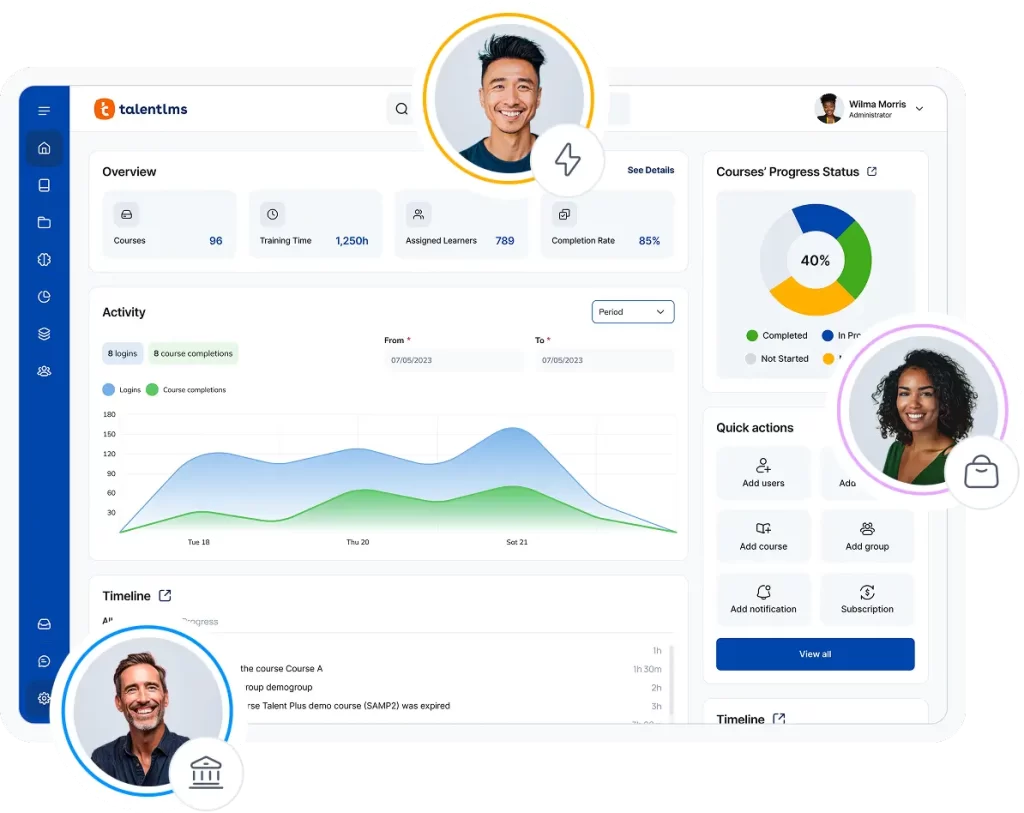
HR and L&D teams can close that gap before and after promotion. New manager training and a modern LMS can give future managers opportunities to practice delegation, feedback, coaching, conflict resolution, and performance conversations. Pair formal learning with mentoring, peer discussion, and opportunities to lead projects.
And when it comes to support, it shouldn’t stop after the promotion. Keep giving managers tools they can use when a real situation comes up, rather than relying on a course they completed months earlier. In Learning Playground, new managers can practice different scenarios in a safe environment to prepare them for day-to-day work.
The goal isn’t to create managers who know every framework. It’s to help them handle the conversations, decisions, and everyday problem-solving that come with leading people.
Great managers are built, not born
Becoming a manager doesn’t mean you suddenly know how to manage employees.
You’ll get some things wrong and have conversations you wish you’d handled differently. You’ll learn that an approach that worked with one employee doesn’t necessarily work with another. That’s part of the job.
“It’s more about mindset, motivation, willingness to learn, and to be able to take action… and even if you’re taking action in the wrong direction, taking a step in any direction and seeing what happens.” — Neena Newberry, TalentLMS Future Leaders podcast
Pay attention to what happens next and always ask for feedback. This helps you think about what you’d do differently next time. Practice the skills that still feel uncomfortable and keep asking questions, giving your team enough room to tell you what they need.
FAQs
What is the 30-60-90 rule for a new manager?
The 30-60-90 approach gives a new manager a simple structure for the first three months. The first 30 days focus on learning how to be a manager and getting to know the team. Days 31–60 are about establishing priorities and taking ownership. Days 61–90 are about strengthening what’s working and planning ahead. It’s a guide, not a strict schedule. Some teams need faster action; others need more time to understand the situation before making changes.
What are the 5 C’s of management?
The five C’s of management are commonly described as communication, collaboration, critical thinking, creativity, and commitment, although the framework varies by source. For a new manager, the useful takeaway is to communicate clearly, work well with others, think through decisions, encourage new ideas, and follow through on commitments.
What is the first thing a new manager should do?
Listen before changing things. Meet your team, understand their work, learn what’s going well, and find out where they’re struggling. At the same time, get clear on what your own manager expects from you. Once you understand the situation, decide what actually needs to change.
What are the top 3 weaknesses of a manager?
Three common weaknesses are poor communication, avoiding accountability, and failing to adapt their management style. These problems show up in everyday situations: unclear priorities, feedback that never gets addressed, or treating every employee as if they need the same kind of support. These are also common challenges for new leaders and first-time managers. The fix starts with paying attention to how your team responds, asking for feedback, and adjusting your approach when something isn’t working.


