





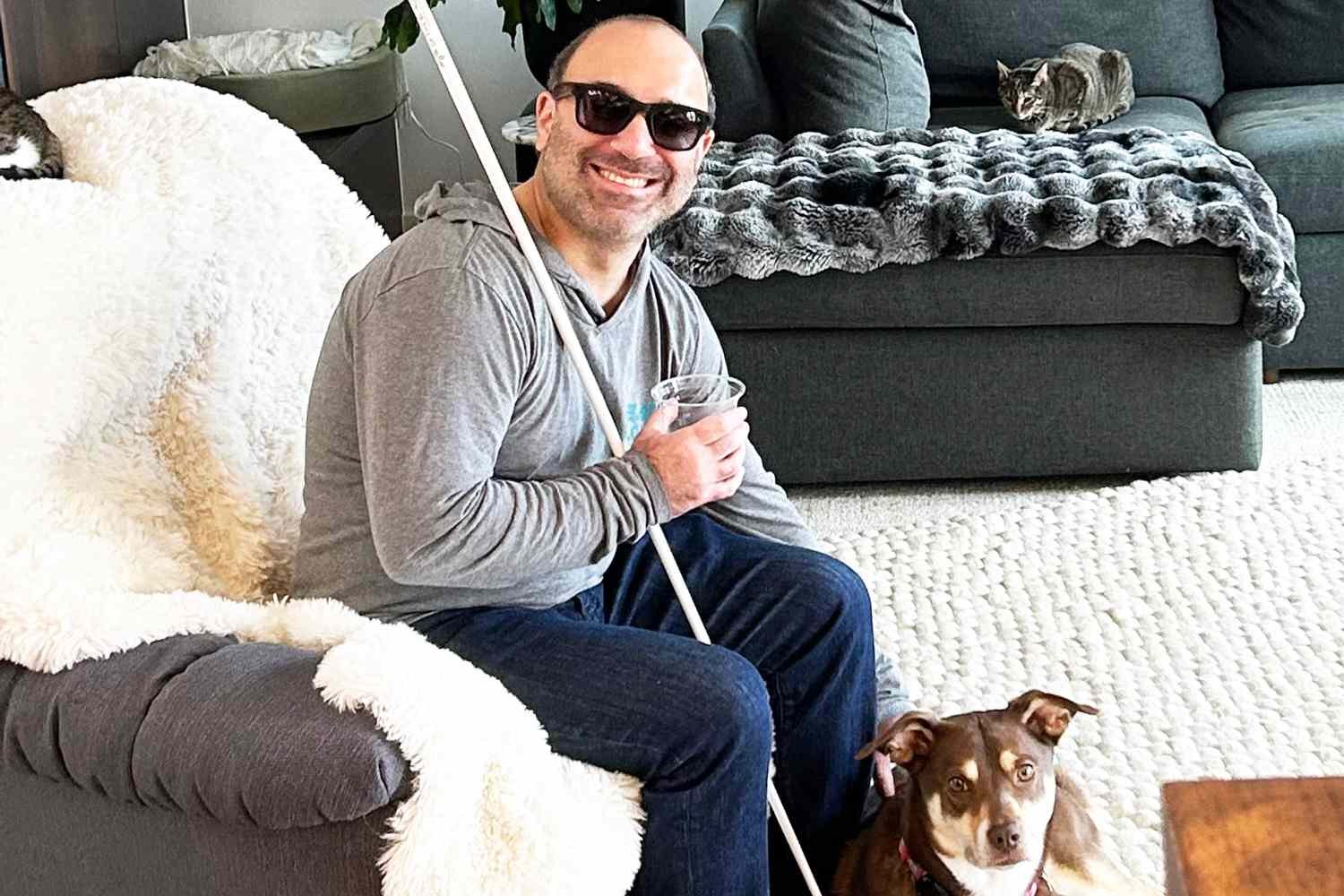
William Lubinsky hoped to attend a state-subsidized program that helps blind people learn skills for independence, but claims there was not enough funding

:max_bytes(150000):strip_icc():format(jpeg)/A-Massive-Heart-Attack-Left-Him-Permanently-Blind-031626-1-5e91a894f0dc487bba7b1fbc798686ae.jpg "A Massive Heart Attack Left Him Permanently Blind At 40.")
Credit: Courtesy of William Lubinsky
NEED TO KNOW
- William Lubinsky, an ER doctor, became permanently blind after surviving a massive heart attack and multiple surgeries
- Funding issues delayed his access to an independence training program for individuals who have lost their vision
- Lubinsky’s family and friends eventually raised $30,000 for him to attend the program, but he is speaking out about systemic challenges for people with disabilities
In late August, William Lubinsky went for a mile-and-a-half run through his neighborhood in Denver, Colo. He was 40 at the time, a recreational runner who had recently completed a 10K race.
When he returned home — as he stretched outside his apartment building — he became increasingly sweaty and experienced cramps. At first he assumed it was his body's response to the 90-degree weather. He went upstairs to take a cold shower but soon felt weak, prompting him to call 911. First responders thought he was having a panic attack. But as an emergency room physician, Lubinsky knew it was far more serious.
"I think I'm having a heart attack," he recalls telling them. He described his other symptoms — shortness of breath and pressure in his chest — and also shared that he had a family history of high cholesterol and heart disease.
The emergency medical technicians performed an abbreviated EKG (electrocardiogram) that came back normal. But it only provided a limited picture of his heart, and they needed more information. He was rushed to the hospital.
"I got into the ER and I told them my name, that I was an ER doc and that I think I'm having a STEMI, a severe life-threatening heart attack," Lubinsky tells PEOPLE.
He was right. Within a minute of arrival, he coded and needed immediate life-saving resuscitation. He had a repeat code and underwent more than an hour of both manual and device-assisted CPR. He believes this is when his optic nerves were injured beyond repair.
But more medical issues followed. He was rushed to a cardiac laboratory, where a cardiologist performed a heart catheterization to remove a long string of blood clots. Stents were placed to restore proper blood flow.
Afterward, he required a large blood transfusion and was given less than a 5% chance of survival.
While he survived, his eyesight did not. He became legally blind.


Credit: Courtesy of William Lubinsky
Now, 41, Lubinsky is trying to regain his independence and navigate his new circumstances. His hope was to enroll in a nine-month blindness training program at the Colorado Center for the Blind (CCB). The program would teach him the skills needed to live on his own. But with a cost up of to $5,500 a month, this crucial independence training seemed out of reach.
The program is funded by the home states of the attendees, according to CCB spokesperson, Dan Burke. With four other Colorado residents enrolled, a portion of the center's funding comes from the Colorado Division of Vocational Rehabilitation (DVR), which helps people with disabilities live independently and thrive at work.
Hoping to qualify for state assistance to participate in CCB's program, Lubinsky says he began DVR's application process in Fall 2025.
But he ran into a problem. "DVR told me things are somewhat disorganized now due to funding issues and staffing issues," he said. "Before I had even been evaluated in person, they said there was no funding for people who did not already have an implemented plan."


Credit: Courtesy of William Lubinsky
DVR would not comment on Lubinsky's particular case. But a spokesperson for the agency tells PEOPLE it contracts with the CCB "when it's necessary, appropriate and the most reasonable cost to support an individual's employment goals."
On its website, DVR says it receives the majority — nearly 80% — of its funding from federal funds. The rest comes from local and state funds. According to the spokesperson, last year, Colorado received $63.7 million in federal funds to provide vocational rehabilitation services. The agency's federal grant for 2026 decreased to $54.9 million, due to an increase in Colorado's per capita income. That has led to a decrease in resources for Colorado residents.
Currently, the agency is managing its limited resources by prioritizing services for individuals with the most significant disabilities. The rest, like Lubinsky, go on a waiting list.
"While demand continues to grow, our resources remain fixed," the spokesperson said. "The waitlist process will ensure we continue to be the best stewards of these fixed resources as possible. DVR continues to provide services to individuals with an approved plan for employment, accept applications and provide necessary assessment to determine eligibility and provide pre-employment transition services to students with disabilities."
Julie Deden, the executive director at CCB, says she receives calls several times a week from newly blind people seeking training and support. But without the funds, she can't help them.
"There is little that we can do other than offering encouragement and introducing them to blind people who are role models," Deden tells PEOPLE. "I am extremely concerned about the lack of services for blind people in Colorado."
Never miss a story — sign up for PEOPLE's free daily newsletter to stay up-to-date on the best of what PEOPLE has to offer, from celebrity news to compelling human interest stories.
Last month, after Lubinsky realized he would not get state funding to attend the CCB's program, his loved ones helped him launch a GoFundMe that has raised more than $30,000 — enough for him to begin the program.
While he is grateful for the support of family and friends, he knows not everyone has that option. Lubinsky says the system failed him.
"I think it is failing many others as well," he says, "in the same way, or worse ways."


