


![AFG vs BAN [WATCH]: Yamin Ahmadzai castles Mushfiqur Rahim with a brilliant yorker in one-off Test](https://kumbhcoin.org/wp-content/uploads/2026/10/AFG-vs-BAN-WATCH-Yamin-Ahmadzai-castles-Mushfiqur-Rahim-with.webp-300x156.webp "AFG vs BAN [WATCH]: Yamin Ahmadzai castles Mushfiqur Rahim with a brilliant yorker in one-off Test")




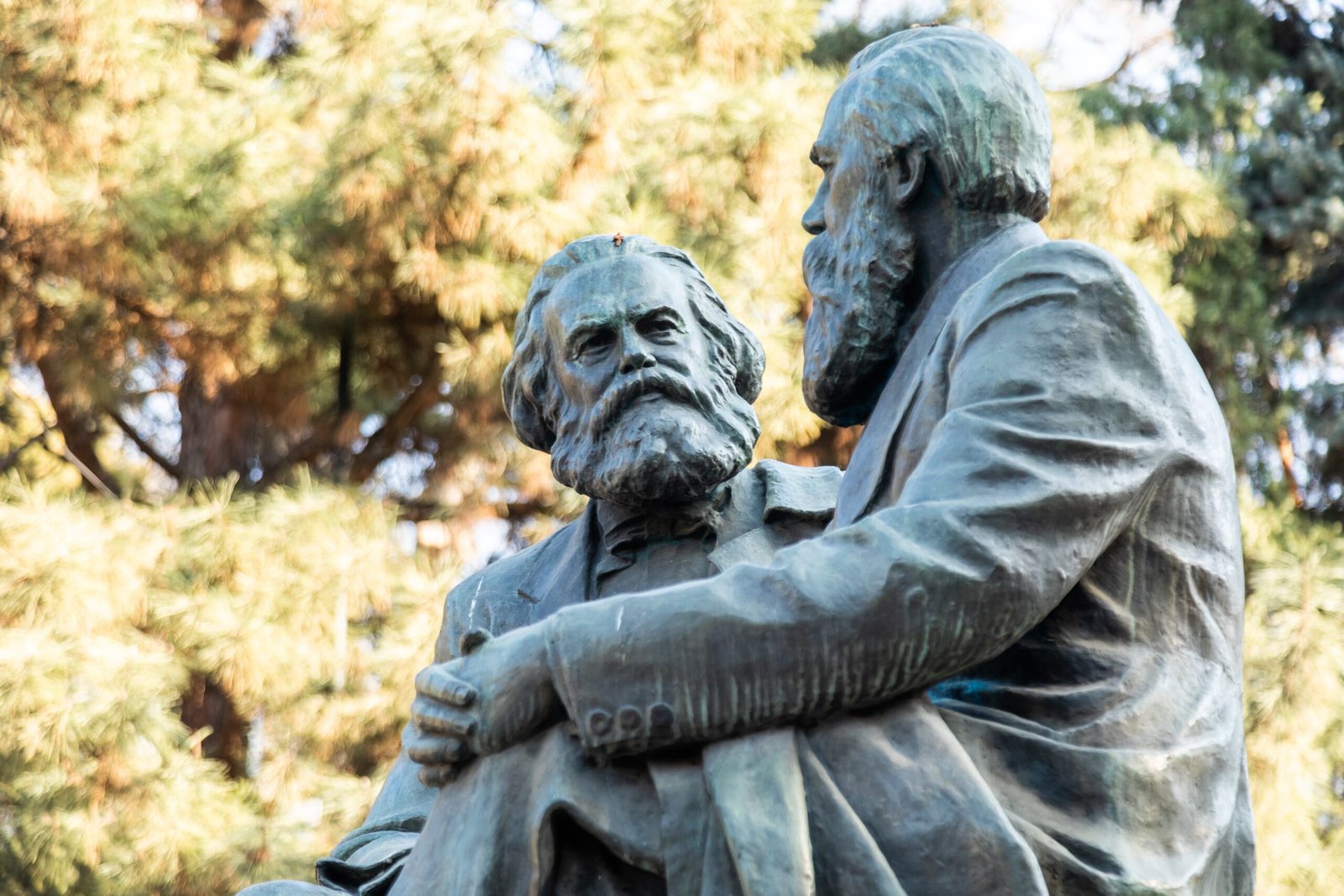
As a seventeen-year-old high school student in Trier, Germany, Karl Marx wrote a religious essay to fulfill a graduation requirement. Titled “The Union of the Faithful with Christ,” it explained the human need for the divine as an “unsatisfied longing for truth and light.” A loving relationship with God not only filled that longing but also brought virtue as a benefit.
“Then every repulsive aspect is submerged,” Marx continued, “everything earthly suppressed, everything crude extinguished, and virtue is more enlightened as it becomes milder and more humane.”
Although the essay feels somewhat more analytical than heartfelt, along with Marx’s other work, it was easily good enough to graduate. He finished eighth in a class of 32, ready for college.
Parents naturally fret when children leave home. What if they fall in with a bad crowd or adopt destructive ideas? Pity Marx’s parents, Heinrich and Henriette; young Karl was an edge case of this. Within two years of his family turning out at 4 a.m. to see him off to university aboard a river steamer, Marx was living a life notably short on virtue, mildness, or humanity. In fact, a tsunami of egotism and wrath toward God had consumed him. Those who have had their own battles with self-absorption and anger can relate.
Between 1835 and 1841, Marx studied at the University of Bonn and the University of Berlin, during which time he was jailed for drunkenness and disturbing the peace, was accused of carrying weapons, and reportedly fought a duel.
His parents, who were financing this mischief, worried, with Heinrich carrying on a correspondence with Karl that degenerated into conflict. Believing his son’s heart was “enlivened and governed by a spirit that is not given to all men,” in 1837, he frankly asked Karl whether that spirit was “of a heavenly or a Faustian nature.”
“Do you think,” he wrote, “that you will ever be capable of feeling a truly human, a domestic happiness?”
Karl wrote back a long, solipsistic reply which signaled that a momentous battle inside him had been decided. He described an illness that seemed to be partly physical and partly spiritual. It had led him out of Berlin into the countryside to recuperate. For several days he was unable to think at all.
“I ran like a madman around the garden beside the dirty waters of the Spree,” Karl wrote.
Literary Ambition and Swallowing Fury
In 1838, the very next year, Heinrich died. He was 61. Karl didn’t attend the funeral. Any substantive relationship with his family ended at that point.
What brought on Karl’s remarkable college transformation? Perhaps a Marxist would say he was overcome by rational objectivity. But as the biographer Werner Blumenberg notes, in the end Marx was less an objective scientist than (quoting Marx’s friend and collaborator Friedrich Engels) “a revolutionary politician.” His intellectual work was designed to serve political ends. Beneath the claims of objective rationality lay a tortured, artistic soul.
Marx’s first college ambitions, in fact, had been literary. At Bonn, he was active in a poetry group. Today his verse serves as a window into the emotional storm that drove him.
In “Invocation of One in Despair” (1836-37), Marx describes wanting to avenge himself on a god whom he claimed had “snatched from me my all.” In “The Pale Maiden” (1837) he quotes the titular character as saying “Thus Heaven I’ve forfeited, I know it full well. My soul, once true to God, Is chosen for Hell.” And the later poem “The Fiddler” (1841) reads like a bizarro version of the Charlie Daniels’ song “The Devil Went Down to Georgia.” Marx describes a violin player turning against God, who had lent him his art: “Till heart’s bewitched, till senses reel, With Satan I have struck my deal. He chalks the signs, beats time for me, I play the death march fast and free.”
In 1837, when an editor rejected his poems for publication, Marx had written his father that he “swallowed it with fury.” That was when his primary ambitions pivoted to philosophy and history. Exhaustion from this intense study seems to be what led to the illness that drove him out of Berlin to run like a madman beside the river.
It also arguably drove the work that would make Marx famous.
The Gospel of Marx
Marxist philosophy is a reimagined New Testament, with Marx in the role of Christ. After all, Jesus had first spoken of a kingdom in which the last would be first, and vice versa. Marxism even has its own perverted eschatology, with violent socialist revolutions paving the way to a utopian state of communism that supposedly marks the end of history.
Creating this system of thought came at a cost. Marx’s drive and intellect could have secured a much more comfortable life for his family, who lived in profound poverty. Four of his children died before reaching adolescence. His wife, Jenny, who had been raised in wealth, had to beg a neighbor for money just to bury one of them. Marx himself died in 1883 at age 64, with eleven people attending his funeral — many of his growing number of disciples, one imagines, were too busy promoting his work to the world.
Jesus said you could know a tree by its fruits, and those of Marx did not fully ripen until the twentieth century. At one point, over a third of humanity lived under Marxist governments. Utopias they were not.
Fortunately, today the ratio has declined to less than one-twentieth, if you exclude China, which remains nominally socialist but with a significantly different economic model.
Instead of rewriting the Gospels, Marx’s life might have been better spent trying to live them out, cultivating something he had written about in his high school essay: “…a heart full of love for humankind, open to everything noble, everything great, not out of ambition but for the sake of Christ.”
At seventeen, Karl knew the words of a better way to live, even if he had not yet learned the tune. The dreams of youth are sometimes lost with tragic results.


