






The second chapter of Genesis poetically describes the beginning of the human story. “The Lord formed Adam from the dust of the earth,” it reads. “He blew into his nostrils the breath of life and man became a living being.”
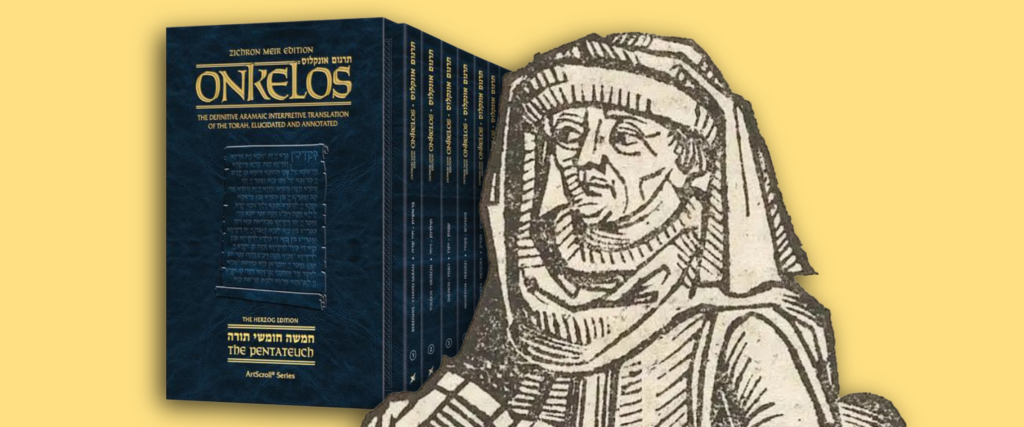
There are different ways to translate the Hebrew term rendered here as “living being.” Onkelos, a Roman nobleman turned Torah scholar, interpreted it to mean “speaking spirit” (in Aramaic: ruach memalela). As Rabbi Shai Held elaborates in the second volume of The Heart of the Torah, Onkelos’s translation implies that “speech is constitutive of what it means to be a human – a core part of our humanity is our ability to communicate with words.”
Onkelos is not the only scholar to explore this concept. As Held also explains:
“According to [the medieval commentator] Rashi, speech is thus not only central to who we are as human beings, it is also key to our uniqueness. Alone among God’s creations, Jewish tradition affirms, human beings are capable of speech.”
The original scribes of the Hebrew Bible were reflecting the central role words have played in the post-Paleolithic human experience. They allow us to alchemize our state of mind into vocalized phonemes or written letters that can then be decoded in the mind of the receiver – a miraculous and intimate act of human-to-human telepathy. It was also arguably the rise of alphabet systems in the ancient Near East and the literacy they enabled that democratized holiness and, in doing so, birthed the notions of human dignity and universal justice that we take for granted today. Speech matters.
I’ve been thinking about this recently as I grapple with some of the consequences of the generative AI revolution. Like many people, I feel a general sense of unease when holding a fluent conversation with a chatbot. I understand that this lexical fluidity is merely an illusion – the result of endless matrix multiplications, autoregressively generating one token after another – but it still creates a discomforting sense of transgression.
The sacredness of speech helps explain these feelings. It also raises some deep questions.
Should we be so quick to extend the role of ruach memalela to machines, allowing them, seemingly all at once, to become active participants in a ritual so defining to our experience? Should we let AI write and speak on our behalf, or serve as a golemic conversation partner when authentic human companionship isn’t readily available? Something about this, for lack of a better word, feels profane.
I don’t have definitive answers here. But one thing that seems clear is that the newly emerging field of digital ethics (in which I’m currently active) is in the same place today as bioethics was five decades earlier, when new medical technologies began to force tough moral quandaries.
Which is all to say: before we blindly embrace whatever AI product Sam Altman or Dario Amodei declares to be inevitable, we still have a lot of work to do in figuring out what we’re willing to accept.
The post On God and LLMs appeared first on Cal Newport.


