







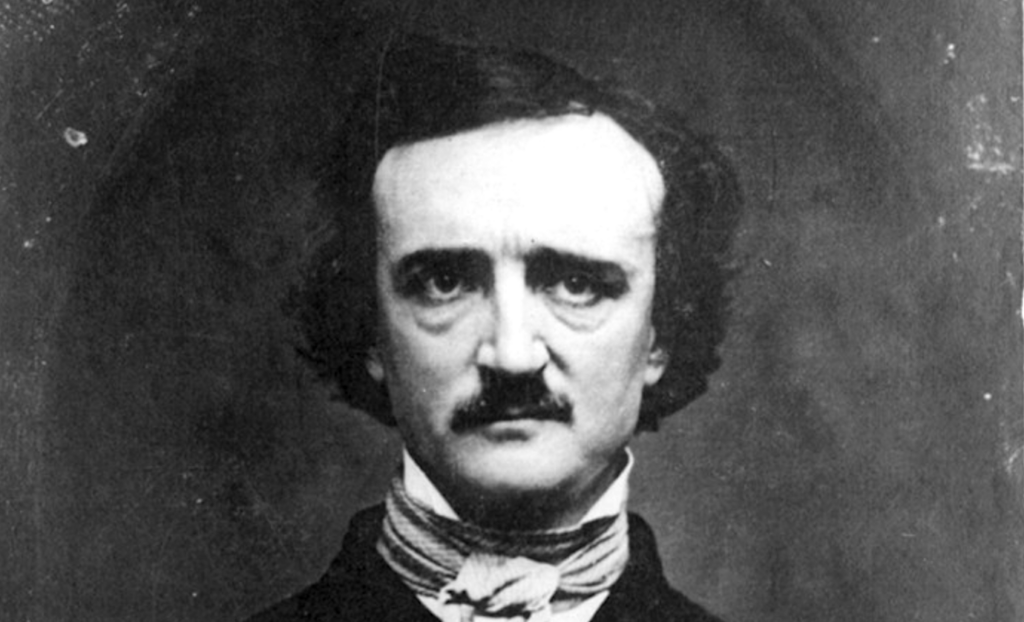
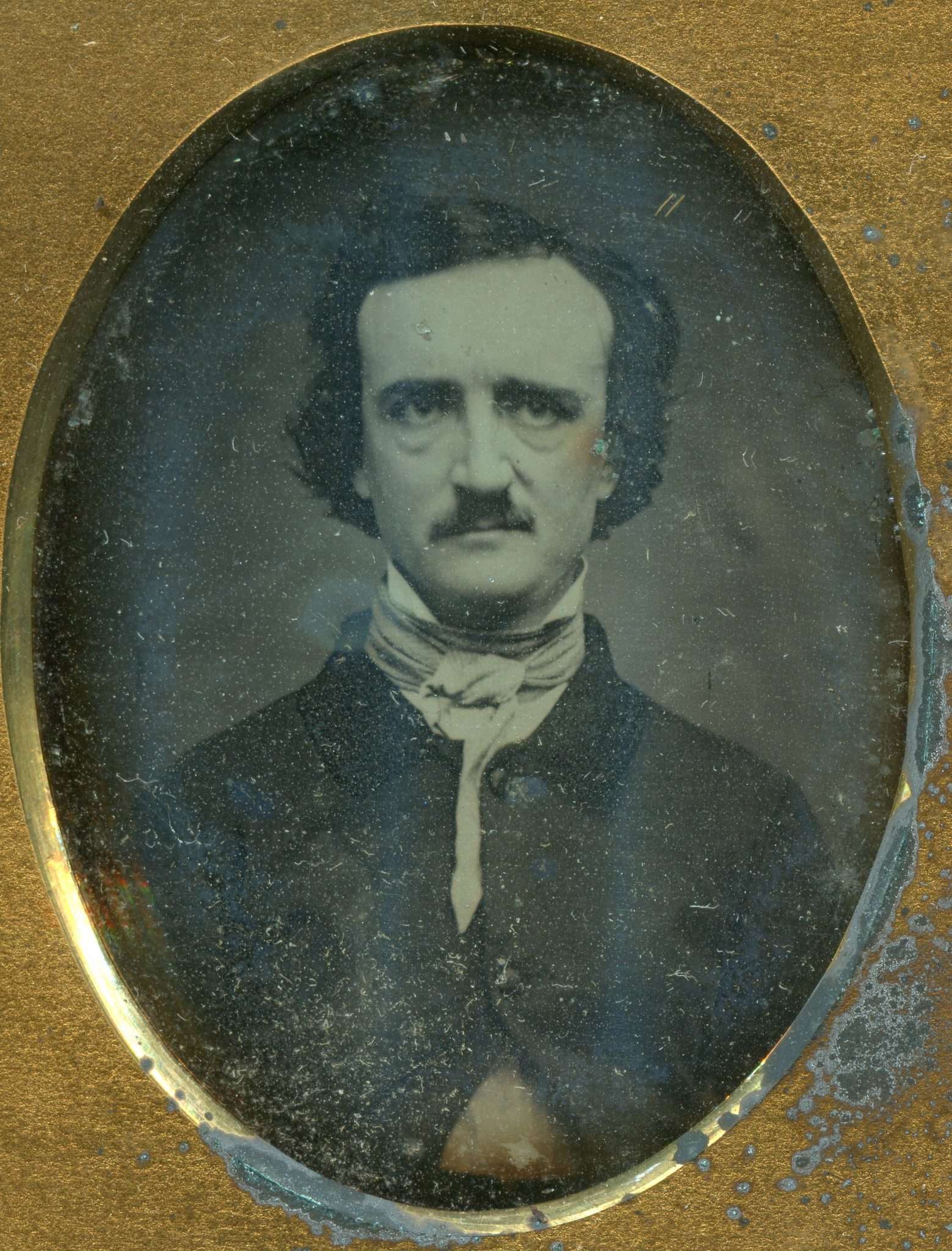

In the Halloween season, one American writer comes to mind more often than any other: Edgar Allan Poe. That owes in large part to his famously macabre tales like “The Tell-Tale Heart,” “The Cask of Amontillado,” and “The Masque of the Red Death,” written though they may have been with barely concealed contempt for their sensation-seeking magazine readership. But it also has to do with the image of the man himself. Or rather, it has to do with one image in particular: a daguerreotype photograph taken on November 9, 1848, at a Providence studio that has inspired practically every representation of Poe in popular culture since.
Known as Ultima Thule, this famous portrait was in fact just one of perhaps ten daguerreotypes for which Poe sat in his lifetime. Inventor Louis Daguerre’s early photographic process, which used silver-coated copper plates, fascinated Poe, who in an 1840 newspaper article called it “the most important, and perhaps the most extraordinary triumph of modern science.” He described its product as “infinitely more accurate in its representation than any painting by human hands,” though anyone sitting for a picture did have to sit still for minutes on end, resulting in not just the unsmiling visages we associate with nineteenth-century photography, but also in a combination of discomfort and slight blurring that can look vaguely otherworldly.
That quality may actually have enhanced the aura of Ultima Thule, which painter Michael J. Deas calls “the image of the tragic romantic poet: solemn, detached, consumed by his own wildly self-destructive nature.” It surely also made a difference that the portrait was made, in the words of poet Hervey Allen, “probably at the very hour when he looked the worst that he had ever looked in his life.” He’d been taken to the studio by a stranger with whom he’d spent the previous night binge-drinking. Just four days before that, he’d unsuccessfully attempted suicide by laudanum overdose, a rash action taken after the rejection of his marriage proposal by Sarah Helen Whitman, a widowed poet he hadn’t known long — and who would give her suitor’s immortal portrait its Latin name, borrowed from his poem “Dream-Land.”
The original daguerreotype, for which the studio probably paid the by-then notable, still perpetually hard-up Poe to sit, remained with its makers until it vanished around 1860, and its whereabouts have remained unknown ever since. But copies have allowed generation after generation of readers to behold Poe’s troubled visage when what Whitman called “all the stormy grandeur of that via Dolorosa had left its sullen shadow on his brow.” Through the drunken chaos and poverty of his life, the writer himself could see things to come. “The consequences of any new scientific invention will, at the present day exceed, by very much, the wildest expectations of the most imaginative,” he wrote, an observation true enough of photography 178 years ago, and no doubt even truer of what we use to make images today.
Related Content:
Iggy Pop Reads Edgar Allan Poe’s Classic Horror Story, “The Tell-Tale Heart”
Why Should You Read Edgar Allan Poe? An Animated Video Explains
The Mystery of Edgar Allan Poe’s Death: 19 Theories on What Caused the Poet’s Demise
7 Tips from Edgar Allan Poe on How to Write Vivid Stories & Poems
The First Photograph of a Human Being: A Photo Taken by Louis Daguerre in 1838
Based in Seoul, Colin Marshall writes and broadcasts on cities, language, and culture. He’s the author of the newsletter Books on Cities as well as the books 한국 요약 금지 (No Summarizing Korea) and Korean Newtro. Follow him on the social network formerly known as Twitter at @colinmarshall.


