







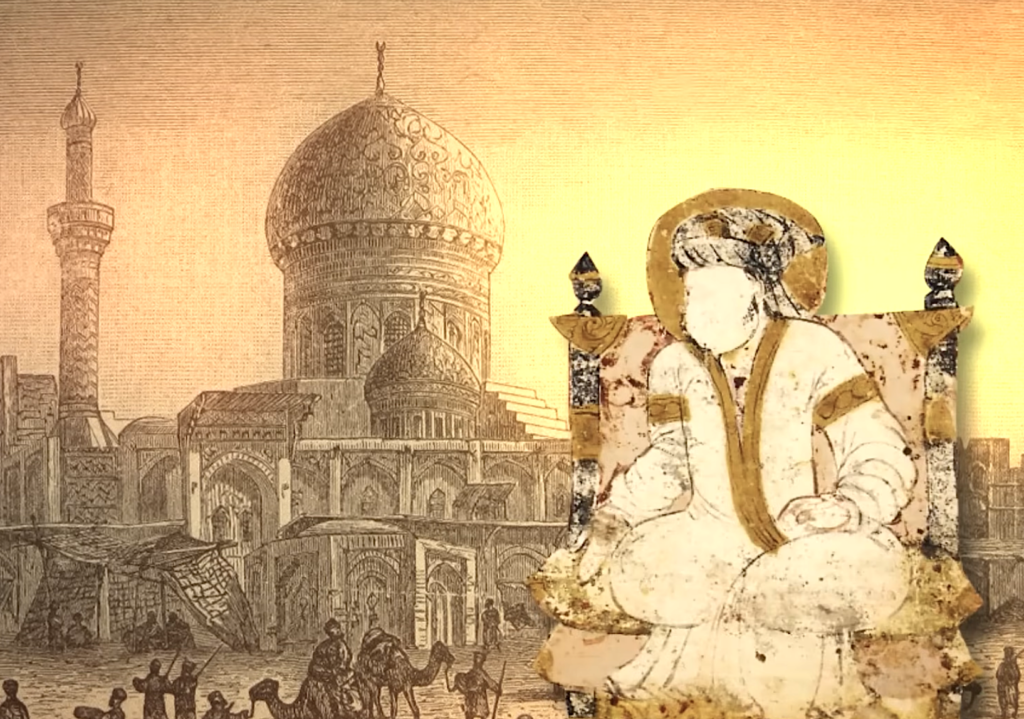
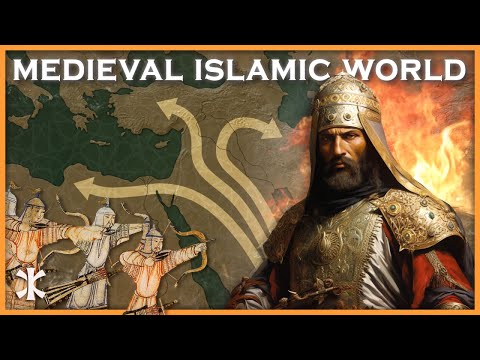
References to Islam in major media can make it sound monolithic and eternal. But it’s actually a much younger and less unified phenomenon than many of us imagine, especially if we happen to live outside the Middle East. As a religion, it dates back “only” to the seventh century, when it was founded by the Prophet Muhammad. As an engine of large-scale civilization, Islam took a bit longer to come into its own, and it hasn’t stopped undergoing divisions, transformations, declines, and rebirths since. Here on Open Culture, we recently featured a video from YouTube channel How So covering 1,000 years of medieval European history in 20 minutes. The one above does the same thing for the Islamic world’s first millennium, ending with the rise of the Ottoman Empire.
After he united the formerly polytheistic Arab tribes under his new faith, Muhammad lived for a decade longer. His death in the year 632 marked the last time that every believer in Islam would have been on the same page. It was at that point that the title caliph, or successor, was defined, and the first four caliphs after Muhammad held power for thirty years, the period in which the first Muslim state emerged.
The caliphate, as their territory was called, expanded widely across and out of the Arabian Peninsula, into the territories of the Byzantine and Sassanian empires. Supporters of the early caliph Ali ibn Abi Talib argued that he was the true heir to Islam, and detractors that he wasn’t. Eventually, the former group became known as the Shias, and the latter as the Sunnis, the two sides of a schism of which practically everyone today has heard.
Lesser known to the general public are the Umayyads, Abbasids, Buyids, and Fatimids, all of them major players in the continuing expansion of Islam well into the Middle Ages. But the still-familiar place names of Damascus, Jerusalem, Baghdad, and Constantinople (or, as we know it, Istanbul) are just as important in these chapters of the story of Islam, and without understanding that religion, it’s impossible to understand the diverse forms that civilization has taken in those places and others in the wider region of the world around them. The crisis of authority that began setting in after Muhammad’s death has, in some sense, persisted for nearly fourteen centuries now, more than long enough to have become a defining characteristic of the Islamic world. What shape its societies will take over the next millennium, it would surely take a prophet to know.
Related Content:
The Birth and Rapid Rise of Islam, Animated (622‑1453)
500+ Beautiful Manuscripts from the Islamic World Now Digitized & Free to Download
How Medieval Islamic Engineering Brought Water to the AlhambraThe Complex Geometry of Islamic Art & Design: A Short Introduction
The World Map That Introduced Scientific Mapmaking to the Medieval Islamic World (1154 AD)
1,000 Years of Medieval European History in 20 Minutes
Based in Seoul, Colin Marshall writes and broadcasts on cities, language, and culture. He’s the author of the newsletter Books on Cities as well as the books 한국 요약 금지 (No Summarizing Korea) and Korean Newtro. Follow him on the social network formerly known as Twitter at @colinmarshall.


