







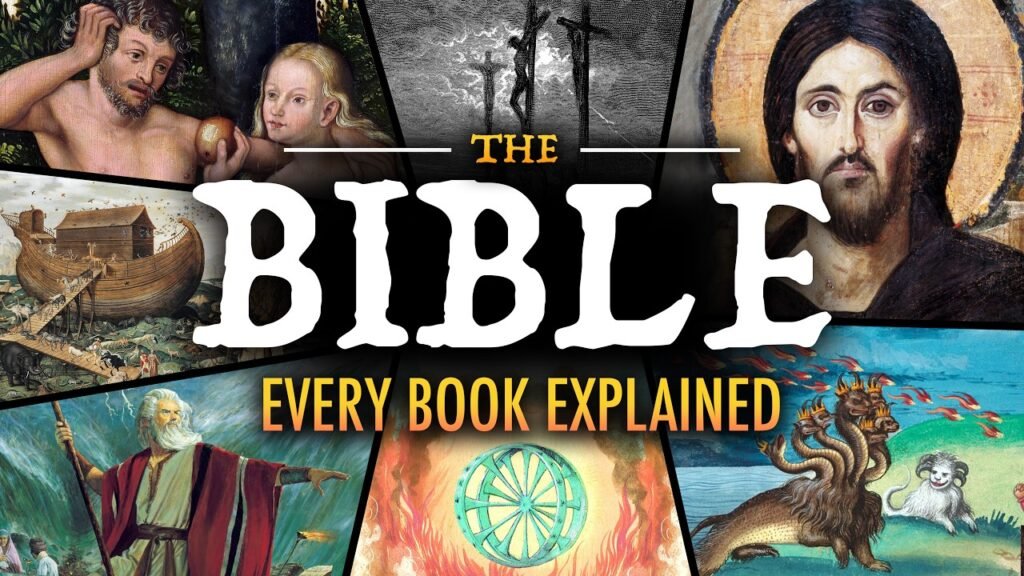

Whether we’re religious or not, we can all agree that the Bible isn’t just a book. In fact, it’s at least 66 of them, 39 Old Testament and 27 in the New, and that’s just in the Protestant tradition. Even if you’ve never read a single page of the Bible, you may well have a decent idea of what quite a few of those books contain: the stories of Adam, Eve, Noah, and the creation in Genesis; the plagues and Moses parting the Red Sea in Exodus; the various depictions of Jesus in the Gospels that define his popular image; the apocalyptic grotesqueries of Revelation. That’s even likelier to be true if you watch Hochelaga, the YouTube channel that just came out with a new video explaining all those stories and everything in between.
The result is long, to be sure, but not as long as you might expect: Hochelaga creator Tommie Trelawny manages to cover the 66 books of the Bible in two hours, the length of an ordinary feature film. For visuals, he draws upon the history of Western art, whose connections with Christianity and penchant for depicting the religion’s central events goes without saying.
In the case of biblical figures like Jonah, Job, or Lot’s wife (before or after her conversion into a pillar of salt), we’ve developed our own mental images at least through cultural osmosis, informed or not by the visions of Renaissance masters. But how many of us can call so easily scenes from the books of Obadiah, Haggai, or Philemon up in our mind’s eye?
This video may prove most helpful in providing a “big picture” of the Bible, allowing viewers with no experience of biblical scholarship to place isolated episodes to which they’ve heard references all their lives in context with each other. And yet, it’s also entirely possible that they’ll come out of these two hours wondering to what extent all these parts really fit together in the first place. Collected from material originally written over centuries and in various forms, not to mention passed through the vagaries of translation, the Bible could hardly be expected to present itself with polished coherence. Whether or not you believe it contains the word of God, you could well feel ready, after Hochelaga’s overview, to grapple with its text in all its linguistic richness, its surprising contradictions, and its moral grandeur — as well as its more-than-occasional strangeness.
Related Content:
Christianity Through Its Scriptures: A Free Course from Harvard University
Why Real Biblical Angels Are Creepy, Beastly, and Hardly Angelic
What Happened to Jesus’ Twelve Disciples After the Bible — It Wasn’t Pretty
Based in Seoul, Colin Marshall writes and broadcasts on cities, language, and culture. He’s the author of the newsletter Books on Cities as well as the books 한국 요약 금지 (No Summarizing Korea) and Korean Newtro. Follow him on the social network formerly known as Twitter at @colinmarshall.


