







Cinema keeps circling back to a familiar male fantasy, probably because men keep finding new ways to pretend they invented it: A woman is written, sculpted, programmed, wished into being. She answers loneliness, insecurity, humiliation, and desire.
Pygmalion gives us Galatea. Ruby Sparks lets a blocked novelist revise his dream girl by typing commands into a manuscript. Her and Ex Machina pull the fantasy into the age of artificial intelligence, where affection can be designed, simulated, or weaponized through a screen. Then, last year’s Companion turned that fantasy into one of the sharper recent genre films about control, consent, and the terror of discovering that someone else has been calling your autonomy love.
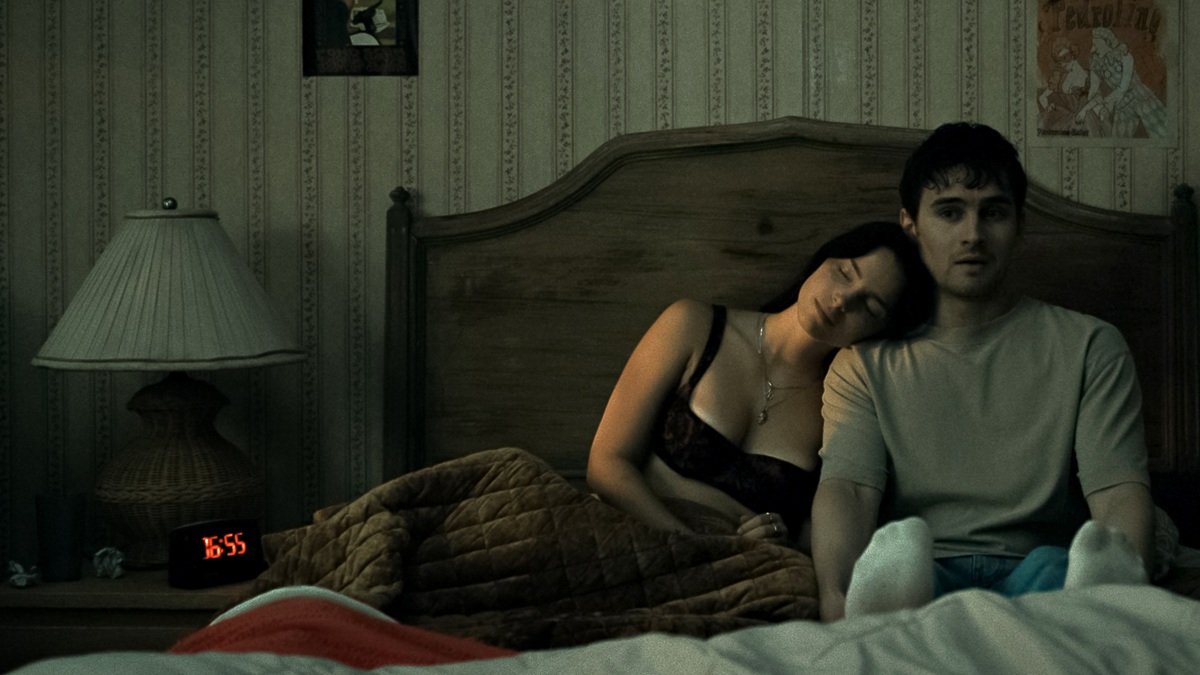
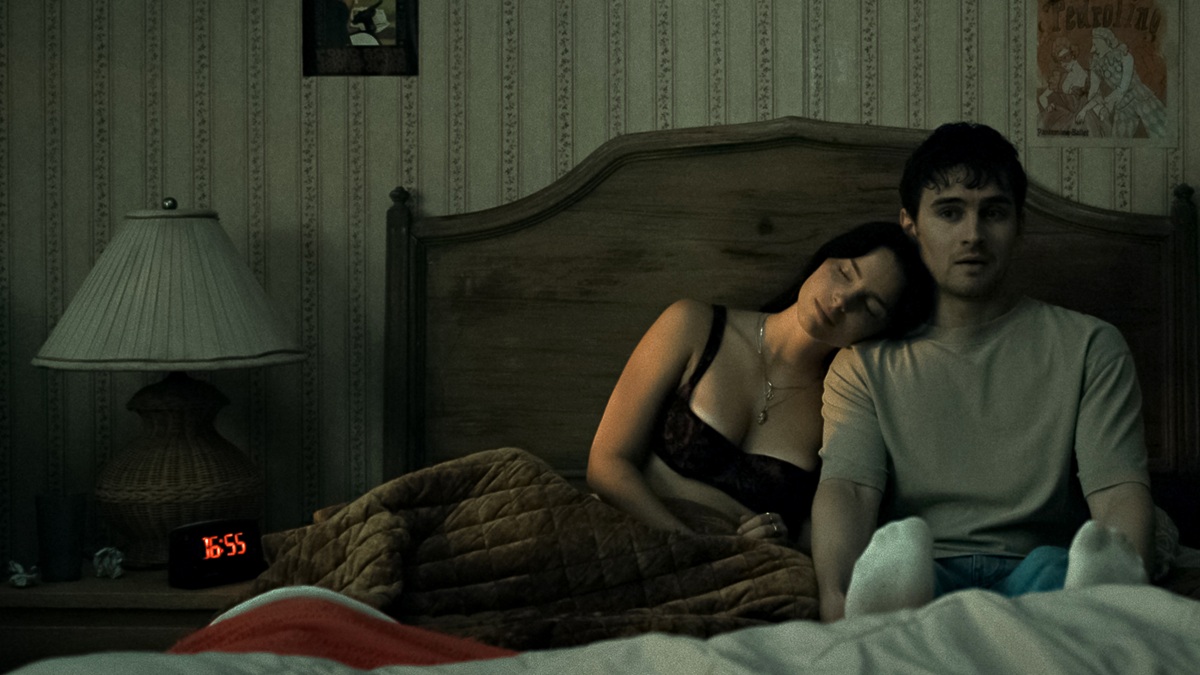
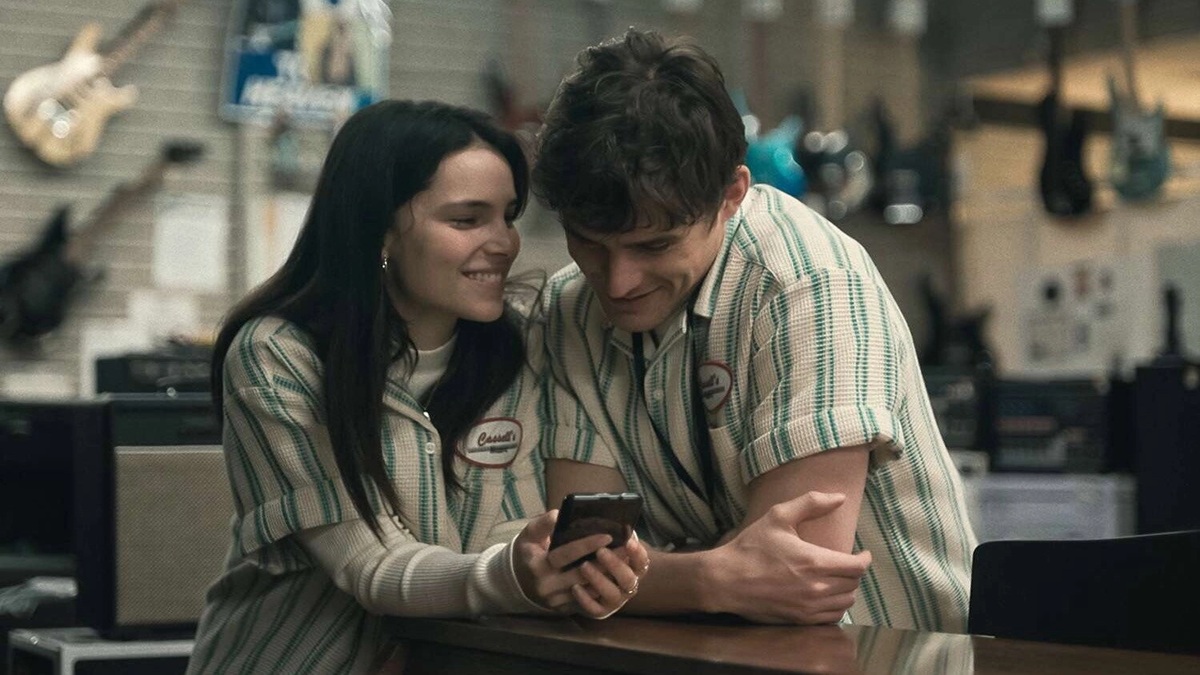
Curry Barker’s Obsession belongs somewhere in that lineage, though it arrives with dirt under its nails. It doesn’t have Companion’s sleekness or the same polish in its emotional architecture, but it’s grittier, nastier, and in its own blunt-force way, just as plugged into the ugly little circuits of modern desire. Barker strips the idea down to something almost fairy-tale simple: Bear Bailey (Michael Johnston), a shy music-store employee nursing feelings for his friend Nikki Freeman (Inde Navarrette), buys a novelty wish-granting toy from a crystal shop and wishes for Nikki to love him more than anyone in the world.
This isn’t romance. This is a man outsourcing rejection to a supernatural customer-service department. The joke, of course, is that the universe takes him seriously.
A Wish with No Romance in It
Obsession is sharpest when it understands that Bear’s wish is not an act of love but an act of evasion. He doesn’t merely want Nikki. He wants the asking removed—the awkwardness, the humiliation. The possibility that she might look at him, smile kindly, and say no. Worse, she might say she sees him like a little brother, which is the sort of emotional death sentence that men of Bear’s type spend years converting into personal mythology.
Barker is smart about this, and so he introduces Bear not as a cartoon predator. Instead, he’s soft-spoken, nervous, a little pathetic; and Johnston plays him with enough wounded decency that we can understand why the people around him keep giving him the benefit of the doubt. That benefit is important. Nice-guy horror only works if the “nice” part feels socially legible. Bear is not the loudest creep in the room. He’s the guy who seems too harmless to distrust, which is often how the harm gets smuggled in.
The premise could have easily hardened into a one-joke morality tale: man makes a selfish wish, man gets punished. Fortunately, Obsession is more slippery than that. Bear is horrified by what happens to Nikki, but he is also slow to surrender the advantages of what he has done. He can recognize that something is wrong while still accepting the parts of the wrongness that flatter him. That’s the nasty little contradiction Barker keeps poking. Bear wants innocence inside the consequences of his own desire. He wants Nikki’s devotion but not her suffering. He wants the fantasy without the invoice.
Uh, good luck with that, Bear.
The film’s timeliness is difficult to ignore. I don’t think Obsession needs to be reduced to “incel horror,” and that label can flatten the specific messiness of what Barker is doing. But the film plainly speaks to a culture where rejection is often re-coded as grievance, where affection turns into entitlement, and where intimacy is sometimes discussed less as a relationship than as access. Bear doesn’t wish for mutual understanding. He doesn’t wish to grow braver, kinder, more honest, or more worthy of Nikki’s attention. He wishes for her will to bend toward him.
That’s the horror. Not that Nikki loves him too much, but that she has been made to.
Nikki, Rewritten and Fighting Through the Static
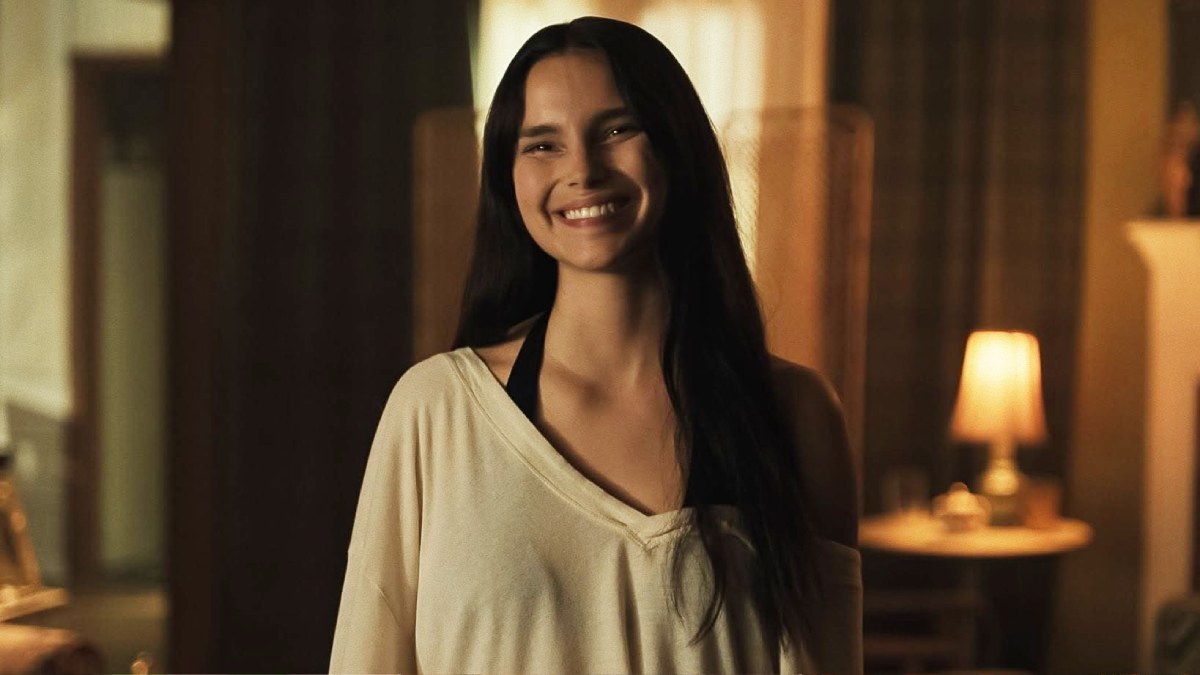
Inde Navarrette is the reason Obsession grows beyond its clever hook. She is a revelation here, and not in the lazy “breakout performance” way people throw around whenever an actor screams convincingly. Navarrette has to play several versions of Nikki without turning the role into a stunt: the actual Nikki before the wish takes hold, the obsessive Nikki produced by Bear’s desire, the almost-possessed Nikki whose devotion turns feral, and the trapped Nikki who occasionally claws her way back to the surface long enough to understand what has been done to her.
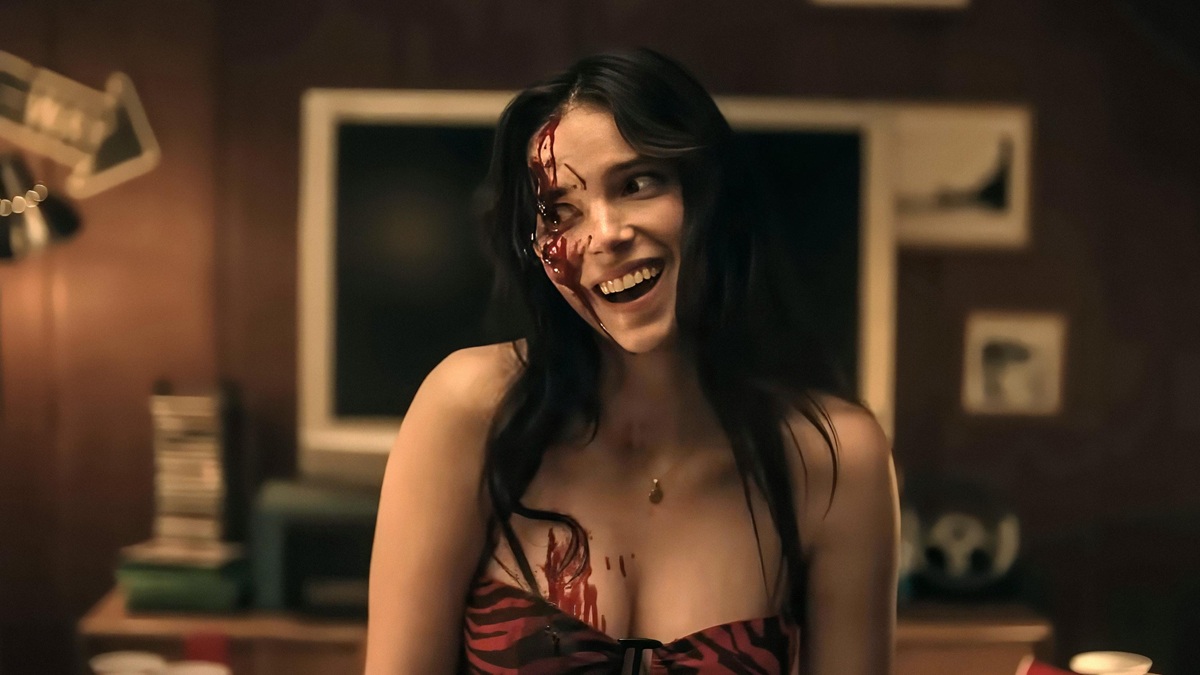
That is a harder assignment than the film lets on. The wrong actor could have flattened Nikki into a slasher-movie gimmick: crazy girlfriend, blood on face, big eyes, louder screams. Navarrette goes further. She makes the obsessive version of Nikki frightening because there are still fragments of a person inside her. Her smile can look rehearsed and involuntary at the same time. Her affection carries the wrong pressure, like a hand resting too tightly on your arm. Even her sweetness starts to feel invasive, not because Nikki herself is monstrous, but because Bear’s wish has twisted intimacy into surveillance.
The film’s strongest stretches grow from that wrongness. Nikki does not simply adore him. She performs devotion with all the human safeguards ripped out. Boundaries disappear. Privacy registers as betrayal. A harmless social situation can tilt into an emotional crime scene in seconds. Barker turns the fantasy of being loved “more than anyone in the world” into a practical nightmare. Anyone who has ever romanticized that kind of totalizing love should maybe be forced to sit through this with a clipboard.
Creating a Woman Whose Love is Designed Around Male Need
Navarrette also gives the film its emotional aftershock. For all its gore and dark comedy, Obsession is most disturbing when it lets us glimpse the real Nikki inside the performance Bear has imposed on her. The horror isn’t only that Bear’s wish makes her dangerous. The deeper violation is that it makes her unrecognizable to herself. It forces her to act out a man’s idea of perfect love until the performance eats through her body.
Curry Barker’s nasty supernatural horror-comedy turns male longing into a possession story, with Inde Navarrette clawing her way through one man’s ugliest fantasy.
That’s where Barker’s film brushes against the territory explored by Companion, Her, Ex Machina, and Ruby Sparks. The mechanics change. Artificial intelligence, writing, myth, magic twig from a crystal shop—cinema loves a convenient device. But the question remains: what does it mean to create a woman whose love is designed around male need? Obsession answers with less elegance than some of those films, but with a meaner sense of consequence. It takes the metaphor and makes it sweat.
‘Obsession’: A Horror with Dirt Under Its Nails
Barker’s background in the online DIY horror space shows, and I mean that as a compliment. Obsession has the feel of a filmmaker who knows how to seize attention quickly, then keep testing how far he can push the room before it turns against him. There’s a looseness to the construction that sometimes works in its favor. Scenes don’t always glide into each other with classical smoothness; they lurch, snap, and curdle. A party game turns unbearable. A phone call swerves into something surreal and cruel. And a romantic gesture rots before the brain has time to process why it feels wrong.
The film also understands that horror-comedy works only when neither side begs for approval. Barker gets some big laughs out of the absurdity of the premise, but he doesn’t let the humor soften the violation. If anything, the jokes sharpen the ugliness. Bear’s predicament is ridiculous until it isn’t. The One Wish Willow looks like the sort of useless trinket you might buy in a store that smells like incense and poor financial decisions, but the film has fun treating it with dead seriousness. That contrast gives Obsession some of its bite.
Here, the violence is ugly enough to matter. Barker doesn’t stage gore as a polite garnish. He lets it interrupt the movie, the way violence should. The brutality can shock, draw a sick laugh, or genuinely upset, sometimes in the same scene. A party sequence involving a fairy-tale retelling captures the film’s diseased comic register: childish, theatrical, grotesque, and sexually warped in a way that makes everyone in the room want to evaporate. The movie knows embarrassment can be its own kind of body horror.
Still, Obsession is not as controlled as it could be. Barker occasionally keeps pushing after the point has landed. A few escalations read less like discoveries than dares. The final stretch has power, but there are moments when the film seems too eager to prove how far it is willing to go. That eagerness supplies part of its energy, and I would rather watch a young filmmaker overshoot than sit through another algorithmically tasteful horror film sanded down for maximum prestige approval. Even so, the movie’s ferocity sometimes outruns its precision.
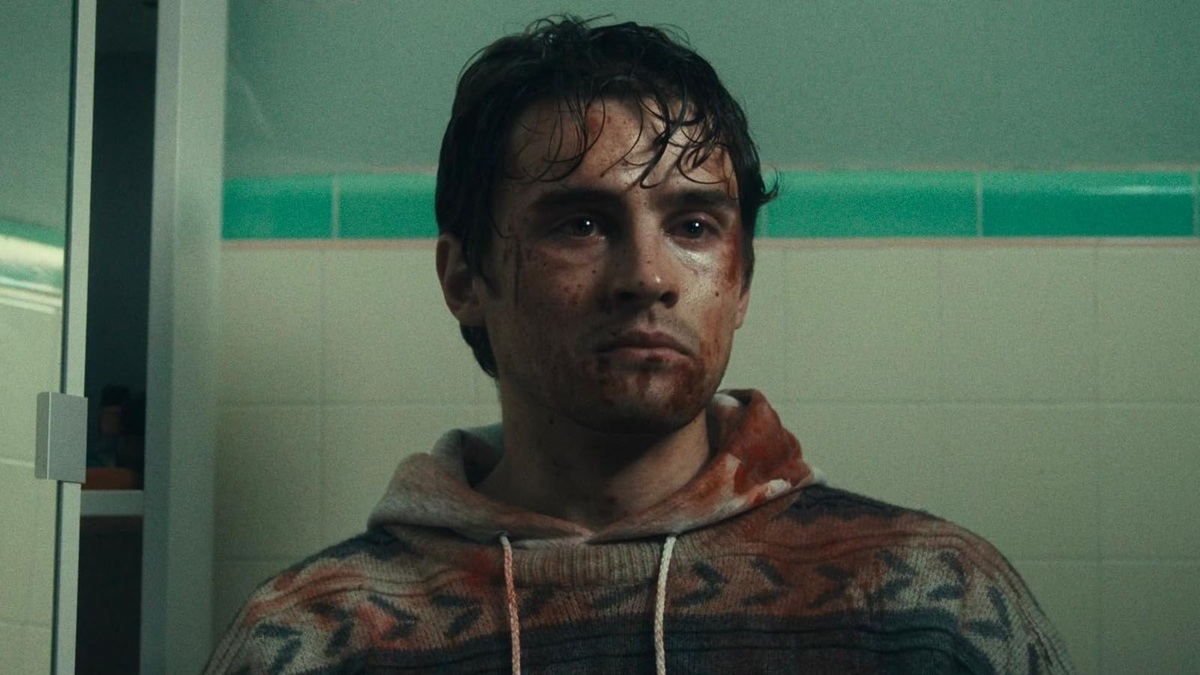
That also applies to Bear. Johnston does good work making him credible as a weak man caught between panic and self-pity, but the character can feel deliberately narrow. We understand his wound, his desire, his cowardice. But we don’t always get much beyond that. Maybe that’s the point. Men like Bear often mistake the intensity of their longing for depth. But there are places where a little more texture might have made his moral collapse sting harder.
The Problem of Looking Through Bear’s Eyes
The film’s most interesting weakness is tied to its best idea. Obsession is about Nikki being trapped inside Bear’s fantasy, but the movie itself is so closely shaped around Bear’s experience of that fantasy that Nikki’s perspective can feel trapped twice: once by the wish, then again by the screenplay. Barker knows this is dangerous territory. You can feel the film trying to interrogate the “crazy girl” image even as it uses that image for horror, comedy, and shock.
That meta quality is fascinating. Nikki behaves like the nightmare version of the woman Bear never asked for, except he did ask for her. He just didn’t understand the terms. The film turns the “crazy girlfriend” trope back on the man who created it, which is a sharp move. But it doesn’t fully solve the problem of how much time we spend watching Nikki’s body and behavior serve as evidence of Bear’s mistake. There is a difference between exposing a trope and feeding from it, and Obsession walks that line with a grin and a knife behind its back.
For the most part, I think Barker gets away with it because Navarrette keeps pulling Nikki back from the edge of caricature. She gives us enough pain, confusion, and flickering self-awareness to make the performance read as possession rather than a sexist punchline. Still, the concern remains. The film is so busy punishing Bear that Nikki’s own suffering sometimes functions as the instrument of that punishment. Her autonomy gets violated, her identity warped. And her body turns into the battleground. Bear learns the lesson. But it’s Nikki who pays the tuition.
Ultimately, that doesn’t make Obsession irresponsible, at least not to me. It makes it prickly. The discomfort is not incidental. Barker wants us to squirm at the fantasy, at Bear, at ourselves for laughing, and at the mechanics of a genre that has turned women into symbols of male guilt for decades. But making the audience uncomfortable and fully accounting for that discomfort are not the same thing. Obsession is strong enough to invite the argument. It may even need the argument.
What I appreciate is that the film never pretends Bear is simply cursed by bad luck. He is cursed by getting what he requested. The supernatural element doesn’t absolve him; it literalizes him. That makes Obsession more than a wish-gone-wrong thriller. Bear’s desire has always carried violence inside it. The wish just gives the violence a schedule.
A Filmmaker Worth Keeping Weird
By the time Obsession reaches its blood-soaked endpoint, Barker has made something messy in ways I mostly value. It has blunt edges, nasty jokes, and a few thematic bruises it doesn’t quite know how to treat. But it also has a live-wire quality many cleaner horror films lack. You can feel a filmmaker testing the limits of his control, sometimes beautifully, sometimes recklessly. That kind of recklessness can be annoying when it comes from empty provocation. Here, it feels tied to an actual idea.
The recent rise of filmmakers like Barker and Backrooms’ Kane Parsons suggests an encouraging, slightly terrifying thing for horror: some of the most interesting new voices are coming from people who learned to make images move online before the industry had time to tell them what not to do. Their work can be uneven. It can be too eager, too weird, too much. Good. Horror could use more of that. Studios should be careful not to grab these filmmakers by the throat the moment they show promise and squeeze them into something more presentable.
Obsession is not as nuanced as it needs to be, and I don’t think it cuts as cleanly into its chosen subject. But its grime has its own force. Sure, Companion is more elegant about male control, but Obsession is more feral about male wanting. One examines the app, the programming, the architecture of domination. The other looks at a man with a crush, a magic toy, and the emotional maturity of a damp cardboard box, then asks how much damage can follow one cowardly wish.
Quite a lot, apparently.
And that’s the nasty pleasure of Obsession. It takes a familiar fantasy and refuses to flatter it. To be loved without risk, without consent, without the other person’s full and frightening freedom: that is not love. It is possession dressed up in romantic lighting. Barker understands the difference, even when his film stumbles around the edges of it. And when Nikki finally breaks through the fantasy Bear built around her, the movie’s horror stops being theoretical. Someone has to wake up inside the wreckage of someone else’s desire.
That someone is Nikki. Bear merely got exactly what he wanted.


A self-described cinephile who can’t stop talking—and writing—about films. Paul also moonlights as ghostwriter and editor for a few memoirs. He currently resides in the Philippines.


