






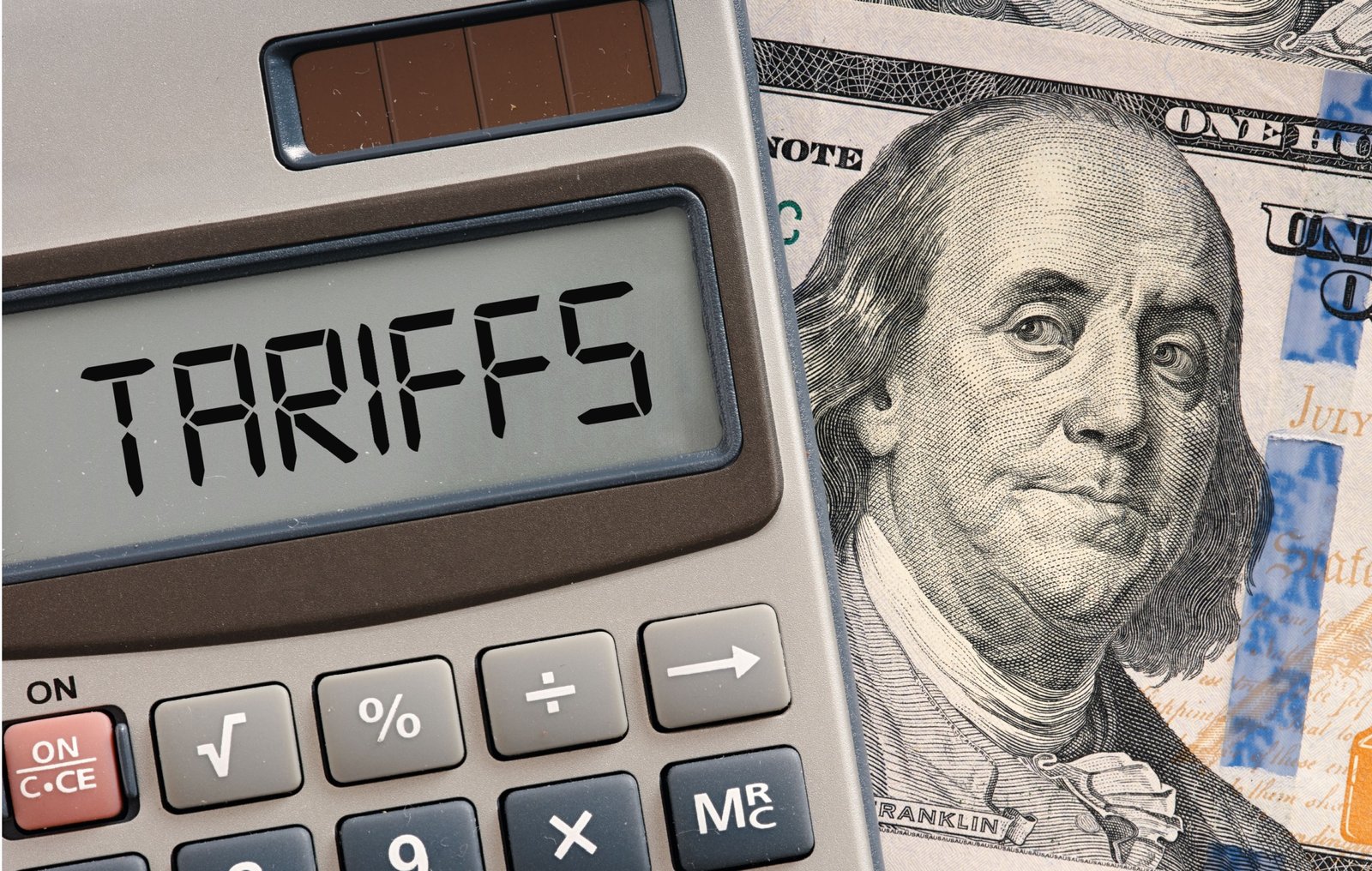
The Trump Administration has proposed coercive new tariffs that would not only raise costs during a national affordability crisis, but would also set a dangerous precedent for executive power.
The new tariffs of 10 percent to 12.5 percent would be imposed on Americans who import goods from countries that allegedly fail to take adequate action against the use of forced labor. It has been illegal to import goods made with forced labor since 1930, as USTR acknowledges. The new tariffs, which would apply to countries that provide 99.4 percent of US imports, would be based on whether other countries maintain and enforce similar measures.
The proposed tariffs, imposed under Section 301 of the Trade Act of 1974, are remarkably similar in scope to the Trump Administration’s illegal 10.8 percent International Emergency Economic Powers Act (IEEPA) tariffs and its illegal 10 percent Section 122 tariffs.
IEEPA tariffs were imposed because the United States allegedly faces a national economic emergency. Section 122 tariffs were imposed because the United States allegedly faces fundamental international payments problems. Section 301 tariffs have been proposed in response to foreign policies regarding forced labor that are allegedly unreasonable and burden US commerce.
Despite the three different justifications, the ultimate tariff actions are nearly identical. But the newly proposed Section 301 tariffs are particularly dangerous.
Section 301 actions can be either mandatory or discretionary. Mandatory actions include measures designed to address foreign actions that are unjustifiable or that violate our trade agreements. These measures must be roughly proportional to the foreign restriction imposed on the United States.
Discretionary actions include measures designed to respond to foreign actions that are unreasonable or discriminatory and that burden or restrict US commerce. There is no explicit requirement for these measures to be commensurate with the burden imposed by foreign actions.
Either way, Section 301 tariffs are intended to secure the removal of foreign barriers, not to impose long-term tariff increases on Americans. President Trump and former US Trade Representative (USTR) Robert Lighthizer imposed the biggest Section 301 tariffs in history to encourage China to modify its investment and intellectual property policies during President Trump’s first term. Unfortunately, those tariffs failed to achieve their stated goals. The tariffs were supposed to expire after four years, but the Biden Administration took the unprecedented action of extending them, and the Trump Administration is now considering whether to extend them again.
Because these proposed Section 301 tariffs are discretionary, not mandatory, current USTR Jamieson Greer arguably has the authority to pluck tariff levels out of thin air.
According to Greer, “The failure of our most important trading partners to address the importation of goods made with forced labor is unacceptable. This creates a dynamic where American workers are forced to compete globally on an unlevel playing field.”
His statement may appear to be relatively innocuous. In reality, it represents a massive power grab designed to give USTR unlimited control over imports.
If allowed to stand, the new template for future tariffs will be:
- Announce: “The failure of our most important trading partners to ______ is unacceptable. This creates an unlevel playing field.”
- Fill in the blank with anything that can be dreamed up.
- Assert the stated foreign action is unreasonable and burdens US commerce.
Section 301 then gives USTR blanket authority to impose duties, limitations, or even import prohibitions, unless the courts or Congress intervene. Future USTRs, regardless of political party, may inherit essentially unlimited tariff power.
A reasonable response would be for Congress to change our trade laws to require a vote on Section 301 tariffs. After all, in 1776, the American colonists declared their independence in part to escape the authority of a King who cut off our trade with all parts of the world.
Two-hundred and fifty years later, Congress should embrace our heritage by passing legislation like the No Taxation Without Representation Act, introduced by Sen. Rand Paul (R-KY). His bill and similar proposals requiring Congress to vote on tariffs are needed to fend off new threats to our freedom to trade, including the unprecedented expansion of Section 301 tariffs.


