







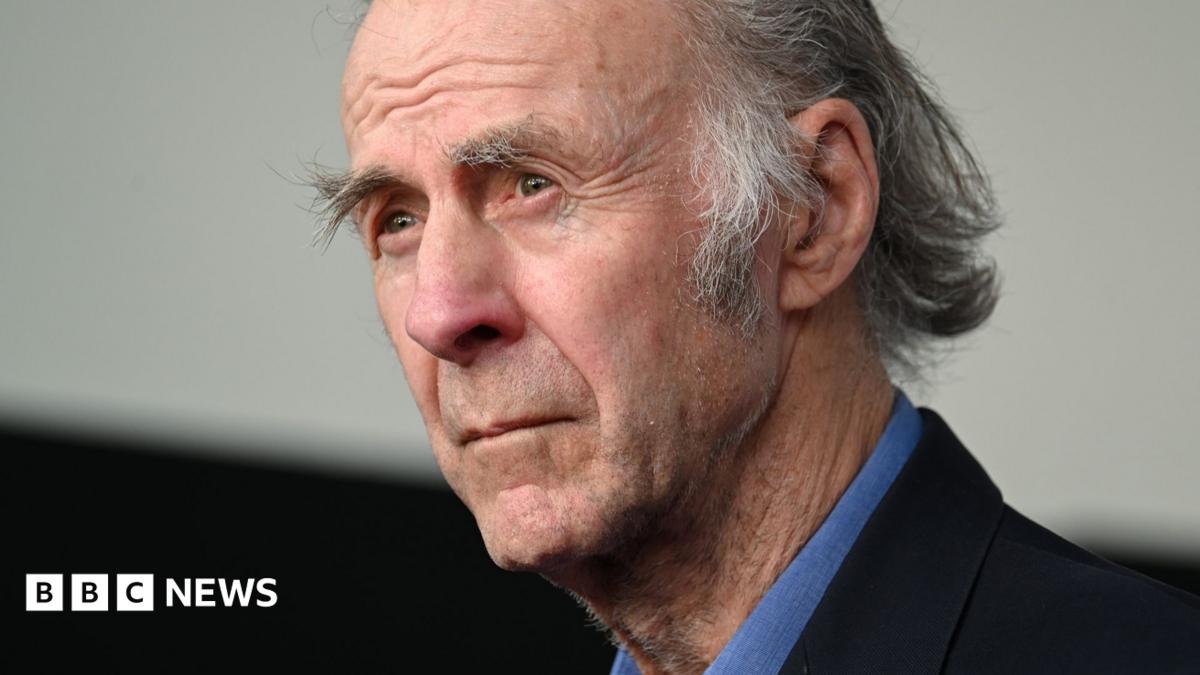
Relatives of the British explorer Sir Ranulph Fiennes have said it is “very painful” he appears to have been hidden away from them.
Speaking to BBC Newsnight, his former sister-in-law told the BBC that she did not know where he was, and nobody had been able to see him.
It has been alleged that Sir Ranulph, 82, has been admitted to a number of care homes under assumed names, after a family rift involving his second wife, Louise Millington-Cotes.
Louise Millington-Cotes did not immediately respond to the allegations, or the BBC’s request for comment.
Cheshire Police have said they are aware of the concerns regarding Sir Ranulph, and are satisfied he is living in an appropriate setting with suitable care.
They said there were “no immediate safeguarding concerns”.
Sir Ranulph has not been seen in public for nearly two years, just months after opening up about a diagnosis of Parkinson’s disease.
He was the first person to visit both north and south poles by surface means in the early 1980s and has been described by Guinness World Records as “the world’s greatest living explorer”.
Spending his childhood between the UK and South Africa, he joined the British Army after leaving school, going on to serve in the SAS.
Sir Ranulph’s stepson, Alex Millington-Cotes, told BBC Newsnight he wanted to see the power of attorney “removed from my own mother” and placed in the hands of people who “have fully his best interests in mind”.
“He’s not an isolated type of person, and so to see him isolated now is very painful,” he said.
Last week, he launched a crowdfunding campaign for legal fees to “locate and safeguard” the explorer, and so far it has raised almost £26,000.
He wrote that the fundraiser had been created as “a result of our concern and desperation” after trying “multiple avenues” to locate his stepfather.
Questions about Sir Ranulph’s whereabouts grew in prominence after a report in the Telegraph earlier this month, external in which “members of his inner circle” raised concerns about his whereabouts.
The paper also reported concerns about Sir Ranulph have been raised with the Office of the Public Guardian (OPG), the government agency which helps people to stay in control of decisions about their health and finances.
In a statement to the BBC, an OPG spokesperson said: “We have a strict duty of confidentiality to all individuals who have made a lasting power of attorney, and it would be deeply inappropriate to comment on a specific case.
“We take all safeguarding concerns seriously and investigate thoroughly where there is the evidence and legal basis to do so.”


