







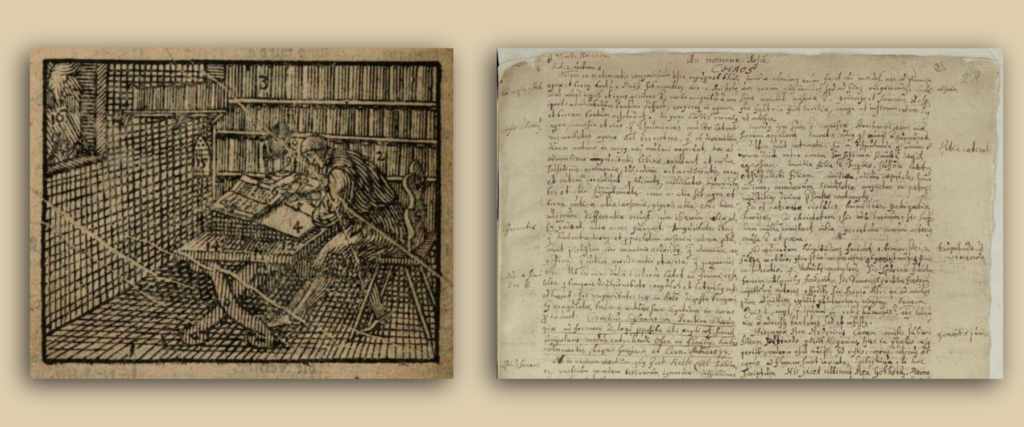
I recently heard from a historian of science at All Souls College, Oxford. He forwarded me an essay he wrote about Nicolaus Steno, a seventeenth-century anatomist and geologist who was later ordained as a Catholic Bishop.
Steno’s training as a scholar unfolded in a period challenged by a novel problem: information overload. Here’s how the essay describes it:
“Books were a leading distraction in the early modern period—and how envious we should be of those times. From the 1500s onward, with the development of the printing press and the humanist revival of ancient philosophies, knowledge became available at a much greater pace than ever before.”
This created pressing questions for aspiring thinkers, including: “How do we decide what to read? How long should we read it for? Must every single chapter be excerpted?”
Part of the solution was the development of “new note-taking techniques,” including the copying of excerpts into a master notebook called a book of commonplaces. (For more on this technique, I recommend William Powell’s delightful 2010 techno-history, Hamlet’s Blackberry).
But as the essay on Steno elaborates, better notes weren’t enough on their own, as there were simply too many good books available. In response to this reality, Steno, during his university studies in the 1650s, innovated some more advanced attention management strategies:
“[H]e learned to focus on specific themes, rather than letting his mind read multiple things quickly. A ‘harmful hastening should be avoided’ as he put it. His solution was to ‘stick to one topic.’
In practice, that meant blocking specific moments of time to go through the hardest tasks. As he wrote in his personal notebook, ‘before noon nothing must be done except medical things.’ … As Steno told a friend, he took ‘almost all the morning hours’ to read the works of the Church Fathers and old biblical manuscripts available at the Medici library.”
In other words, Steno created a method that combines what we might now call slow productivity, deep work, and time blocking.
The lessons here are clear. The use of our brains to think deeply about meaningful ideas isn’t new. It’s been at the core of the human experience since the early modern period, when access to sophisticated information first became somewhat widespread.
The best practices developed back then remain the best practices today: avoid overload, focus on one thing at a time, and block off specific hours in your day for your most mentally demanding efforts.

AI Reality Check:
Two weeks ago, a small financial services firm, Citrini Research, published an essay describing a bleak scenario in which AI agents destroy the white-collar job market in the near future. The piece went viral and was cited as a factor in a modest decline of the S&P 500 the next day.
The Citrini essay wasn’t the first to float this scenario. In recent weeks, there have been multiple credulous articles and op-eds in major publications proposing similar outcomes (e.g., 1, 2, and 3). But the negative impact on the stock market seems to have been the last straw for serious economists who began to push back on these technological ghost stories last week. (I particularly enjoyed a Deutsche Bank analyst who, perhaps borrowing some of my terminology, told the Times that the Citrini article had a “vibes-to-substance ratio” that was “undeniably high.”)
If you’re looking to reduce your blood pressure about this idea that AI is about to unravel the economy, I suggest reading a detailed response article published by an analyst from the Global Macro Strategies group at Citadel. It begins with a bit of finance geek sarcasm:
“Despite the macroeconomic community struggling to forecast 2-month-forward payroll growth with any reliable accuracy, the forward path of labor destruction can apparently be inferred with significant certainty from a hypothetical scenario posted on Substack…”
It then continues to systematically destabilize the economic naivety of these breathless op-eds and viral essays about how AI will dismantle the economy all at once. It certainly made me feel better.
(If you’re looking for additional soothing of your AI anxiety, then you should also check the first episode of my new AI Reality Check podcast series, which I published last Thursday. I have a new episode of the series coming out this upcoming Thursday as well.)


