






The Midnight Madness section at TIFF has a reputation for its histrionics and crowd-pleasing thrills, but it’s also a programming block that stealthily introduces delightful eccentricities off the beaten path. I love projects like “River,” “The Furious,” and “The Shadow Strays,” but they don’t even scratch the surface of the kind of weird that has graced the screens at the Royal Alexandra Theatre. There is a kind of iconoclastic spirit, a willingness to experiment with form and center unconventional characters that unites the outcasts under the same, comforting cinematic sky.
This dispatch features three films that play with the fluidity of memory, their unhinged visions no doubt bolstered by the fact that I caught most well after 12:15 AM.
Writer-director SABU’s “Arrested Memory,” which premiered first at Venice, may be steeped in the aesthetics and pastiche of neo-noir revenge thrillers, but make no mistake: this film is probably the silliest of the bunch. It is refreshing to see a project with performers so committed to physical comedy, and even though SABU keeps the film regulated squarely to the confines of entertainment, he finds ways to interrogate our easy willingness to uncritically listen to law enforcement figures.
I’ve become more weary of films that mine humor from cops’ incompetence and inadequacy, if only because we see the tangible, harmful effects of that negligence ripple through the country in real time. SABU’s film focuses on a famed Detective named Lee (Ethan Juan) and avoids this uncomfortable trap by keeping the realities of his abilities and strengths front and center.
Once Lee learns of a diagnosis that he’ll experience extreme memory loss, not too long after, he feels the effects in real time. He’s assigned to a new case to help bring back the son of a Japanese business tycoon, but he quickly forgets his place in the case or what he is supposed to do, resulting in him running away from his fellow police officers and the kidnappers alike. It escalates when he unknowingly goes on the run with the ransom money, causing his colleagues to believe he has defected.
Lee may have lost his mind, but he remains a top-tier brawler, and SABU uses this to explore thorny questions about what happens when unchecked power loses its supposed “moral” center. In his paranoia, the detective begins to fight back against friend and foe alike, liberated from the accountability that would normally keep him in check. The more you think about it, the more terrifying a character like Lee is, even though SABU keeps the film clipped at such a pace that it’s hard to fully reflect. The film is all tight, up-close camera angles so we can see Lee’s tortured expressions, interspersed with wider shots that frame how small Lee’s frame is against the backdrop of all that tears him asunder.
SABU’s film works best when it embraces its slapstick tone, and is less effective when it tries to make the audience lament its character’s memory loss. Plenty of films released this year focus on the destabilizing effects of losing one’s mental faculties, and “Arrested Memory” suffers when it tries to be both humorous and somber. SABU clearly put in the work to explore how a person in power who loses memory could lead to disastrous results; a gag involving a cell phone call is among the film’s funniest beats, yet it never overstays its welcome, even when it drags on. These scenes have an inventiveness that the film lacks when it tries to explore the reality of memory loss more straightforwardly. Like his protagonist, SABU should have felt free to forget certain trappings and embraced the freedom of spontaneity.

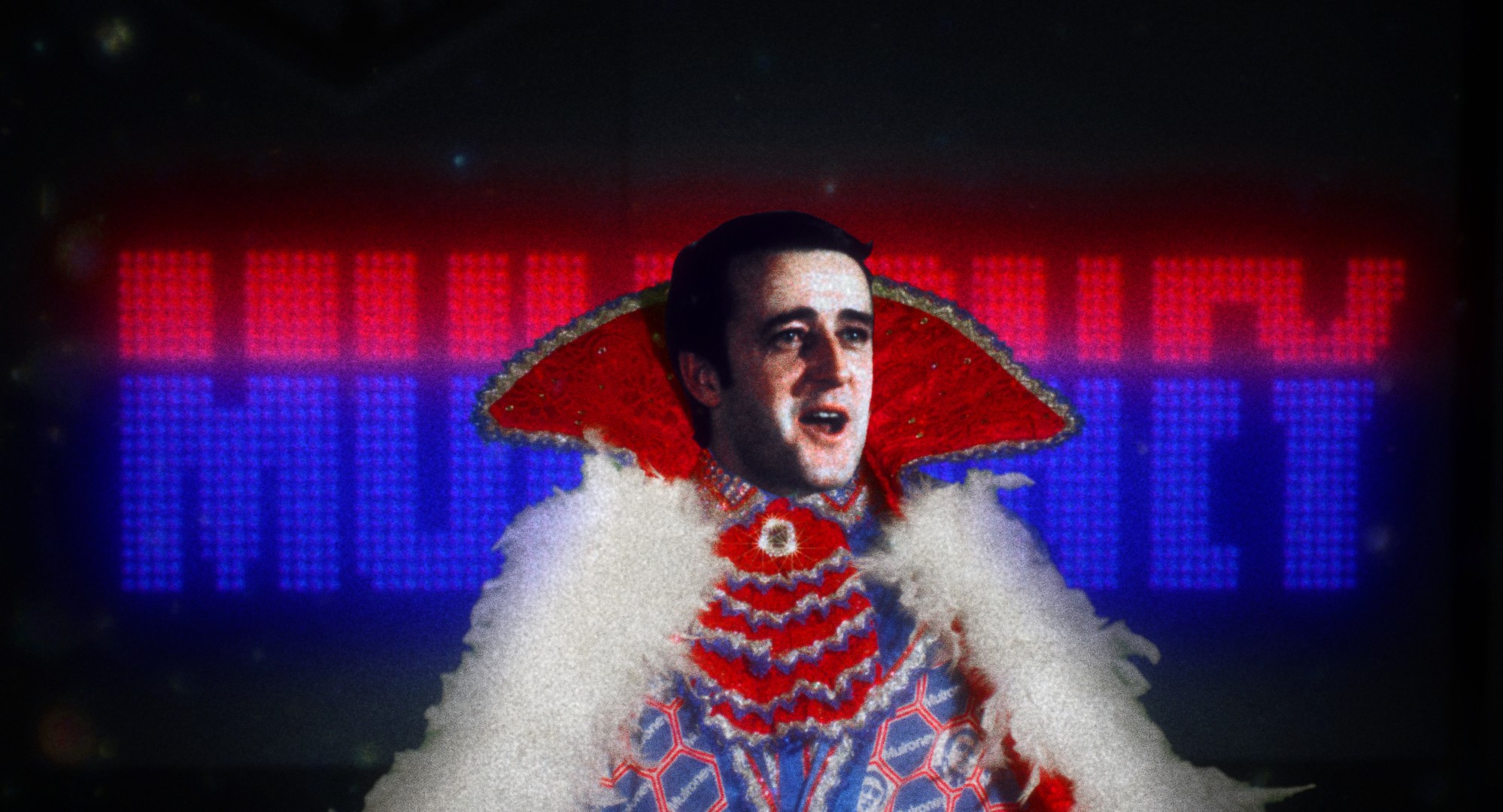
Speaking of inventiveness, with “Ladies and Gentlemen, Brian Mulroney,” director Matthew Rankin (director of last year’s stunner, “Universal Language”) takes the documentary genre and has it snort several lines of cocaine. It’s a film that is difficult to write about, in that trying to distill the experience of viewing is antithetical to the expansive, slippery nature of the film itself, but it’s a trippy joy ride through Canadian history and politics, delivered by a voice that knows history is rarely linear and always filled with tangents. There is something galvanizing about seeing a director take archival footage and blend it into a psychedelic smoothie that must be tasted in order to be believed.
Some context for courtesy (more than you’ll get from Rankin, who gleefully throws his viewers into the michegoss without even the courtesy of an opening crawl): Mulroney is the 18th-century Prime Minister of Canada, and the film charts his initial failed bid for the Conservative Party leadership in 1976 to his landslide victory in 1984.
What happens in between, though, is where Rankin flexes his creative chops, transforming the political speeches and debates into the spasmodic stuff of legend. Take a sequence where Mulroney takes part in a televised debate against Prime Minister John Turner. As Mulroney fires back at Turner, Turner’s figure glitches and scatters, as if Mulroney’s words are literally cutting him down. It’s one of the many ways Rankin remixes archival footage to not just tell a story as it happens but to present the feeling of what it must have been like to experience them in person.
“My enemies keep saying I can’t do things, then I go out and do it,” Mulroney says via voiceover in the film. I cannot claim to know the contours of Rankin’s opps, but that same defiant spirit can be said of Rankin, who will not rest with telling history in a way that’s sanded down. More often than not, it feels like the way stories are told is shrinking as much as the types of stories we get to see are dwindling.
It’s tough to say that the approach Rankin lands here, with its inaccessibility for those who are not aware of Canadian politics and its all-too-fast editing, is the way all documentaries move forward, but there’s a delight in its novelty. You may not walk away understanding this film, but you certainly will not forget it. As Rankin’s film shows, may we all take more care to think about how we discuss the stories that shape us.

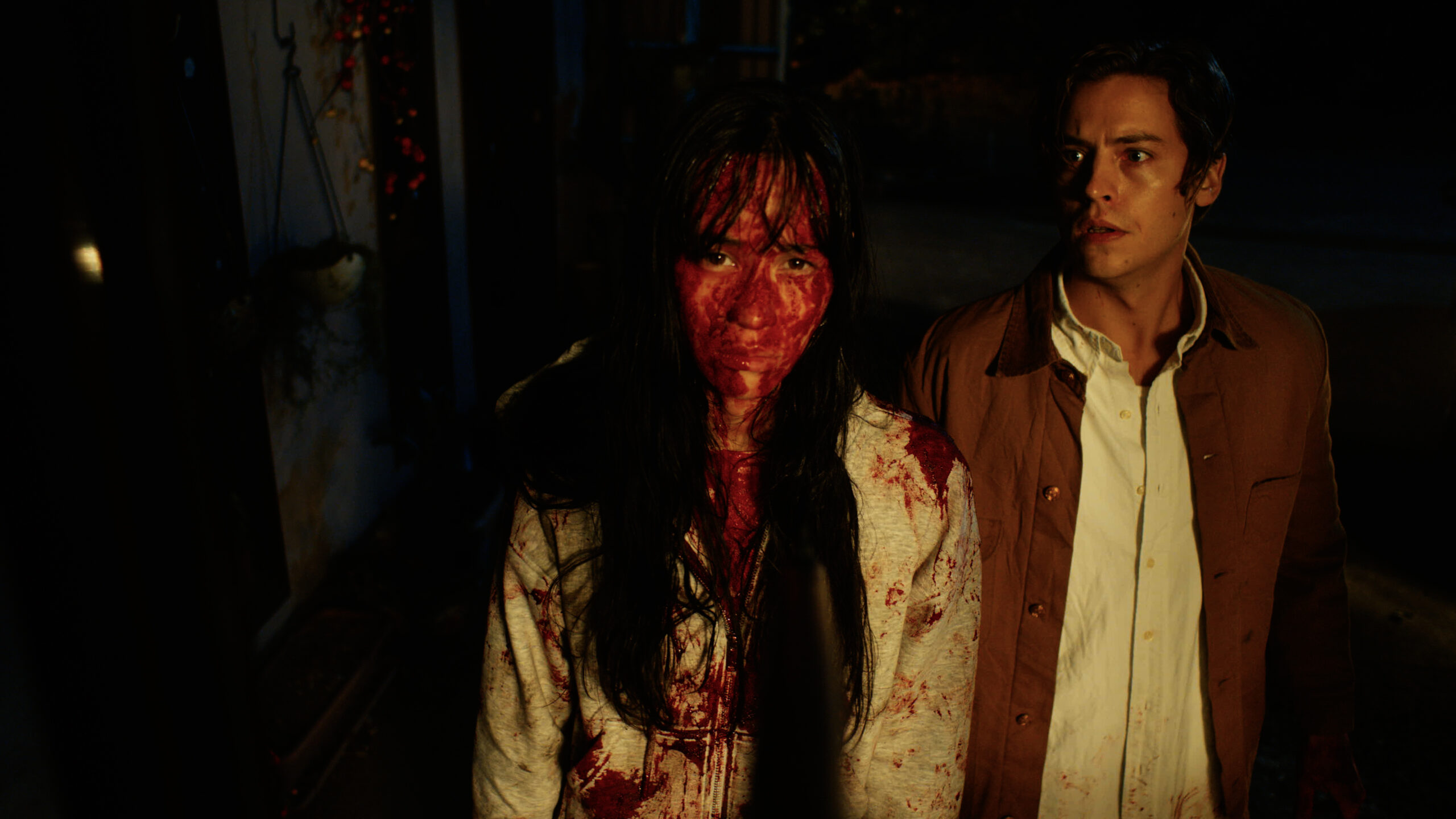
Also keeping the screen quite busy is director Eugene Kotlyarenko’s “Vintage Violence,” which, like his other projects, seems first and foremost preoccupied with how many smaller things he can fit in the frame at once. It has its own cheeky sense of humor and relies so much on Japanese puns that it wouldn’t be unfair to call it “Naked Gun” coded. But ultimately, its performers lovingly embody and ground the project amid its wild swings. As much as this wacky, lo-fi caper can feel a bit too busy for its own good, there’s something comforting about being taken for a ride by someone who knows exactly where he wants to go.
Then again, anyone who has taken a passing glance at Eugene Kotlyarenko’s anachronistic work knows the chaos that they’re getting into. Kotlyarenko sets the crosshairs of his long fascination with new media and algorithms against influencers and their platforms with “Vintage Violence.” Carter (Cole Sprouse) is a streamer who discovers a pile of old-school jeans and is convinced by a follower of his streams, Izumi (Kiko Mizuhara), to come to Japan to sell them.
Carter, believing Izumi’s business proposition is coded language for her interest in him, packs the denim in hopes of romance, unaware that the already-cuffed Izumi plans to work with her boyfriend, Hiro (Nijiro Murakami), to steal the denim. Hiro owes a debt to a crime boss, but the rules of atonement get muddled when the boss catches wind of Carter’s score and wants to seize it for himself.
There’s a lot of bloodshed and death for a movie that is really just about designer pantswear, and if you think about it too hard, the film feels like it can be too irreverent to be worth seriously considering. It’s a film that feels primed for our doomscroll era, as Kotlyarenko rarely presents any scene as it is: if characters are calling, he’ll show their split screens in the frame; if Carter is live streaming, we see not only him from the perspective of the film camera but the same scene from his phone camera.
This isn’t a film that waits for you to catch up; just when you think you have modulated to its wavelength, it introduces another character or wacky element that destabilizes you again. In that regard, it’s worth the trip, if only to test your resolve about how many times you can reinvest in the same movie. In a world of projects that can be punishingly banal because they’re straightforward, here’s a vision from Kotlyarenko that never ceases to be transfixing.


