







By April Foster, updated February 3, 2026
Many traders use leverage to increase their exposure to market movements. However, it’s a significantly high-risk, high-reward scenario that’s not suitable for everyone. If it’s an avenue you are looking to explore, choosing a suitable trading platform is an important factor.
Read on to discover five leading crypto exchanges that offer leveraging trading to make your search for the right trading platform easier.
Key Takeaways
- Crypto leverage trading refers to borrowing funds to increase your trading position, potentially increasing profits as well.
- It’s a high-risk, high-reward approach that can lead to huge losses, so it’s not suited for everyone.
- OKX, Kraken, MEXC, Gate, and Bitfinex are five of the major crypto leverage platforms on the market.
- The range of features and leverage offering available, ease of use, and regulatory compliance are all key elements to consider when choosing a platform.
What Is Crypto Leverage Trading?
Crypto leverage trading is the process of trading cryptocurrency pairs by borrowing funds to increase your position. This can amplify profits, but also losses just as easily, which is why it’s considered a high-risk trading approach.
It’s also sometimes referred to as margin trading, but the two are not synonymous. Leverage is the multiplier that increases your market exposure, while margin is the collateral you commit to open and keep the position active.
There are two main types of leverage trading:
- Isolated margin trading: Isolated margin limits the margin allocated to a single position, so a liquidation won’t automatically pull funds from the rest of your account balance.
- Cross-margin trading: Cross-margin trading uses your entire balance to maintain requirements across all positions (with the possibility of opening more than one at a time), which comes with greater risks, but also more flexibility.
Top Cryptocurrency Leverage Trading Platforms
OKX
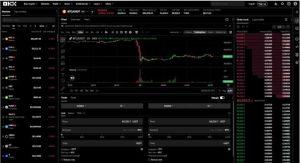

OKX is a popular global cryptocurrency trading platform with products and services for all experience levels, including a suite of margin and derivatives trading features.
Features
OKX lists hundreds of trading pairs across spot, futures, and derivatives markets, with a rich and detailed interface and plenty of analytics data.
Its leverage trading is easy to understand, while its Learn section offers detailed instructions and answers to all the questions on this trading feature.
Leverage Trading Offering
- Leverage available on: spot, futures, perpetual futures, options
- Max leverage: Up to 10x on spot, 125x on futures
- Leverage trading fees: Annual percentage rate starting from 1%, up to 10% for some stablecoins, plus a 0.02% maker and 0.05% taker fee
User Experience
Every spot trading pair on OKX shows the maximum leverage amount next to it, making everything transparent and easily comparable. Additionally, the platform is easy to understand and provides ample analytics. Whether you’re looking to track the ADA price in real-time or want to look at orderbook depth, you’ll find plenty of market data to help you make trading decisions.
Security & Regulations
OKX supports standard security controls, such as cold storage and multisig, as well as user-level protections, such as 2FA and withdrawal controls. It also emphasizes regulatory compliance, holding licenses in many of the territories in which it operates.
Kraken
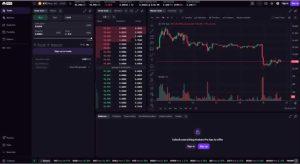

Kraken is a longstanding crypto trading platform that offers leverage as part of its Kraken Pro interface, aimed at more experienced traders.
Features
Kraken offers spot and futures trading, a wide range of markets, and detailed analytics for pro users. Its guides are found on the Kraken website (as opposed to Kraken Pro, which is where you’ll find leverage trading), and there you can learn how leverage works on this exchange.
Leverage Trading Offering
- Leverage available on: spot and futures
- Max leverage: Up to 10x on spot and 50x on futures
- Leverage trading fees: Kraken charges an opening fee between 0.01% and 0.05% on margin positions, with a rollover fee charged at the same rate for every four hours the position remains open. Standard spot fees also apply when opening and closing a position (0.02% to 0.40% depending on trading volume).
User Experience
Kraken lists the maximum leverage next to every trading pair where it’s available. You’re going to have to use the Pro version of the exchange for leverage trading, so make sure you’re checking the correct version of the platform. Otherwise, it is easy to fund, understand, and use.
Security & Regulations
Kraken is highly compliant with local regulations, widely licensed, and requires stringent KYC before you can trade with leverage.
MEXC
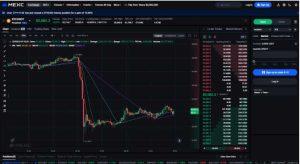

MEXC is a crypto exchange known for its very high leverage offering, although it is smart to begin lower to gradually become more used to market behavior.
Features
MEXC offers the usual spot and futures trading, but its incredibly high leverage is only applicable to futures trading pairs. For most of the pairs, the leverage goes up to 200x, with a select few going up to a whopping 500x.
Leverage Trading Offering
- Leverage available on: primarily futures/perpetuals
- Leverage trading fees: 0% maker and 0.02% taker fees (can vary by market/promo)
User Experience
MEXC features different filtering options for trading pairs, a relatively straightforward interface, and a fast sign-up process.
Security & Regulations
MEXC is compliant and secure, and it also offers limited-time events with loss coverage on users’ first net liquidation losses on the platform. However, this is a lottery-type event and not necessarily an ongoing protection, so you shouldn’t rely only on this to cover any losses.
Gate
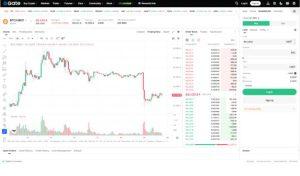

Gate, previously known as Gate.io, is a trading platform that offers a wide array of crypto assets. The exchange lists new tokens relatively quickly after their launch and offers high leverage on futures.
Features
Gate offers up to 100x leverage only on futures. Aside from this, it offers the usual spot and futures trading, different ways of earning yield on your holdings, and a help desk for beginners and experienced traders alike.
Leverage Trading Offering
- Leverage available on: futures only
- Leverage trading fees: futures fees generally start around 0.015%–0.02% maker and ~0.05% taker (varies by contract/VIP)
User Experience
Gate is easy to sign up for and pretty simple to navigate. Users with any previous experience in trading will be able to make their way through the exchange with little issue.
Security & Regulations
Gate operates through multiple entities and holds registrations or licenses in select jurisdictions, which are listed on its website.
Bitfinex
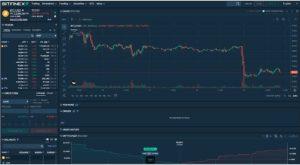

Bitfinex is a crypto exchange designed for intermediate to advanced users, with a data-driven interface and advanced trading tools.
Features
Bitfinex offers spot, futures, and perp futures trading, along with other options like securities and OTC trades for big investors. There are some guides related to leverage trading, but they deal more with the terminology used, rather than explaining everything from scratch.
Leverage Trading Offering
- Leverage available on: spot, futures, perp futures
- Max leverage: up to 10x on spot (selected assets) and up to 100x on derivatives
- Leverage trading fees: 0% maker and taker fees
User Experience
The platform requires some previous know-how to navigate, and is aimed at experienced traders. However, the Tour option in the top right corner can help you learn what each feature on the screen represents.
Security & Regulations
Bitfinex is regulated and compliant with local laws. It’s also secure, using cold wallets and multisig (among other things) to keep your funds safe.
What’s the Best Crypto Platform For Leverage Trading?
There’s no universal “best” leverage trading platform. Some exchanges prioritize regulatory clarity and conservative leverage limits, while others focus on broader market access and higher-risk products.
The right choice depends on how experienced you are, which markets you trade most often, and how much complexity you’re comfortable managing on a live trading screen.
Use this guide to narrow your options, then compare platforms side by side using the same trading pair and position size. That kind of practical testing often reveals more about usability and costs than any feature list ever will.


