



![AFG vs IND [WATCH]: Abhishek Sharma’s fielding brilliance removes Rahmanullah Gurbaz in the first T20I](https://kumbhcoin.org/wp-content/uploads/2026/09/AFG-vs-IND-WATCH-Abhishek-Sharmas-fielding-brilliance-removes-Rahmanullah.webp-300x156.webp "AFG vs IND [WATCH]: Abhishek Sharma’s fielding brilliance removes Rahmanullah Gurbaz in the first T20I")



During Wimbledon a few years ago, a thread about King Felipe VI of Spain went viral. It was posted to the social media platform formerly known as Twitter by Derek Guy, author of the menswear blog Die, Workwear! “Very rare to see this level of tailoring nowadays, even on the wealthy,” he commented on a photo of Felipe in the stands on the tournament’s last day. Even when not attending major sporting events, the king’s collars always hug his neck, his lapels are always well-proportioned, the lines of his coat always flow into his trousers, and his four-in-hand always has just the right asymmetry. For my money, such self-presentation befits not just a monarch, but indeed an emperor.
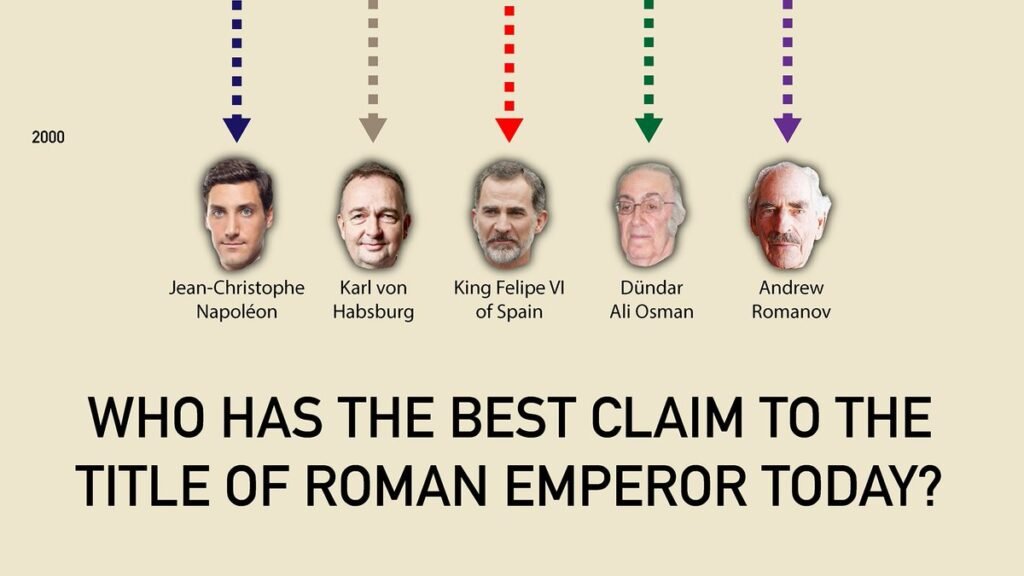
It so happens that Felipe is one of the most plausible candidates for that job, at least in the hypothetical scenario that the Roman Empire never declined and fell. He’s also the only actual sitting monarch among them, though each of the others can also make his own credible claim to the imperial throne.
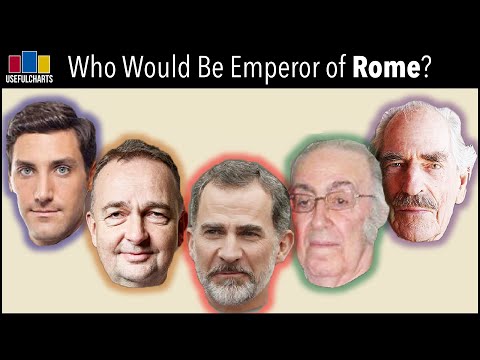
So who would rightfully rule over a still-extant Roman Empire? Understanding that history buffs enjoy nothing more than a speculative but knowledge- and judgment-intensive debate of that kind, UsefulCharts creator Matt Baker (whose online store happens to offer a Roman emperors family tree poster) once invited thirteen history YouTubers to cast their votes — and, of course, explain their answers.
In addition to Felipe, the roster of potential modern-day Roman emperors includes Dündar Ali Osman, heir to the Ottoman dynasty, and Andrew Romanov, heir to the Russian throne (a choice for those who accept the onetime description of Moscow as the “third Rome”). Alas, both have died since the making of this video, but the claimants who could draw their legitimacy from the legacy of the Holy Roman Empire live on: the still relatively young Jean-Christophe Napoléon, a descendant of Bonaparte’s brother, and Karl von Habsburg, the undisputed current head of the eponymous house. In favor of each candidate, one can make a variety of arguments political, cultural, and geographical. Nor, as some of us would insist, can we reasonably ignore the sartorial.
Related Content:
Ancient Roman Coins Reveal the Existence of a Forgotten Roman Emperor
Five Hardcore Deaths Suffered By Roman Emperors
The History of Europe from 400 BC to the Present, Animated in 12 Minutes
Based in Seoul, Colin Marshall writes and broadcasts on cities, language, and culture. He’s the author of the newsletter Books on Cities as well as the books 한국 요약 금지 (No Summarizing Korea) and Korean Newtro. Follow him on the social network formerly known as Twitter at @colinmarshall.


