







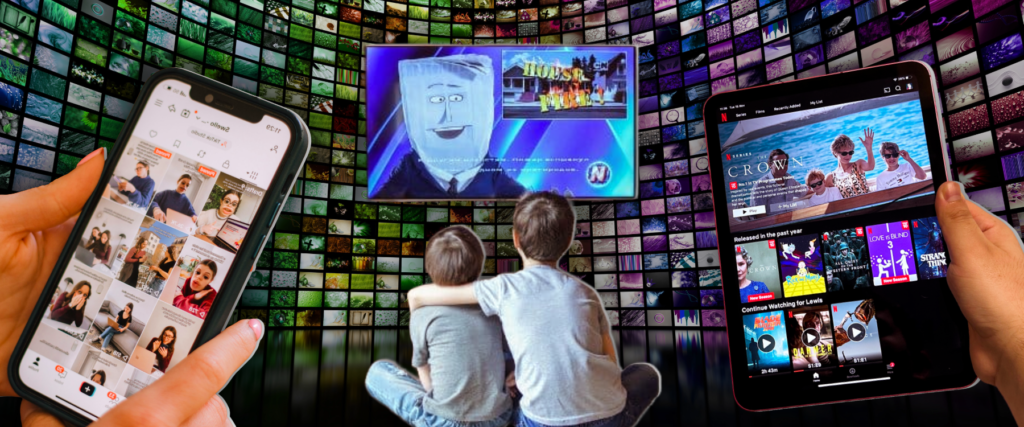
The recent announcement that Netflix formalized a deal to acquire Warner Bros. Discovery’s television and film studios, as well as the HBO Max streaming service, got me thinking about an essay that Derek Thompson published on his Substack titled “Everything is Television.”
“A spooky convergence is happening in media,” he begins. “Everything that is not already television is turning into television.”
Thompson then gives three examples of what he means:
1. Social Media is moving from offering connection to streaming videos (in court documents from this summer, Meta admitted that only 7% of activity on their Instagram platform involves users following people they know).
2. Podcasts are migrating inexorably toward video format.
3. Even AI is shifting toward visual media with the launch of new products like OpenAI’s Sora and Meta’s Vibes.
Television, of course, can mean many things. “When I say ‘everything is turning into television,’” Thompson clarifies, “what I mean is that disparate forms of media and entertainment are converging on one thing: the continuous flow of episodic video.”
While I might disagree with the premise that all media is turning into television (the global book and movie industries continue to chug along well enough in their traditional formats), I think Thompson is pointing out a real and very important trend that’s particularly pronounced in the world of internet media. (I’ve been arguing this point for a while now; e.g., the first 15 minutes of my most recent appearance on the Tim Ferriss Show, when I tried to convince Tim that video was inevitably going to devour audio podcasts.)
This leaves us with a significant question: why are these media devolving into glorified TV? In other words, why has the internet, which once held promise as the collaborative, intellectually stimulating alternative to the boob tube, increasingly churned out a stream of TikTok clones?
I’ve come to believe that the answer is less about technological determinism than it is economic determinism. The video entertainment sector is shockingly lucrative, with the combined online video and traditional TV markets projected to reach $1 trillion in annual revenue by 2030. The reason why internet media are becoming more like TV, then, is because that’s where the money is!
The broadband and wireless internet infrastructure we built through public/private partnerships over the last two decades turned out to be the perfect foundation on which a small number of tech companies could build competitors to the existing television and video market – to grab their share of that trillion-dollar sector. You can’t blame Meta, or Google, or even OpenAI for chasing that market. It was too big to ignore.
But here’s the silver lining: Once we realize that these companies’ apps are essentially glorified TV, we should feel more comfortable ignoring them. There was a time when platforms like Facebook and Twitter wanted to convince you that they were part of a new social fabric; a fundamental technology that responsible citizens couldn’t ignore. Not any more. If they’re just TV, then we can respond the way we always have: by simply turning off the proverbial set.


