







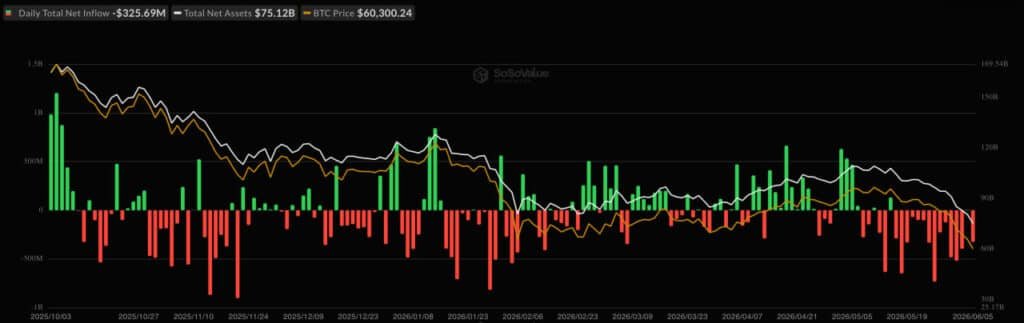
Bitcoin ETF News: U.S. spot Bitcoin ETF products just ended a record 13-day outflow streak on June 4, 2026, after hemorrhaging $4.4 billion, the longest sustained redemption run since these funds launched in January 2024.
BlackRock’s IBIT led the reversal, pulling in $47.66 million to produce a net inflow of $3.05 million across the complex. Bitcoin price at the time sat at $61,303, down 51.5% from its all-time high of $126,173 set on October 6, 2025.
That $3.05 million recovery represents less than 0.1% of what left during the streak. It is technically a reversal. It is not a flood. Here is the central tension this article unpacks: the headline says Wall Street fled Bitcoin, but the data underneath shows institutional crypto exposure never actually disappeared, it just moved.
EXCLUSIVE: Earn $10 USDC Via Binance Sign-Up
Bitcoin ETF Outflows News Explained: What the $4.4 Billion Number Actually Tells You
Think of a spot Bitcoin ETF like a shared storage locker. Investors hand their money to a fund manager, BlackRock, Fidelity, Grayscale, who buys and holds actual Bitcoin on their behalf. When investors want out, the fund sells Bitcoin to return cash. Thirteen days of that selling in a row is what pushed $4.4 billion back onto the market.
But context matters enormously here. Before the streak began on May 15, total U.S. spot Bitcoin ETF assets under management sat at roughly $104 billion. The $4.4 billion that left represents about 4.2% of that base, significant, but not a structural collapse.
AUM fell to approximately $82.8 billion by June 3, a drop amplified by Bitcoin’s own price decline rather than redemptions alon and is currently at 75B.

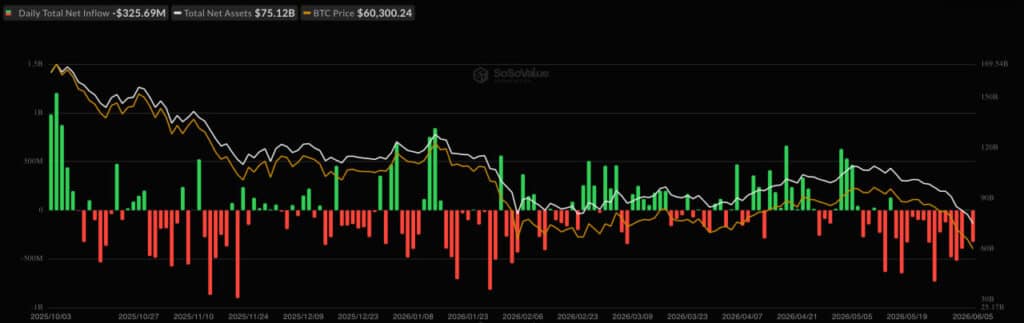
BlackRock’s IBIT absorbed approximately $3.3 billion of those outflows, about 75% of the total, which sounds alarming until you consider that IBIT is also the largest Bitcoin ETF by assets.
As our earlier coverage of the developing outflow streak walked through, the concentration of redemptions in the largest fund is consistent with institutional portfolio rebalancing, not a loss of conviction in the asset class. Fidelity’s FBTC recorded $456 million in outflows over the period; Grayscale’s GBTC shed $303 million.
Galaxy Research estimates that ETF holdings fell by roughly 59,000 to 60,000 BTC over the 13 sessions, meaningful spot supply returned to the market, which mechanically pressured Bitcoin price lower.
DISCOVER: Best Meme Coin ICOs to Invest in 2026
Rotation, Not Retreat: What Was Actually Happening Beneath the Headline
Strategy Executive Chairman Michael Saylor framed the outflow streak plainly in a post on June 4: “Capital markets are funding the AI buildout at historic scale: ~$400B over 6 months. Bitcoin ETFs have seen ~$4B of outflows since May 14, pressuring $BTC. This is a capital rotation, not a Bitcoin impairment. Volatility creates opportunity.”
The data supports that read. While Bitcoin bled, other corners of institutional crypto saw fresh money arrive. XRP ETF products recorded approximately $120 million in net inflows between early May and early June, as investors rotated into assets with more idiosyncratic near-term narratives. Solana-focused products drew consistent inflows with zero outflow days during the same window.
Capital markets are funding the AI buildout at historic scale: ~$400B over 6 months. Bitcoin ETFs have seen ~$4B of outflows since May 14, pressuring $BTC. This is a capital rotation, not a Bitcoin impairment. Volatility creates opportunity.
— Michael Saylor (@saylor) June 4, 2026
The Hyperliquid ETF category, including Grayscale’s HYPG filing and competing products, pulled in roughly $160 million within weeks of launching, making it one of the only major crypto ETF categories drawing fresh institutional capital during the Bitcoin outflow period. This is crypto ETF rotation in its clearest form: institutions adjusting the composition of their exposure, not canceling it.
The macro backdrop explains the timing. Strong U.S. jobs data and rising bond yields through May rekindled higher-for-longer rate fears, making risk assets broadly less attractive.
The AI infrastructure buildout, absorbing an estimated $400 billion in capital markets funding over just six months, competed directly for the same institutional dollars that might otherwise have entered Wall Street crypto vehicles. Bitcoin, as the largest and most liquid crypto target, became the easiest position to trim.
The signal that matters most: IBIT was the first fund to flip positive on June 4, not one of the smaller products. BlackRock’s institutional client base skews toward longer-duration holders. When they move first on the recovery side, it tends to precede rather than follow retail participation.
EXPLORE: Best Crypto Presales With Asymmetric Upside in the Current Market
The post Bitcoin ETF News: BTC ETFs Just Bled $4.4B, So Why Is Wall Street Already Buying Back In? appeared first on 99Bitcoins.


