







By Mark James, updated June 10, 2026
The street art market has a forgery problem. Banksy prints appear on auction sites without documentation. Photos of murals get flogged as limited editions by people who’ve never even crossed paths with the artist. Cheap knock-offs flood online marketplaces, making it hell for collectors and artists to pick the real deal from shiny fakes. By 2026, blockchain has become the sharpest tool to sort the mess — creating permanent, tamper-proof ownership logs that neither galleries nor dealers can quietly doctor.
How Blockchain Authentication Actually Works
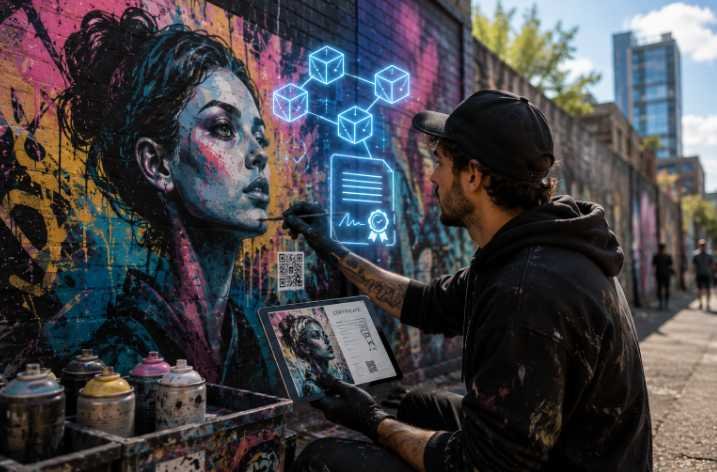
Every artwork gets a digital certificate locked onto a decentralised ledger. That record stores high-resolution images, mural GPS locations, timestamps, and the artist’s cryptographic signature. Once the data lands on the blockchain, nobody can alter or wipe it.
A collector scanning the QR code on a print can trace the full ownership trail from the original studio release to the current owner. Anonymous street artists can verify their work without exposing who they are. The setup confirms the piece is genuine while keeping the creator hidden.
Where the Street Art Market Stands in 2026
Major auction houses have begun requiring blockchain verification for consignments valued above £10,000. Christie’s accepted its first blockchain-verified Banksy print in February 2026. Sotheby’s followed with a dedicated street art sale in March, where every lot carried a Verisart certificate.
Secondary market platforms like Artsy now filter listings by “blockchain verified” status, and buyers pay premiums of fifteen to twenty percent for certified works. The technology has moved from experimental to expected within eighteen months.
Mobile Access for Busy Users
Speed and security define modern digital interactions. Casino online pokies applies these principles to entertainment access. Online pokies run smoothly on smartphones, requiring no desktop setup for gameplay. Australian casino game libraries load within seconds, and session progress saves automatically when users close the application. Online pokies app stores login credentials securely, so returning players skip repetitive verification steps.
How Blockchain Protects Creators Directly
Authentication technology serves creators across multiple dimensions, not just sales verification.
- Royalty enforcement – Smart contracts automatically send percentage payments to artists whenever a work resells. A graffiti artist whose mural photograph trades for £5,000 receives their agreed share within hours, not months of chasing dealers.
- Reduced legal costs – Disputes over authenticity now resolve by checking the blockchain record instead of hiring experts and lawyers. One British street artist reported saving £12,000 in legal fees during 2025 by relying on blockchain documentation.
- Global accessibility – An artist in São Paulo can authenticate a work for a collector in Tokyo without shipping anything or paying international courier fees. The certificate travels instantly.
- Anonymity preservation – Anonymous creators register works under pseudonyms while maintaining cryptographic proof of authorship. The public sees the tag. Only the artist controls the private key.
These four benefits have convinced a growing number of street artists to adopt blockchain verification. The upfront effort of registration pays back quickly through reduced legal exposure and new sales opportunities. Artists who have completed the process rarely return to paper certificates.
Why Some Artists and Dealers Remain Reluctant
Despite clear benefits, blockchain authentication has not become universal. Several obstacles continue to slow adoption across the street art world.
- Technical literacy gaps – Older artists and dealers who never engaged with cryptocurrency find the registration process intimidating. User interfaces have improved, but the learning curve remains steep for those outside digital native generations.
- Upfront registration costs – Creating a blockchain certificate costs between £50 and £200 per work. For an artist producing hundreds of small pieces annually, the expense adds up quickly.
- Mural authentication limits – Outdoor works fade, get painted over, or suffer damage. A blockchain record proves the mural existed but cannot guarantee its current condition. Buyers of mural documentation still need physical inspection.
These obstacles are real but not permanent. Technical literacy improves as younger artists enter the market. Registration costs have already fallen by forty percent since 2024 and will continue dropping. Mural authentication will always require physical inspection, but blockchain at least establishes a baseline of existence and authorship.
What Authentication Will Look Like in 2028
The technology will become invisible. Artists will register works through their phones automatically when uploading images to portfolios. Auction houses will refuse unverified consignments as standard practice. Insurance companies will offer lower premiums for blockchain-authenticated pieces because fraud risk drops substantially.
The debate will shift from whether to authenticate to which blockchain standard provides the most trustworthy record. Street art will finally have the provenance infrastructure that traditional markets developed over centuries, compressed into a few years of technological change.


