







Choosing the right hockey stick can completely change how you play the game. From puck handling and passing to shot speed and control, the type of stick you opt for directly impacts your performance on the ice. In this guide, we’ll demystify the different types of hockey sticks, the materials they’re made from, and how to pick a hockey stick by matching features like flex, curve, and size to your playing style.
Understanding Hockey Stick Materials
The modern hockey stick has come a long way from the straight wooden blades of the sport’s early days. When we look back on the rich history of hockey sticks, we can better grasp how innovation has shaped the game we know and love now.
Today’s sticks are designed with precision-engineered materials that enhance feel, control, and shot power. Choosing the right material starts with understanding how each type performs under pressure:
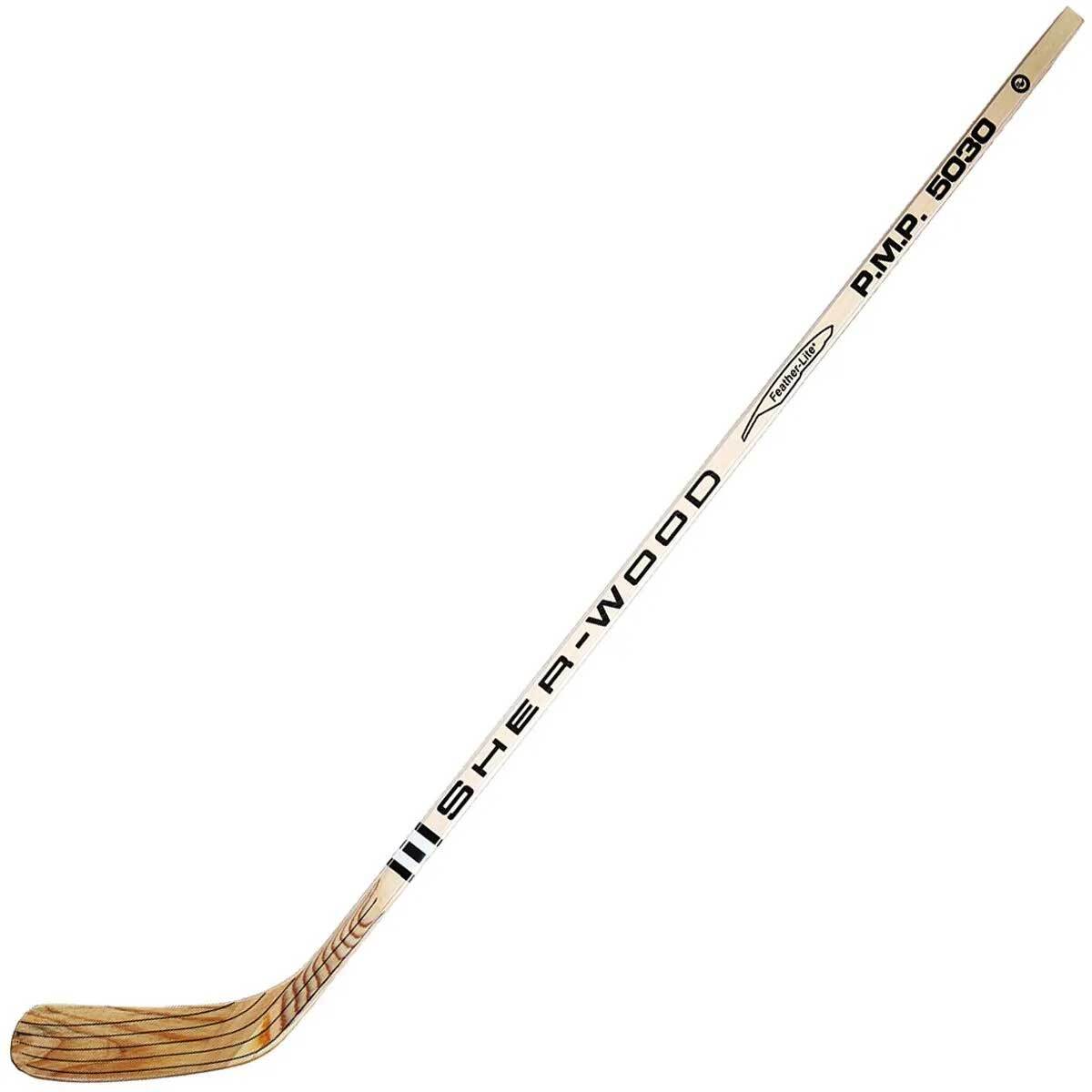

Wood Hockey Sticks
- Made from layers of ash, birch, or maple
- Offer a heavier, more traditional feel
- Provide excellent puck feedback and stiffness
- Cost less, making them great for beginners or casual players
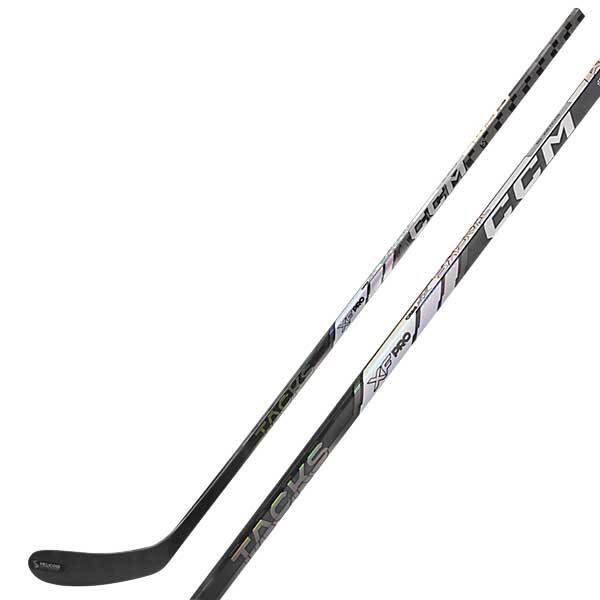

Composite Hockey Sticks
- Constructed from lightweight materials such as carbon fiber, fiberglass, and resin
- Offer more consistent flex and improved energy transfer
- More durable than wood, resisting chips and warping
- Provide balance, precision, and speed favored by competitive players
The shift from wood to composite completely changed the game; composite sticks help players shoot harder, pass more accurately, and react faster. Many elite athletes now rely on carbon fiber blends for superior control. The right material also depends on age, strength, and playing frequency, as younger players or those on a budget might start with wood, while older or more competitive players generally benefit from the advanced performance of composites. Learn more in our full guide to hockey stick materials.
Composite Hockey Sticks: Lightweight Power and Precision
Composite sticks are so commonplace in hockey today because they combine lightness and power. Made by layering carbon fiber sheets with epoxy resin, these sticks are carefully tuned for optimal strength and flexibility. Manufacturers adjust the carbon weave, resin content, and kick point placement to create sticks suited to different styles and positions.
Key Advantages of Composite Sticks
- Reduced overall weight for quicker reaction time
- More consistent flex, resulting in better shot accuracy
- Enhanced energy transfer for powerful slap and wrist shots
- Greater durability, even under high-impact play
- Available in multiple kick point designs for different shooting preferences
Players who rely on quick releases—such as forwards taking snap shots in tight spaces—often choose low kick point sticks, which bend closer to the blade. Defensemen, who need longer wind-ups and harder shots, prefer mid or high kick points for stability. Because composite sticks are so customizable, it’s easier to match them to specific roles and abilities.
Even though composite sticks tend to cost more than wood, their longevity, weight advantage, and shooting consistency make them a worthwhile investment for players prioritizing performance. Many players also explore hockey stick customization options—tweaking blade patterns, shaft shapes, or flex points—to create a stick tailored to their personal preferences.
Wood Hockey Sticks: Classic Feel and Durability
Wood sticks might be the oldest design in hockey, but they still have a loyal following to this day. Many players appreciate the solid, natural feel they provide on the ice; wooden sticks are crafted from durable hardwoods or layered laminates, creating a stiffer profile that provides better feedback when handling the puck.
Benefits of Wood Sticks
- Strong, sturdy build that gives players better puck awareness
- Inexpensive compared to composite alternatives
- Ideal for training sessions, pond hockey, or beginners learning technique
While heavier than composite models, the extra weight of wood can help players build strength and improve stickhandling control. For youth players, they’re an affordable way to develop solid fundamentals before transitioning to advanced materials. The main drawback is durability—wood sticks are more likely to chip, warp, or break—but their simplicity and low cost make them a practical option for recreational use or backup play.
One-Piece vs. Two-Piece Hockey Sticks
Another crucial factor to consider when shopping types of hockey sticks is their construction. Sticks come in two formats: one-piece and two-piece. Both serve the same purpose, but they cater to different preferences and performance goals:
One-Piece Sticks
- The shaft and blade are molded together for uniform flex and strength
- Provide superior energy transfer from hands to puck
- Offer consistent balance and a lightweight feel
- Preferred by most professionals and advanced players
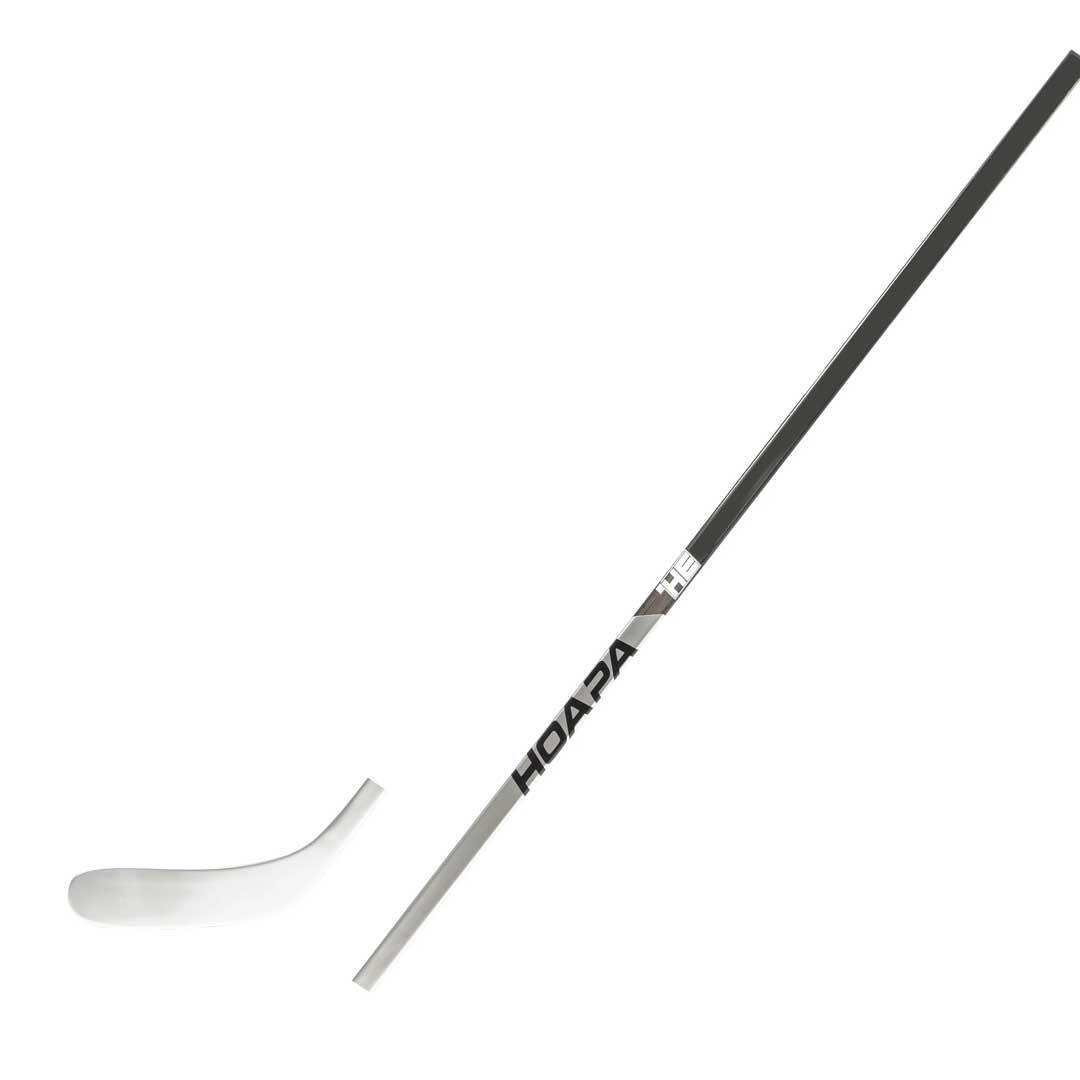

Two-Piece Sticks
- Feature a separate blade and shaft that can be mixed and matched
- Allow players to replace the blade without buying a new shaft
- Slightly heavier but provide versatility for customization
One-piece sticks maximize shooting efficiency and are ideal for players seeking speed and responsiveness. Two-piece sticks, however, are great for players experimenting with hockey stick blade types, since blades can be swapped to test different patterns and lies. For example, players transitioning from defense to forward might change blade curves to adjust their puck lift and control. Each design offers a balance between flexibility and performance, so the right choice depends on how much customization and feedback you want.
Matching the Right Stick to Your Play Style
Finding the right stick isn’t only about the material in question. More specifically, it’s about matching your gear to how you play; position, strength, and technique all determine the best hockey stick for your position and playing style.
Forwards
- Prefer shorter sticks for agility and close puck handling
- Often select lower flex ratings (70–85) for quick wrist and snap shots
- Choose open curves like the P28 for faster lifts and precise control
Defensemen
- Use longer sticks for reach, poke checks, and blocking shots
- Favor stiffer flex (90–110) for powerful slap shots and long passes
- Opt for moderate blade patterns that balance accuracy and puck protection
Goalies
- Need specialized sticks with shorter shafts and wide paddles
- Prioritize stiffness and control for rebound management and durability
Flex and curve are two of the most important factors when choosing a stick. Flex refers to how much a stick bends when pressure is applied. A lower flex allows easier loading for quick-release shots, while a higher flex produces more power but requires greater strength. Learn more about hockey stick flex and kick point. Curves, on the other hand, influence control and shot style. A deeper curve makes it easier to lift the puck but may reduce backhand accuracy, while a shallower curve improves passing precision. Explore different hockey stick curve types here.
Finally, stick size can’t be ignored. The proper length ensures balance between control and reach. Too long, and you’ll lose handling precision; too short, and you’ll compromise defensive reach. For detailed sizing recommendations, check out Pro Stock Hockey’s hockey stick sizes chart. The perfect combination of length, flex, and curve allows each player to feel confident and consistent on the ice.
Why Pro Stock Sticks Offer the Best of Every Type
When you want professional-grade performance, pro stock hockey sticks deliver the best blend of quality, value, and technology. Built to NHL player specifications, these sticks are designed for maximum responsiveness and balance. Every model is crafted from high-end carbon fiber and undergoes additional testing for durability and flex consistency.
Advantages of Pro Stock Sticks
- Manufactured to meet exact NHL player preferences
- Feature unique shaft shapes, custom flex points, and special blade patterns
- Offer better weight distribution and balance than retail models
Pro Stock Hockey carries models from leading hockey stick brands such as Bauer, CCM, Warrior, and True—each known for engineering innovation and consistency trusted by professionals worldwide. These sticks aren’t reserved for the pros; serious players at any level can benefit from the feel and reliability of a pro stock design. Because each stick is tailored for professional performance, players often find a better combination of stiffness, grip, and energy return.
Pro Stock Hockey provides a wide range of authentic options directly from professional locker rooms. You can shop NHL Player Sticks or browse affordable used hockey sticks. Many players appreciate the authenticity of pro stock models because they reflect the small but meaningful tweaks NHL athletes request—adjustments that often improve the balance, shot response, or durability of the stick.
FAQs About Hockey Stick Types
How many types of hockey sticks are there?
There are two main types: wood and composite. Each offers unique benefits in terms of feel, performance, and cost. Within these categories, you’ll also find variations in construction (one-piece vs. two-piece) and materials.
How many types of hockey are there?
There are several, including ice hockey, field hockey, roller hockey, and ball hockey. Each requires sticks suited to the playing surface and rules.
What are the differences between hockey sticks?
The biggest differences come from materials, construction, flex rating, and curve. These all influence how the stick handles, shoots, and feels during gameplay.
What is better, P28 or P92?
It depends on your shooting style. The P28 has a more open face and helps players lift the puck quickly for wrist and snap shots. The P92 offers a deeper pocket for better puck control and passing.
Find Your Perfect Hockey Stick Today
Your hockey stick is your most important tool—an extension of your hands, your balance, and your skill. From the sturdy reliability of wooden models to the high-performance engineering of carbon fiber composites, every type offers something different for every player.
Pro Stock Hockey makes it easy to compare features, understand specifications, and find professional-quality sticks for all budgets and experience levels. Browse our full collection to find the ideal match for your play style, position, and goals.


