





Emanuel Lewenstein and his wife, Hedwig Lewenstein Weyermann, passed the piece to their children before it was stolen in 1940

:max_bytes(150000):strip_icc():format(jpeg)/kandinsky-colorful-life-101626-26cd78065e83416696dd5d740d04ba84.jpg)
Credit: Buyenlarge/Getty
NEED TO KNOW
- A 1907 painting by Wassily Kandinsky that belonged to Dutch-Jewish collectors Emanuel and Hedwig Lewenstein before the Nazi occupation was sold at an auction finalized on Oct. 14
- Their heirs sought its return decades after the bank BayernLB acquired the painting in 1972
- Christie’s described the Paris-painted work as an early Kandinsky masterwork while keeping the buyer anonymous
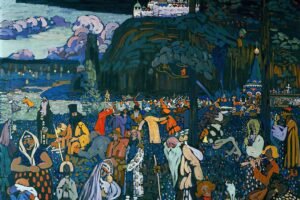
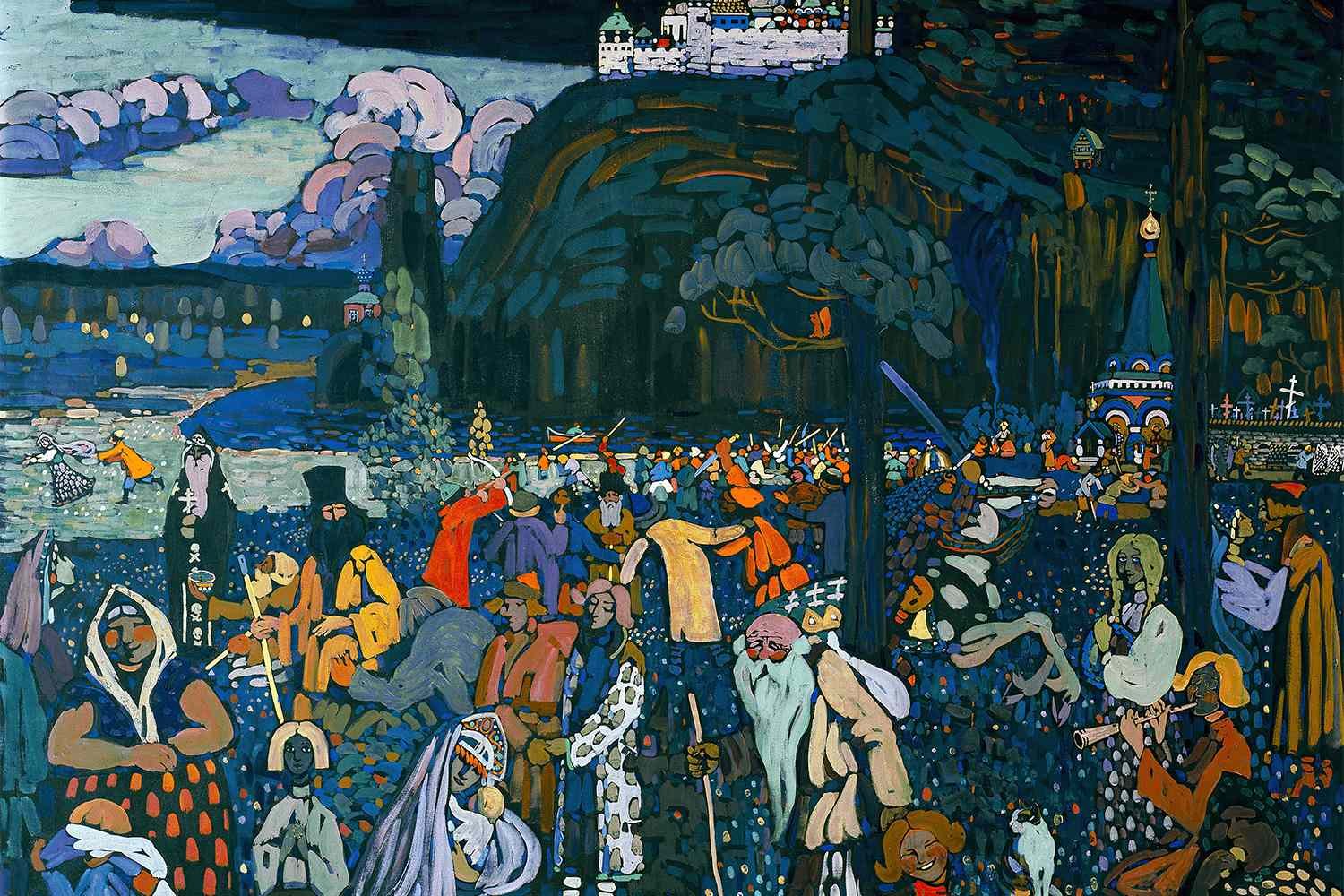
A 1907 masterpiece by Russian painter Wassily Kandinsky that was stolen by the Nazis in October 1940 sold for approximately $43 million at auction.
On Wednesday, Oct. 14, Christie’s auction house closed the sale on Das bunte Leben (La vie mélangée), which translates to The Colorful Life in English. The final price was £31,560,000, or about $42 million.
The signed and dated piece was painted on canvas in Paris in March 1907.


Credit: OLIVER LANG/DDP/AFP via Getty
Dutch-Jewish businessman and art collector Emanuel Lewenstein and his wife Hedwig Lewenstein Weyermann owned the piece in Amsterdam before depositing it for safekeeping at the Stedelijk Museum in 1933 ahead of World War II, per Christie’s.
By the time the Nazis invaded the Netherlands in 1940, the Lewensteins had died, and passed the painting down to their children — Robert Gotschalk Lewenstein and Wilhelmine Helene Lewenstein. Both fled the country for safety, the New York Times reported.
Wilhelmine left the Netherlands for Mozambique in 1938, and Robert fled to New York in 1939, The Guardian reported in 2017, when the family filed a lawsuit seeking the painting’s return. The painting was sold during an auction in October 1940, without the family’s permission, they said in 2017.
While tracking down the exact details of how the painting was sold has been hard for historians to prove, German bank Bayerische Landesbank (BayernLB) purchased the artwork in 1972 before lending it to a museum in Munich, the Times reported.


Credit: Buyenlarge/Getty
“In 1972, BayernLB legally acquired the painting “Das Bunte Leben” by Kandinsky at the instigation of the City of Munich,” BayernLB said in a statement to The Guardian in 2017. “The purchase negotiations were handled by the Lenbachhaus museum, where the painting has been publicly displayed on permanent loan ever since. Nonetheless, BayernLB is willing to take part in a review by the so-called Limbach Commission. BayernLB feels, however, that the commission’s decision should be binding on all parties. BayernLB has expressed its desire that the painting remain on public display at the Lenbachhaus rather than be taken away.”
BayernLB returned the painting to the Lewenstein heirs in 2023, after a recommendation by a German government panel on Nazi-looted art, The New York Times reported at the time.
The Colorful Life is described as one of the early masterworks of Kandinsky’s career and was created while he was living in Paris and immersed in the city’s culture.
Never miss a story — sign up for PEOPLE’s free daily newsletter to stay up-to-date on the best of what PEOPLE has to offer, from celebrity news to compelling human interest stories.
Christie’s called it “a kaleidoscopic play of vivid colour and vitalistic energy.”
The identity of the person who purchased the painting at the 20th/21st Century: London Evening Sale was not disclosed.


