

It took the world — and stock markets — a while to grasp that Trump’s tariffs aren’t primarily intended to achieve reciprocal tariff parity. Rather, they focus absurdly on rectifying individual trade deficits with specific countries. Notably, these tariffs target only imbalances in goods, conveniently overlooking America’s substantial surplus in services.
Examining the rhetoric of Trump and prominent advocates like Navarro and Lutnick reveals a primary objective beyond revenue generation: returning industrial jobs to the US, almost irrespective of the economic consequences. Steel mills, auto plants, and oil fields symbolize an idealized, nostalgic vision of industrial America.
This vision is rooted in an idea long recognized by scholars of populism: producerism. Found across various populist movements globally, producerism centers on the belief that the working middle class is the true backbone of economic and moral strength, supporting both the parasitic elites above and the welfare-dependent poor below. A closer look at who qualifies as the ideal working middle class reveals that producerism splits into two distinct strands: Decentralized Producerism and Dirty Hands Producerism.
Decentralized Producerism: The Jeffersonian Ideal
Decentralized producerism has deep roots in American political culture. Thomas Jefferson envisioned America as a nation of self-reliant farmers, skeptical of industrialization but open to free trade if it complemented agrarian life. In an 1812 letter to John Adams, Jefferson expressed that every family should ideally function as “a manufactory within itself,” relying on external production only for finer goods.
This form of producerism emphasizes small-scale production and promotes self-sufficiency. The dignity of labor arises primarily from local autonomy and independence from state control, rather than from any particular mode of production.
The People’s Party — America’s first significant populist movement — embodied this ethos. Historian Lawrence Goodwyn described it as a grassroots democratic movement aimed at limiting corporate power. These populists weren’t against capitalism; they supported free trade while opposing monopolies and cartels threatening independent producers.
Later, thinkers like Wilhelm Röpke, inspired by Ortega y Gasset’s The Revolt of the Masses, championed an independent middle class — artisans, small traders, and farmers — as a necessary balance to state and corporate dominance. Röpke promoted decentralized capitalism with small, diverse, locally embedded enterprises operating freely in competitive markets.
Dirty Hands Producerism: Smokestacks and State Power
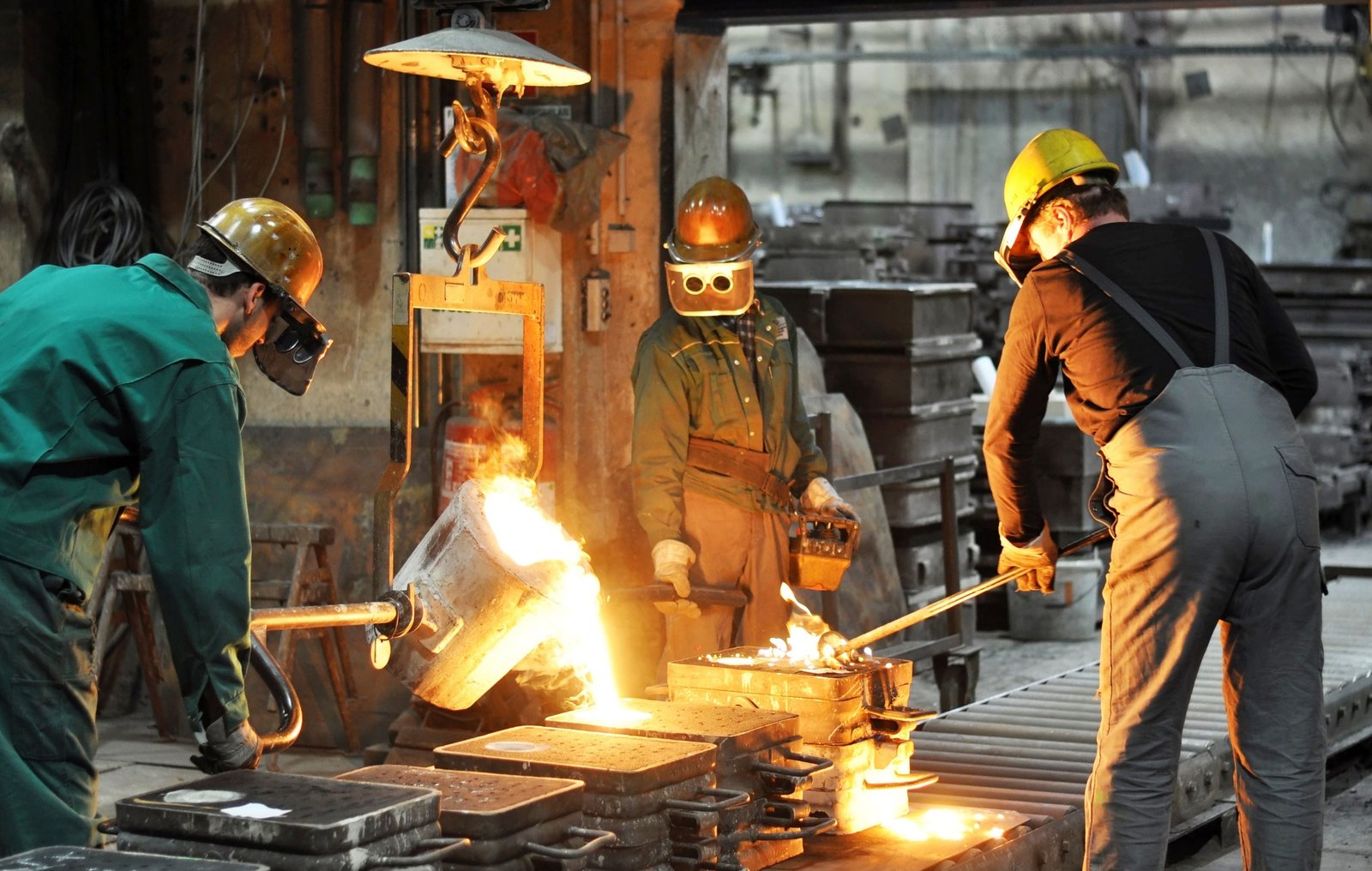
By contrast, Dirty Hands Producerism emphasizes manual labor’s dignity in large-scale industrial settings — steel mills, auto plants, and oil rigs. It romanticizes workers whose jobs involve physically, ideally dirty work.
Mid-twentieth-century populists like George Wallace championed this version. He praised the “steelworker, the rubber worker, the textile worker” and lambasted the “over-educated ivory-tower folks with pointed heads” who, he claimed, had lost touch with real American values.
This form of producerism aligns easily with mercantilism – the idea that national strength depends on producing more and consuming less. It portrays centralized industry as virtuous and essential, justifying state interventions such as subsidies and tariffs to protect domestic production. Whereas decentralized producerism strives to keep production free from government interference, dirty-hands producerism insists on active state involvement to preserve industrial jobs, even at significant economic, social, and political costs.
April 2: The High Cost of “bring industry jobs home”-policies
The recent tariff expansion announced on April 2 represents the culmination of dirty-hands producerism combined with MAGA nationalism and superficial economic reasoning. The focus on industrial jobs might carry emotional appeal, yet its economic merits are deeply questionable.
As The Economist has pointed out, it’s far from clear that operating industrial robots is inherently more fulfilling than preparing cappuccinos. Data from the Bureau of Labor Statistics indicates that many service-sector jobs — when adjusted for comparable education and skill levels — offer equal or superior pay, benefits, job security, and workplace safety compared to traditional blue-collar manufacturing roles.
Meanwhile, the costs associated with protectionist policies designed to “bring industry jobs home” are tangible and significant, especially for the independent middle class whom producerism claims to champion. Entrepreneurs dependent on imports or integrated global supply chains are now confronting higher input costs and market disruptions. They often become collateral damage in a conflict driven by nostalgia for industrial labor and mercantilist, zero-sum economic thinking.
Producerism’s Double Edge
Producerism identifies a legitimate issue: the traditional working and middle classes are underrepresented politically, culturally, and economically. Powerful elites benefit disproportionately from expanding federal authority, harming traditional, self-reliant producers.
However, only decentralized producerism effectively addresses these imbalances within a free-market context. It promotes local autonomy, counters corporatism, and restrains bureaucratic state power. Dirty Hands Producerism, meanwhile, provides an emotionally compelling narrative — but risks strengthening state-corporate collusion rather than diminishing it.
The true test isn’t whether a job involves steel, software, or cappuccinos, but whether it thrives due to genuine market demand rather than government intervention. Similarly, the real measure of trade isn’t whether it balances neatly in national accounts, but whether it is
balanced through voluntary exchange that benefits both sides. Only then does trade create wealth and effectively limit both market and governmental power.
