


“Why is it the Black man always dies in the first 10 pages?”
Luther Stickell, played by Ving Rhames, was supposed to die in the first “Mission: Impossible” movie. Brian De Palma’s 1995 film did away with almost all of the TV show’s characters and radically changed the one who remained, all to leave Tom Cruise’s new recruit to the IMF, Ethan Hunt, as the last one standing. Rhames, fresh off the success of “Pulp Fiction,” was going to be another casualty. But, as he explained in a 2025 interview with Screen Rant, that changed when he asked Cruise that question. Cruise agreed, and so Luther stuck around, growing into the beating heart of the franchise and a sorely needed reminder of Rhames’ talent.
Much has been written about the evolution of “Mission: Impossible,” growing from an IP reinvention and star vehicle for Tom Cruise to a labyrinthine cavalcade of high-concept stunts and thrills, all held together by The Last Movie Star. The finale, “The Final Reckoning,” has certainly proven to be an extended victory lap for Cruise, a true worldwide icon capable of doing things that nobody else in the entertainment industry could ever dare to replicate. The franchise was held together by his presence, with Ethan Hunt and his manic running acting as the captain, as directors and characters came and went. These films have always attracted top-notch talent, even for the most thankless roles. But Cruise wasn’t the only constant in “Mission: Impossible.” Standing right behind him and to the side for all eight films was the only other character present in every installment, and he’s well overdue his moment.
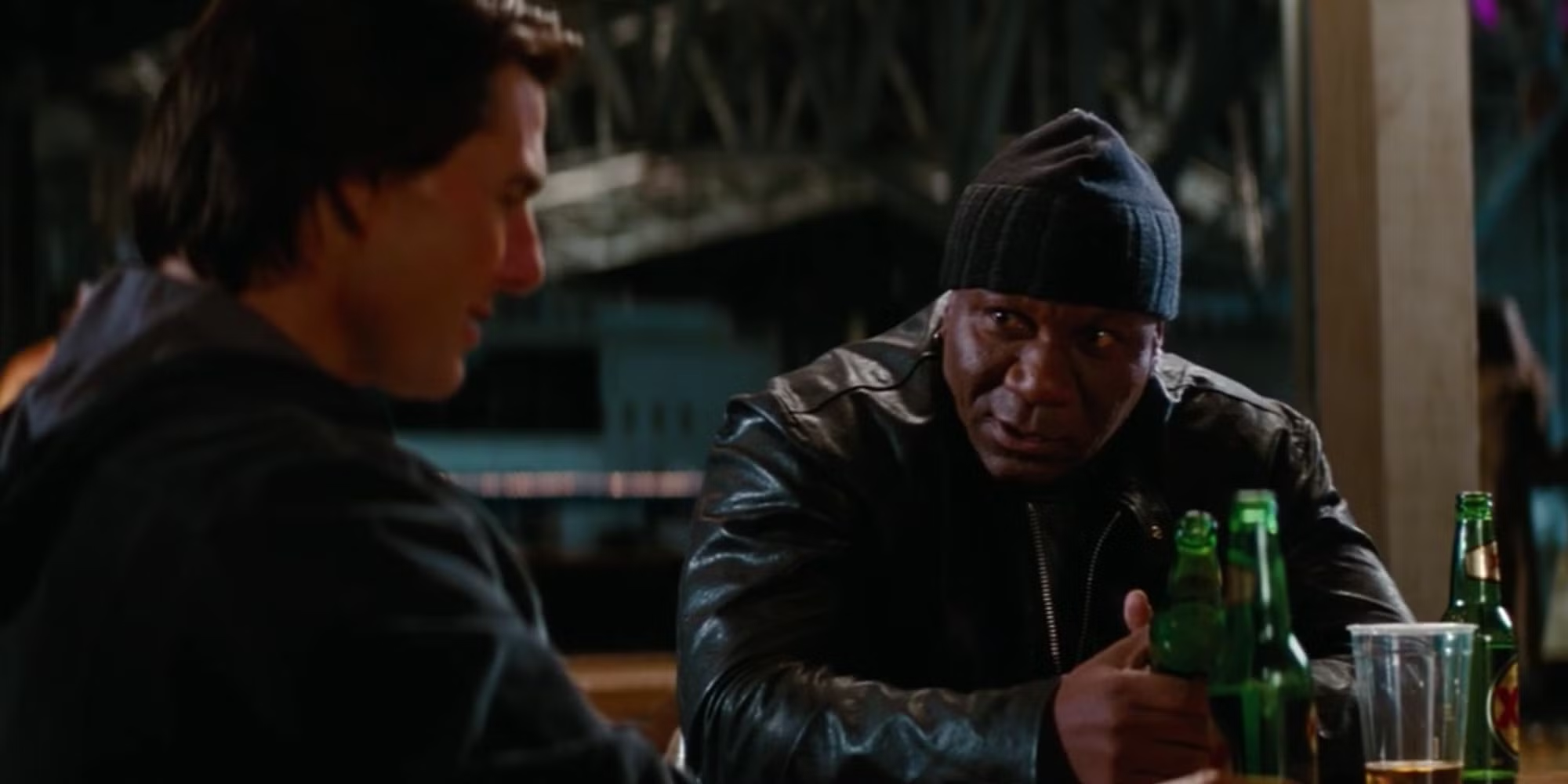
Luther is a world-class hacker who, like Ethan, becomes disavowed by the IMF and is forced to work off the grid to clear their names. Thus begins a beautiful friendship that sees Stickell becoming Ethan’s “second eyes” and guiding hand for the rest of his career, officially or otherwise. He’s there to open doors, hijack cameras, decode secrets, and ensure Ethan has the smoothest path possible to his mission. As the series progresses, Luther is firmly established as Ethan’s best friend, and maybe even the most important companion in his strange and torrid life. He’s even there to help Ethan’s wife, Julia (Michelle Monaghan), find ways to fight back should anyone try to get to her husband through her. When things get tense, Luther’s there to bring calm. Even when he’s not part of the main mission, as is the case in “Ghost Protocol,” he’s still there at the end to share a beer, mock Ethan’s corny one-liners, and reminisce about the good times.
It’s hard to remain grounded when your franchise is always aiming for the stars (usually so its hero can fall among them from a great height). The major appeal of the series became its eagerness to outdo itself with each new set-piece, Cruise flexing his megastar clout through self-performed stunts that became increasingly dangerous. This flex helped to rehabilitate Cruise with audiences after his PR nadir of couch-jumping and Scientology preaching, but becoming Mr. Invincible made him seem far less human. The Mission: Impossible films kept giving Ethan female characters to make him seem more approachable (usually by offing them), but it never felt as real as needed.
But then there was Luther: fiercely loyal, level-headed, stoic but not apathetic, and oddly comforting. Rhames is the king of stoic charm, and Luther is Ethan’s safe port in the endless storm of subterfuge and danger. Where Simon Pegg’s Benji, introduced in the third film, is more harried and perennially baffled by the situation he finds himself in, Luther is the steady hand, the straight man with the dry quips. There’s a weariness there, too, seen in the shrugged shoulders of Rhames, often behind a computer, as he tries to act as a guide and occasional moral conscience to the ultimate Hero. Cruise may be ageless, but Rhames bears the signs of the passage of time. It brings an undeniable pathos to their relationship, even when they’re mid-set-piece or chewing over screeds of exposition. Rhames plays Luther as a man who has truly seen it all but still believes in his guy. And so we do too.
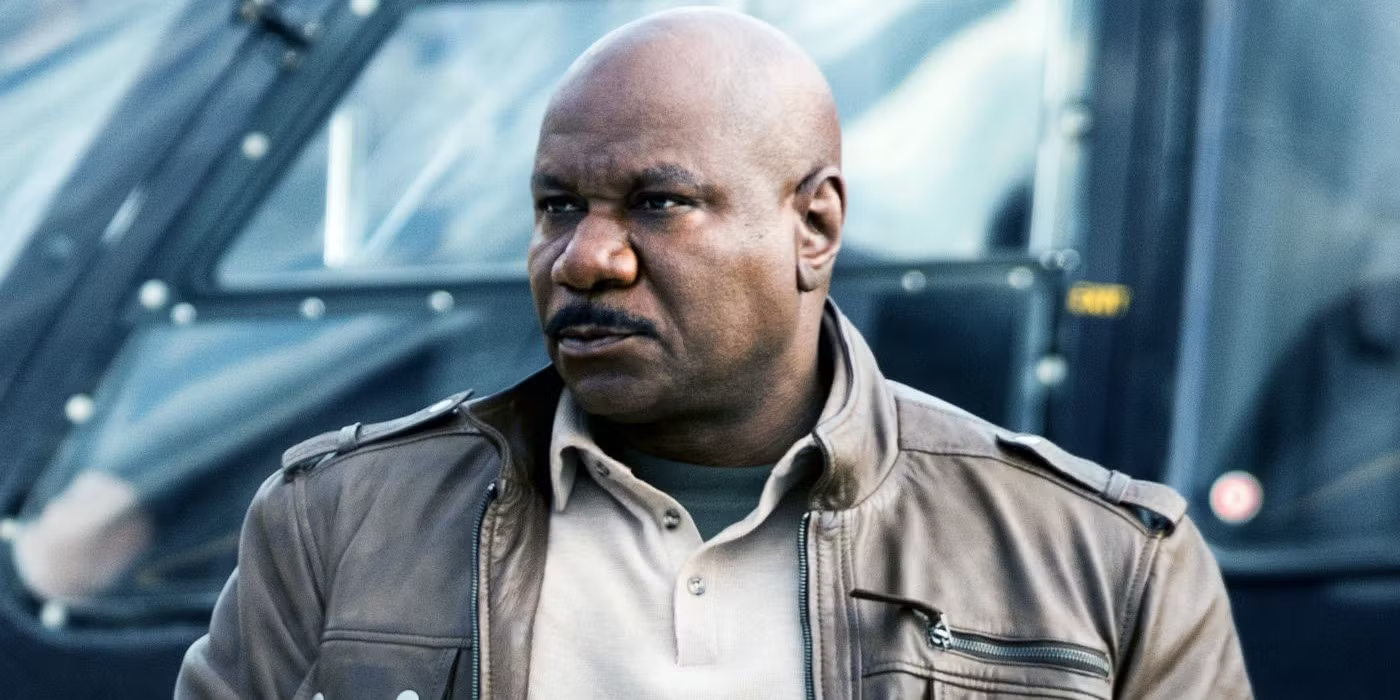
Ethan’s genuine affection for his found family is most evident in his relationship with Luther. When Ethan tells him in “Dead Reckoning,” “Your life will always matter more to me than my own,” he rejects Luther’s assertion that “none of our lives can matter more than this mission.” You never doubt Luther’s loyalty either, or that he would throw himself in front of a bullet for his friend. The steely force with which he reminds William Brandt in “Rogue Nation” that Ethan is his friend would be enough to make any potential traitor quake in their shoes.
One of the series’ true tear-jerking moments comes in “Fallout” when Luther tells Ilsa Faust (Rebecca Ferguson) about Ethan’s wife and the heavy price one pays to remain by Ethan’s side. “If you care about him, you should walk away,” he tells Ilsa through his tears. It’s an act of compassion, the kind of break in Rhames’ usual stoicism that reveals the humanity amid the motorcycle flips. Whenever you watch the films and find yourself wondering why the hell anyone sticks around to help Ethan Hunt out of yet another cataclysm, Luther’s quiet words remind you there’s a damn good reason for it. There’s a touching quality to Rhames, a foreboding physical presence with that distinctive voice, representing a figure of dedicated platonic love for another man, and for it to be so fully reciprocated by Cruise.
Rhames hasn’t always gotten the roles he deserves, but he remains one of his generation’s most reliable supporting players. His distinctive voice can make any mumbo-jumbo sound Shakespearean. In “Pulp Fiction,” his character Marcellus Wallace is introduced to audiences from behind, a phantom who is discussed by others, and often with fear. But Rhames, even with the camera focused on his neck, makes you fully aware that everyone is right to be scared of his power. He gets one of his juiciest roles as a cigar-chomping paramedic with a penchant for preaching in “Bringing Out the Dead,” a role dependent on his innate ability to balance gravitas with an impish sense of humor.
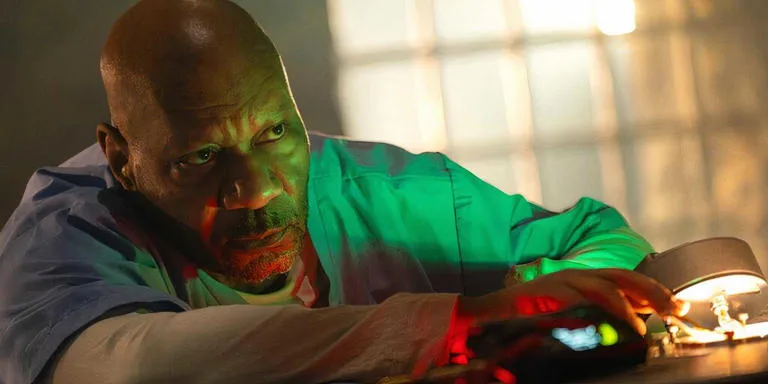
That’s Luther in a nutshell, albeit with more tech jargon: the authoritative figure who seems cannily aware of the ridiculousness of his situation. That and he’s just so damn cool. You don’t hire Ving Rhames to play a nerd, even when he’s the greatest hacker on the planet. Even Tom Cruise looks nebbish in comparison to Rhames’ suaveness.
“Final Reckoning,” mercifully, seems aware of Rhames’ importance to the franchise and gives him an ending worthy of his stature in this long and sprawling arc. Certainly, nobody could have foreseen how a remake of a ‘60s TV show would evolve into one of the most enduring and technically daring series in modern cinema. It allowed for an intended bit-part player to become a crucial supporting player whose presence was indelible to the films’ success. In a machine as well-oiled and sophisticated as the Mission: Impossible series, Rhames was the cog that kept everything moving forward.
