


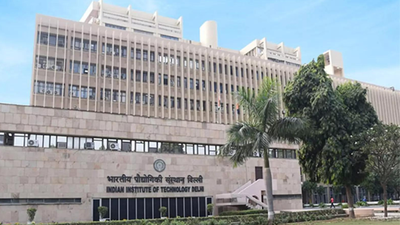
Indian Institute of Technology Delhi has set up a fact-finding committee and sought explanations from faculty organisers after an academic conference on caste and race drew sustained criticism and escalated into a question of institutional judgment rather than academic disagreement.The conference, Critical Philosophy of Caste and Race, was held from January 16 to 18 and organised by the Critical Philosophy of Caste and Race (CPCR) research study group under IIT Delhi’s Department of Humanities and Social Sciences. In another time, it may have passed with limited notice. This time, it did not.What altered the course of events was the way one part of the programme came to be read and then publicly contested outside academic spaces.Concerns gathered around a session that drew a parallel between caste-based marginalisation in India and the Palestinian condition. As one widely circulated post put it, the question being posed was “What is common between Dalits and Palestinians?”The phrasing triggered unease well beyond campus, with critics arguing that such a comparison moved from scholarly exploration into overt political signalling, particularly sensitive amid the current geopolitical climate.That objection did not remain abstract. It hardened into a more pointed institutional question: Whether a nationally symbolic technical institute should be hosting discourse that can be read as aligning domestic social questions with global political conflicts.Once that frame took hold, the conference was no longer being evaluated on academic grounds alone.
A response framed as governance, not ideology
As criticism intensified, IIT Delhi chose to respond publicly. In an X post (formerly Twitter), the institute said: “Serious concerns have been raised over the choice of speakers and content of the ‘Critical Philosophy of Caste and Race’ conference held from January 16 to 18.” It added that the institute had “sought an explanation from the concerned faculty” and that “a fact-finding committee with independent members has been constituted to investigate the concerns.” The same post went on to state that “appropriate actions will be initiated in accordance with institutional protocols, based on the committee’s findings,” while reaffirming the institute’s commitment to academic integrity and national goals. The phrasing matters. IIT Delhi did not defend the conference. Nor did it condemn it. Instead, it relocated the issue to process: Speaker selection, approvals, and oversight. This is a familiar institutional manoeuvre: When ideas become politically combustible, process becomes the safest ground to stand on.
When organisers become part of the story
Attention also turned to the organisers. Divya Dwivedi, Associate Professor, Department of Humanities and Social Sciences, IIT Delhi, was among those associated with the conference. Her earlier public commentary on caste, Hinduism and politics — which has previously drawn public controversy — meant the event was read by critics in continuity with that broader public record rather than as a standalone academic exerciseIn controversies of this nature, academic intent is often overtaken by accumulated context. Organisers are no longer read as neutral convenors, they are seen as carriers of argument. Once that happens, events they host are interpreted less as open inquiry and more as institutional endorsement. That shift explains why the debate moved so quickly from what was discussed to who allowed it.
The language that changed the stakes
The issue took on a different gravity when it was articulated in explicitly political terms. In an X post, former CBI Director M. Nageswara Rao accused the research group of engaging in “anti-national and destabilising activities” and demanded that it be disbanded. Questioning the institute’s leadership, he suggested that the inquiry announced was insufficient and narrowly framed. With that intervention, the controversy crossed a threshold. Allegations of imbalance or ideological bias are one thing; accusations framed around national stability are another. At that point, institutional inaction itself begins to look like risk. The fact-finding committee, already announced, acquired a new role: Not merely to inquire, but to protect.
What is actually under examination
Officially, IIT Delhi has said the committee has been constituted after “serious concerns” were raised over the choice of speakers and content of the conference, and that it will “investigate the concerns” before “appropriate actions” are taken under institutional protocols. The institute has not spelt out the committee’s terms of reference beyond that. But a fact-finding exercise of this kind typically turns on administration, not ideology: Whether the correct internal processes were followed, what approvals were in place, and how responsibility is assigned when an event hosted under an institute’s banner becomes a reputational and governance issue.These are not arguments about caste theory or comparative frameworks of oppression. They are questions about institutional control, the rules that decide what can be hosted, how it is cleared, and who is accountable. The outcome, therefore, is unlikely to be a judgment on ideas. It is more likely to be a tightening of guardrails: clearer process, more explicit oversight, and a more cautious operating template for future events.
The boundary IIT Delhi is now negotiating
The committee’s findings are unlikely to settle wider debates on caste, race or comparative frameworks of discrimination. What they will shape instead is the operating logic of universities like IIT Delhi when academic work attracts political interpretation. The episode illustrates how questions of caste — especially when framed in ways that travel beyond domestic contexts — quickly shift from scholarship to governance. The consequence is not an overt narrowing of academic freedom, but a subtler recalibration: more emphasis on approvals, clearer lines of accountability, and a higher sensitivity to how campus discourse is read outside academic settings. For institutions, the lesson is not about what may be studied, but how visibly and under what institutional safeguards it can be hosted.
