


Most leaders believe they’re supporting their teams’ skills development. But employees often see something different. Across organizations, there’s a measurable gap between how leaders and employees experience skills development day to day.
Recent data from The TalentLMS 2026 L&D Benchmark Report reveals a 19-point perception gap on AI learning support. 83% of HR leaders believe they actively support AI learning, but only 64% of employees agree.
This extremely polarized viewpoint raises an uncomfortable question:
If leaders are this far off on AI skills support, what else might they be misreading about their teams’ capabilities?
The pattern behind the skills blind spot
The same research shows the gap extends far beyond artificial intelligence. It reveals a broader skills blind spot inside many organizations.
For example, there’s a 5-point satisfaction gap in training overall, with 89% of leaders satisfied compared to 84% of employees.
Another signal: 44% of HR managers say their companies prioritize external hires over internal candidates for open roles.
If organizations truly trusted their internal capability (and the effectiveness of their training programs), they would look inside first.
Together, these numbers point to a common issue: leaders are often making decisions based on assumed skills rather than skills they can actually see.
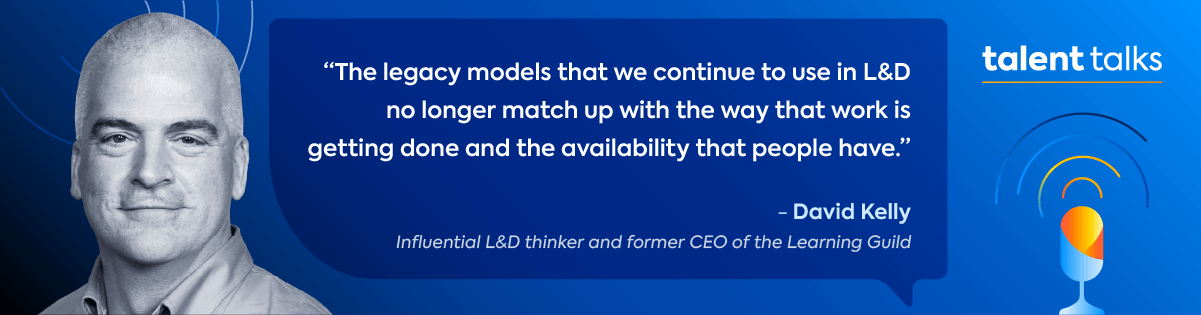
David Kelly highlights the same issue in his Talent Talks podcast on L&D in 2026 when explaining why internal mobility often breaks down: “Companies look at job titles instead of skills,” he says.
When leaders lack skills visibility, capability decisions become guesswork.
When skills aren’t measurable, capability stays hidden
Many organizations believe they’re measuring learning effectively. But in reality, most systems still track training activity rather than capability.
Only 37% of companies measure learning success by business results. The rest rely on signals like course completion, enrollment, and satisfaction scores.
Those metrics show who participated. They don’t show the application of skills, impact, or skills you can trust.
Without measurable skills, organizations face real operational blind spots:
- Talent gets misallocated
- Internal promotion opportunities are missed
- Recruiting budgets increase unnecessarily
The issue isn’t a lack of training. It’s a lack of clarity around skills.
Accenture research backs up that industry-wide illusion. Leadership perception is out of sync with employee reality by as much as 16 points, it reveals.
Why the skills visibility gap keeps appearing
Careless leadership doesn’t cause this skills clarity gap. Most leaders care deeply about developing their teams.
The issue is structural.
Watch a top performer solve a complex client problem in real time. They rarely learned that exact maneuver from a generic, mandatory compliance video. More often, they built that skill in the trenches, through experience, experimentation, and collaboration.
Yet their official HR profile might only show a compliance badge.
The capability exists on the floor. The system simply fails to capture it.
The reality is that people build skills in many places beyond a traditional LMS dashboard:
- 86% of employees build skills by figuring things out on the job.
- 65% say on-the-job experience is their primary development method.
In other words, skills are constantly being built inside organizations.
They’re just not always visible.
At the same time, many companies are shifting toward skills-based hiring and development.
79% of HR managers say they’re adopting skills-based approaches.
This is a sensible move in a workplace where roles and required skills are evolving faster than ever. The challenge is that a skills-based strategy only works if you can actually see those skills.
Without visibility, organizations simply replace one set of assumptions with another.

How leaders can close the skills visibility gap
Supporting leaders to shrink the skills visibility gap doesn’t require a complete overhaul of your learning strategy.
But it does require a shift in what you measure and how you manage development.
Here are four changes that make capability easier to see and trust.
1. Measure what people can do
Relying on surface-level training metrics creates a false sense of security.
Picture a marketing director who has to handle a complex website migration on a tight deadline. They pull up the corporate learning dashboard and see a perfect sea of green completion checkmarks for recent digital infrastructure training. Yet when they ask the team who can actually execute the server redirects quickly, everyone stares at the floor.
That’s why many organizations are looking deeper into the L&D metrics that matter.
And using modern training platforms to support the shift toward skills-based measurement.
Instead of merely logging a completed course, training platforms that support this model ask a simple question:
After this training, what can someone now do that they couldn’t do before?
This is where structured skills tracking becomes valuable. When skills are mapped to courses, roles, and people, organizations can start measuring capability beyond completion.
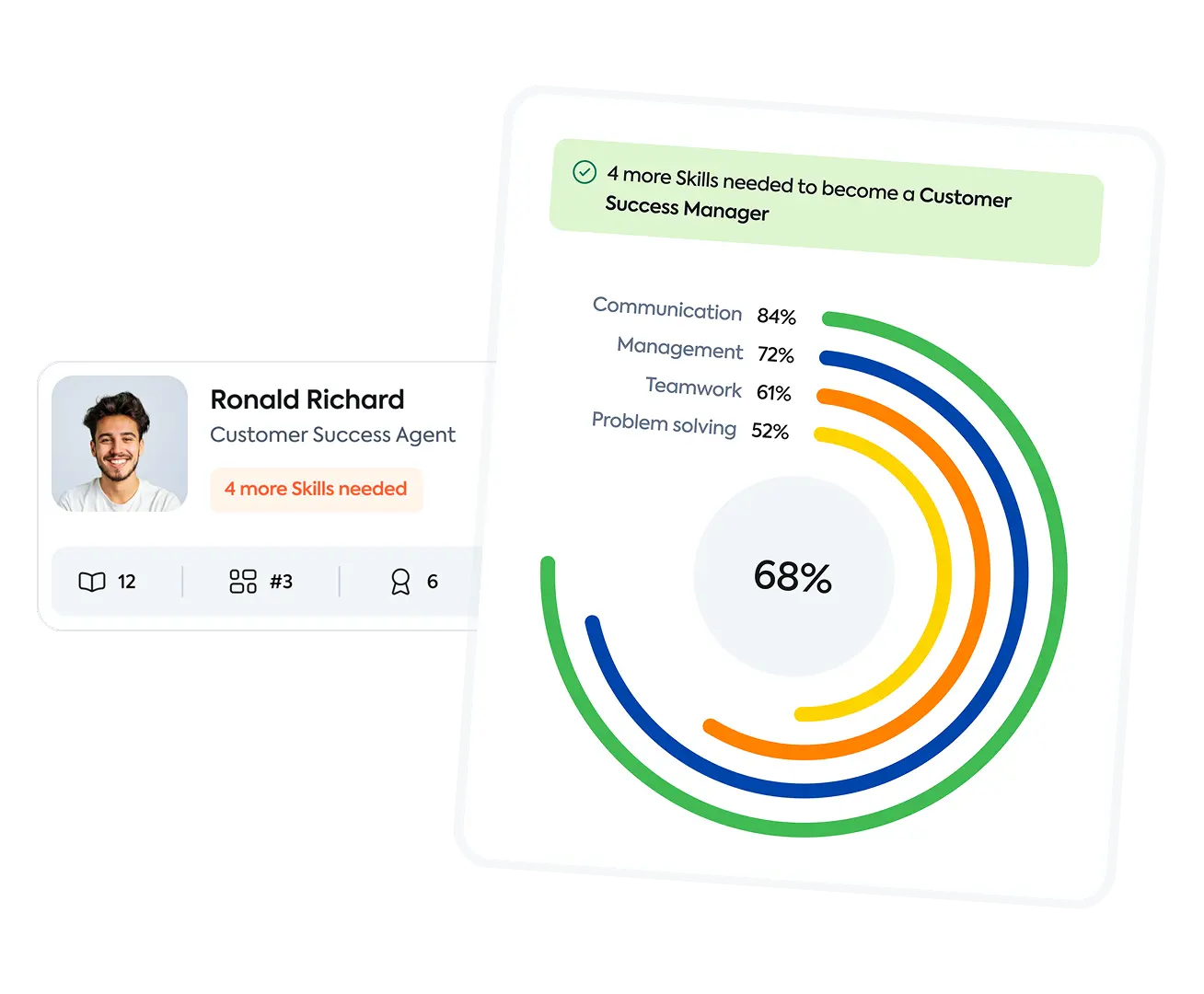
Real-world examples show the impact of this shift. At SalesRoads, managers began measuring readiness directly before reducing live training sessions. Once they could see verified capability across the team, they made more confident decisions about development and deployment.
2. Close the perception gap with structured feedback
Many organizations still rely on annual performance management reviews to discuss employee development. But skills evolve faster than once a year.
A better approach is to make skills conversations routine.
Short, regular check-ins between managers and team members help surface capability that might otherwise remain hidden.
These conversations can focus on questions like:
- What new skills have emerged recently?
- Which capabilities need strengthening?
- What skills will the team need next quarter?
When these insights are documented and tracked, leaders begin to build a clearer map of their team’s capability.
Over time, these small checkpoints help close the gap between leadership perception and employee reality.
3. Trust internal capability before defaulting to external hires.
If nearly half of companies prioritize external hiring first, it often signals something deeper:
Leaders don’t always know what their current teams are capable of.
Before opening a role externally, it’s worth auditing the skills already present across the team.
A skills gap analysis template can help map existing capabilities against the requirements of a role.
Edie Goldberg, in our Hiring from Within podcast, sums up the exact operational fix perfectly. She urges companies to build a platform-supported internal talent marketplace that matches employees with new projects based on their verified interests and abilities. Moving your people into new internal roles creates a culture of continuous learning and keeps your absolute best talent from walking out the door.
4. Make skills visible at the team level, not just the individual level
Individual performance data tells part of the story. But leaders also need visibility into team-level capability to deploy talent effectively and spot vulnerabilities before they hit revenue.
Imagine a manager preparing for a new project.
Knowing that one employee completed a training course is helpful. But the kind of visibility that shapes real workforce decisions is knowing the team has:
- Three people who can run data analysis
- Two who can build dashboards
- Zero who can handle financial modeling
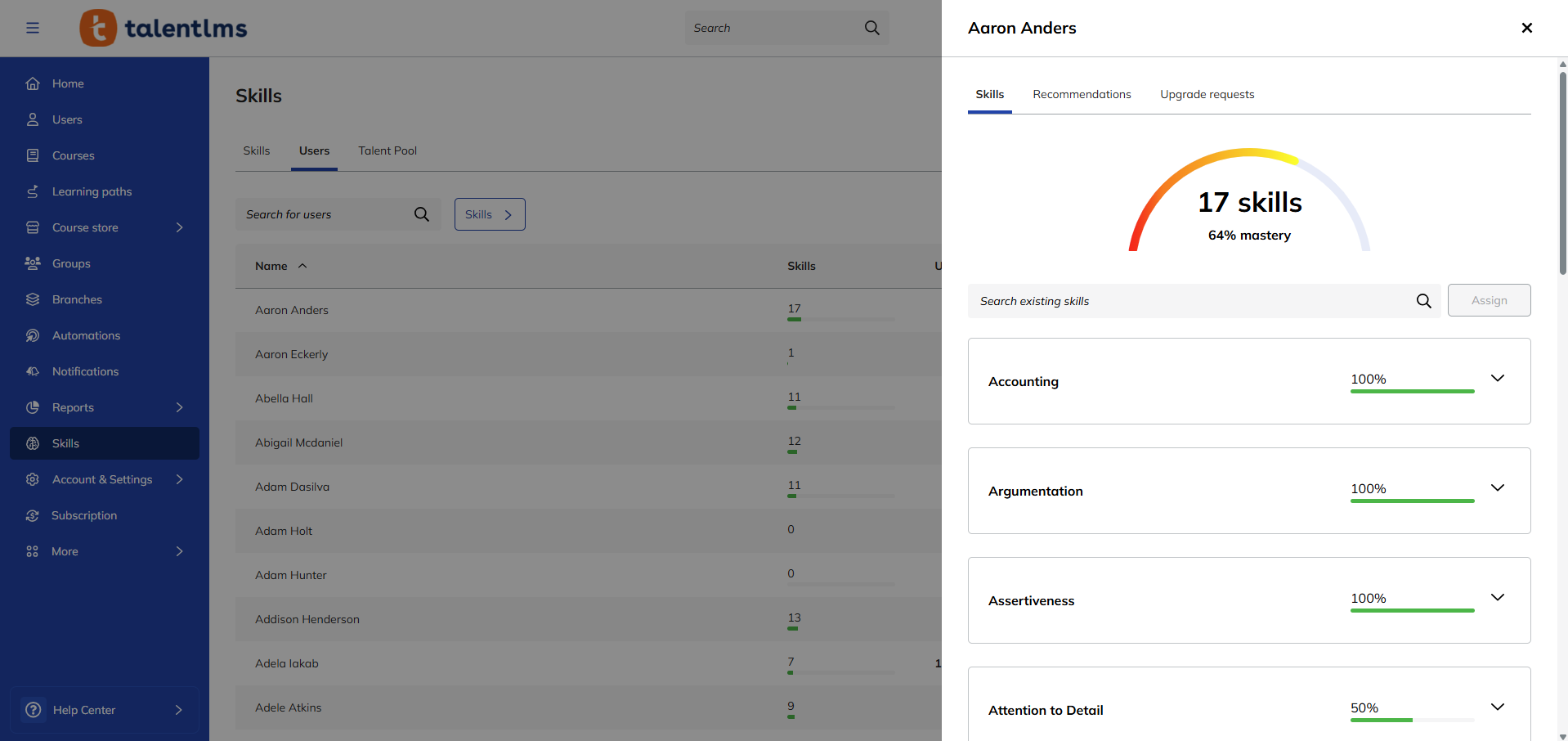
This is where skills mapping across teams becomes powerful. When you see the whole board at once, you’re starting the whole skill management process the right way. Platforms like TalentLMS support this approach by allowing teams to map skills to courses, roles, and learners, turning scattered training activity into structured skills progression.
The new baseline for talent
The era of running a business on leadership instinct is over. Succeeding today requires a complete structural change across the entire board.
The necessary shift is clear. Move away from assumed skills and build toward visible skills. Trade pure instinct for hard insight. Upgrade the entire management dialogue from hoping your team can handle a new project to knowing exactly what your people can do.
That pivot is not aspirational. It is operational. And everything starts with simply acknowledging the 19-point perception gap sitting right in the middle of your floor.
