

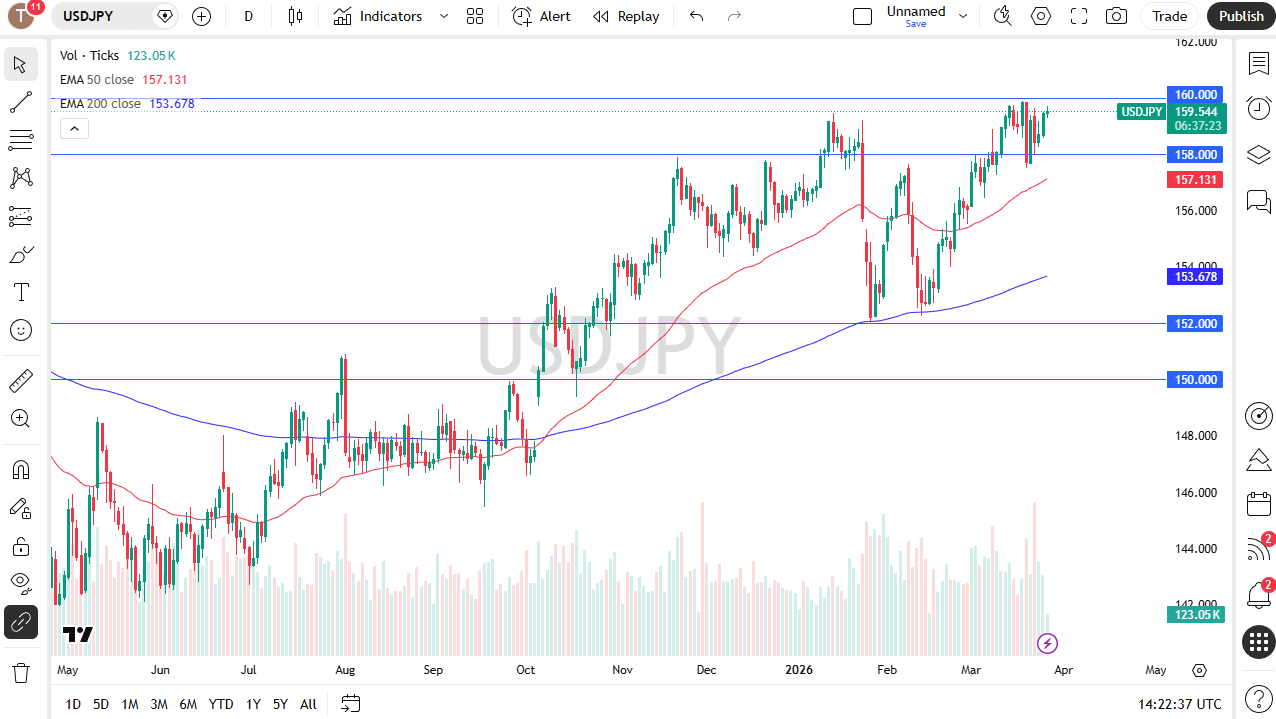
The US dollar is slightly positive against the Japanese yen in early trading on Thursday as the pair is caught between the high stakes levels of safe haven flows favoring the Japanese yen and yield differentials which of course favors the United States. The primary driver today is escalation in the Middle East conflict as reports of strikes on infrastructure have derailed hopes of a 15-point peace plan.
This ironically has supported the US dollar via safe haven demand even as the 10-year Treasury yield climbs towards 4.4% due to oil driven inflation fears. At the same time, the Bank of Japan held rates at 0.75% last week and Japanese short-term yields, the 2-year yield, has spiked to 30-year highs at 1.32% today as markets price in a 64% chance of an April hike to combat imported inflation. This is a relative interest rate play, and if both banks remain inflation weary, then this pair should continue to see buyers as things stand.
Central Bank Policy and Yield Differentials
However, as long as the remain of central banks are more or less either hawkish or wait and see mode with a benchmark rate far above Japan’s, the path of least resistance remains higher over the longer term.
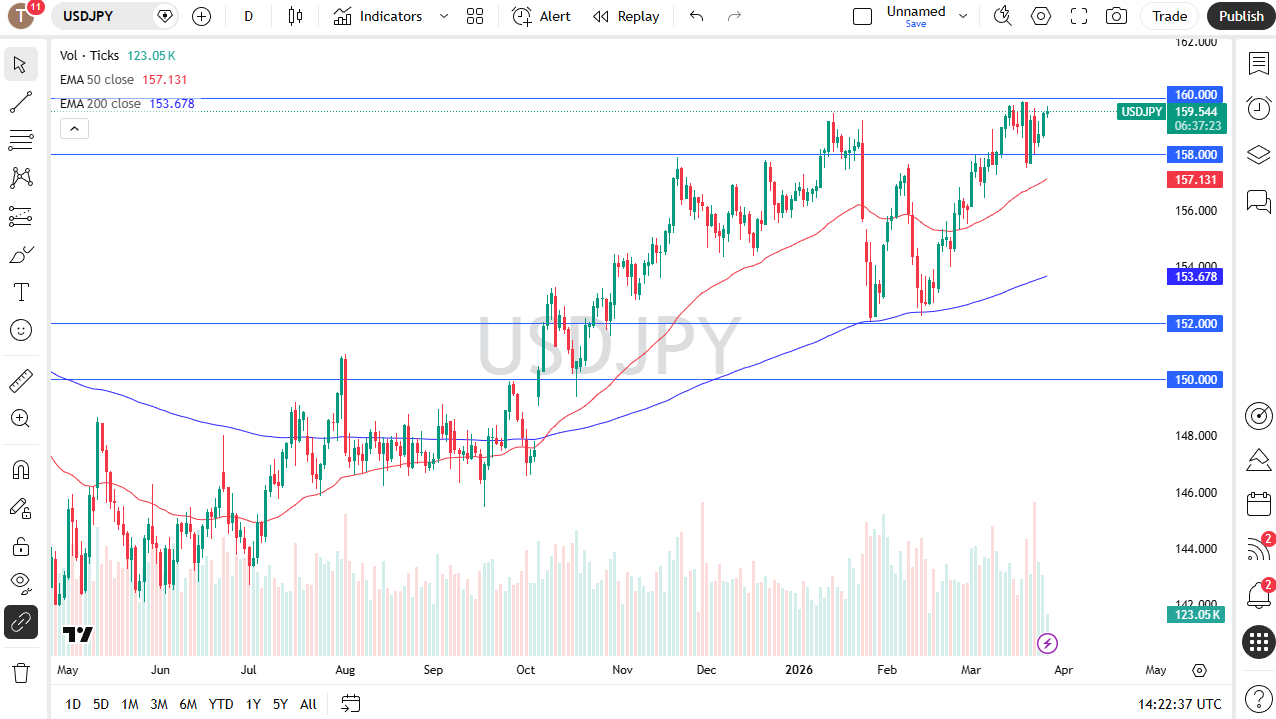
The 160-yen level is an area that has been a level that gets the Bank of Japan verbally intervening, but if we can break above the 160.40-yen level, then we clear a 1990 resistance barrier and could send this market much higher over the longer term. I believe that this remains a buy on the dip market and the 158-yen level should be a bit of a floor.
Want to trade our USD/JPY forex analysis and predictions? Here’s a list of forex brokers in Japan to check out.
Christopher Lewis has been trading Forex and has over 20 years experience in financial markets. Chris has been a regular contributor to Daily Forex since the early days of the site. He writes about Forex for several online publications, including FX Empire, Investing.com, and his own site, aptly named The Trader Guy. Chris favours technical analysis methods to identify his trades and likes to trade equity indices and commodities as well as Forex. He favours a longer-term trading style, and his trades often last for days or weeks.
