


What Is An eLearning Podcast?
An eLearning podcast is an audio program made to help employees learn new things, build skills, and grow in their careers. Unlike shows meant just for entertainment, these podcasts focus on specific learning goals and are part of a larger company learning plan.
There are several types of podcasts. Marketing podcasts try to reach new listeners and promote a brand. Educational podcasts teach general topics to many people. Corporate learning podcasts are made for employees and support company goals, training, and workforce development.
Today, educational podcasts for employees are often used alongside other learning tools. They can work with LMS courses, online training, coaching, and other audio content at work. Because they are flexible, podcasts are helpful for remote, hybrid, and mobile teams who need learning content they can access anytime.
Effective podcast-based learning also relies on Instructional Design for podcasts. Episodes are typically organized around learning objectives, concise explanations, real-world examples, and reinforcement activities to improve knowledge retention through audio learning.
Why L&D Leaders Are Adopting Podcast-Based Learning Models
An eLearning podcast is becoming an important part of workplace learning because they give employees the flexibility they need in today’s fast-paced work environment.
Flexibility
As more organizations support remote, hybrid, and global teams, learning needs to be available anytime, anywhere. Podcasts let employees learn while commuting, exercising, traveling, or during breaks between meetings, making it easier to fit professional development into busy days.
Microlearning
Podcast-based learning also aligns well with microlearning audio formats. Instead of requiring employees to complete lengthy training sessions, organizations can offer short episodes that focus on one concept, skill, or challenge at a time. This method supports spaced repetition, so learners can revisit key topics and remember more through audio.
Higher Engagement
Many L&D professionals notice that podcasts often lead to higher engagement than traditional slide-based courses. Slides usually need focused screen time, but audio feels more conversational and personal. Employees can hear industry experts, leaders, or peers share insights and real experiences, making learning more engaging.
Mobile-First Approach
Corporate learning podcasts are also popular because they fit with how today’s employees use their phones and mobile devices. People already listen to audio content on these platforms, so offering learning through familiar channels helps organizations reach learners where they are.
Cost-Effectiveness
Podcasts are often more cost-effective than making videos. Producing high-quality video courses usually needs cameras, editing software, graphics, and a lot of time. In contrast, educational podcasts can be made faster and are easier to update.
Improved Performance
Most importantly, successful podcast-based learning programs are more than just content libraries. They should be seen as tools that help employees perform better. When podcasts are part of a larger learning strategy, they can reinforce training, support ongoing development, and help people use what they learn on the job.
Organizations that treat podcasts as a strategic learning channel rather than a content experiment gain a powerful advantage. The real value isn’t in producing more episodes but in creating opportunities for employees to learn, reflect, and improve performance.
-Christopher Pappas, CEO and founder of eLearning Industry
Where eLearning Podcasts Deliver The Most Value
eLearning podcasts work best when they support clear business and learning goals. Unlike traditional training, these podcasts let employees learn whenever they need to, making it easier to fit learning into their busy days.
Onboarding
Onboarding is one of the best ways to use podcasts. New employees often have to learn a lot quickly. Podcasts can help them understand company culture, processes, and job details without feeling overloaded. Audio also lets them learn while commuting or between tasks.
Leadership Development
Podcast-based learning can also play a big role in leadership development. Interviews with executives, coaching sessions, and real leadership stories give managers practical tips they can use right away. Since audio feels more like a conversation, it often helps learners connect better than traditional training.
Compliance Training
Organizations can use audio content for compliance training and policy updates. Rather than just sending long documents or presentations, L&D teams can share short podcast episodes to explain changes, highlight key points, and help people remember important information.
Sales And Product Training
Podcasts are a flexible way to support sales and product training. Teams can easily share product updates, competitive insights, customer stories, and sales tips with everyone. This keeps employees up to date without disrupting their daily work.
Continuous Learning
eLearning podcasts also help with ongoing professional development. Learning leaders can create regular content about industry trends, new skills, and career growth. As part of a digital learning strategy, podcasts make it easier for people to keep learning throughout their careers.
How To Create An eLearning Podcast Step-By-Step
An eLearning podcast can be a great way to enhance your learning strategy, but making one that really connects with learners takes more than just recording conversations. As with any learning program, it’s important to set clear goals, understand your audience, and define how you’ll measure success. The steps below can help L&D teams create podcasts that support business goals and offer valuable learning experiences.
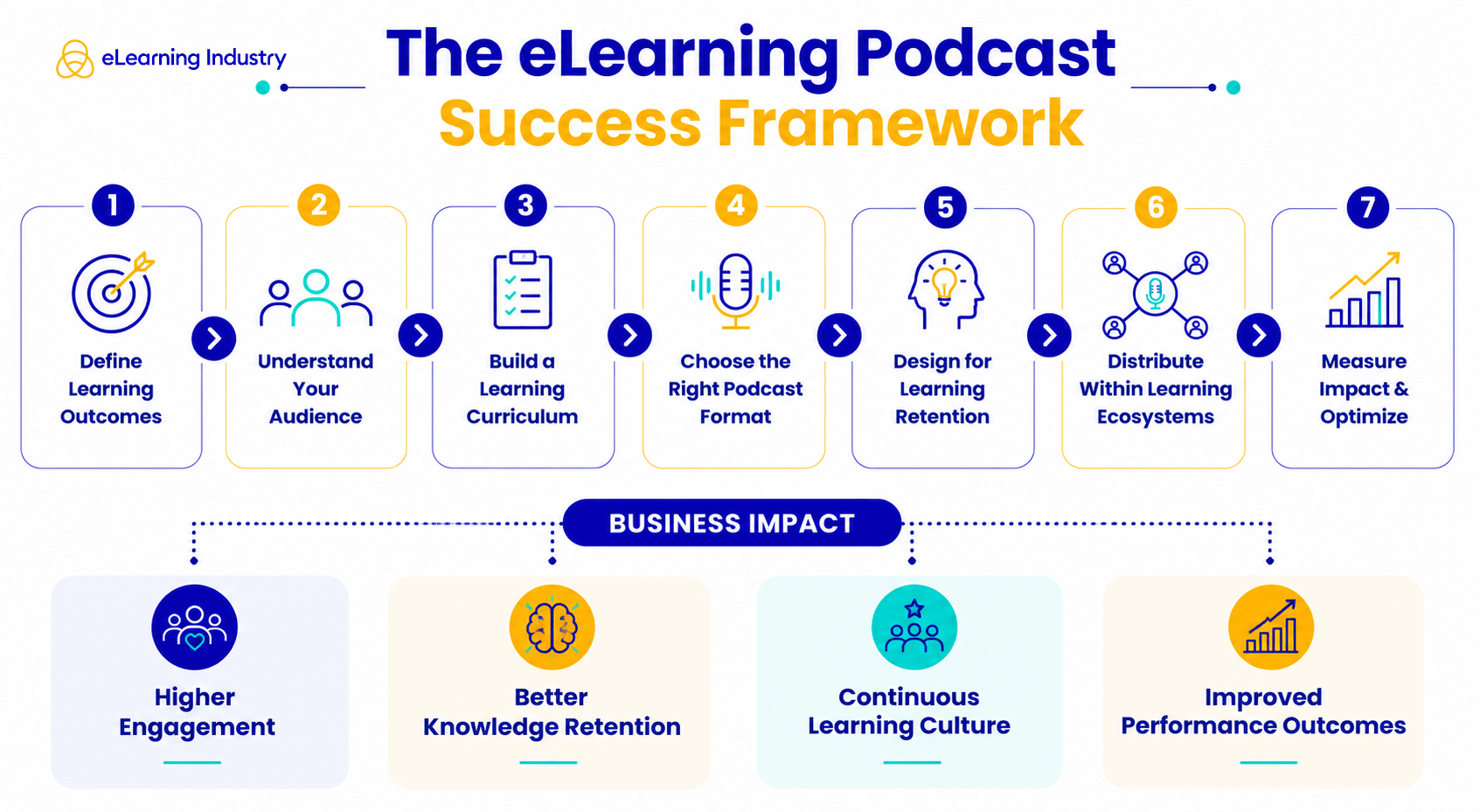
Step 1: Define Learning Outcomes
Before choosing topics or recording, decide what you want learners to know, do, or understand after listening. Each episode should have a clear learning goal that matches your organization’s needs.
For example, a sales podcast might help employees learn more about products, while a leadership podcast could help managers build coaching skills. When you match your content to business needs, your podcast is more likely to improve performance instead of just being another thing people listen to and forget.
Step 2: Identify Audience Personas
Learners have different needs, challenges, and priorities. To create a successful learning podcast, start by getting to know your audience. Group your learners by roles, like frontline staff, managers, executives, sales teams, or new hires. Think about what they already know, how they like to learn, and what their jobs involve. This helps you create content that feels relevant and keeps people interested.
For instance, managers might like discussions about leadership, while employees may want practical tips they can use right away.
Step 3: Design A Curriculum Structure
Some organizations treat podcasts as one-off episodes, but it’s better to see them as part of a bigger learning journey.
Plan your episodes in a logical order. Organize them into modules, series, or tracks that help learners build their knowledge and skills step by step. This makes it easier for people to connect ideas and stay engaged.
For example, an onboarding series could start with company culture, then cover job expectations, and finish with tips for good performance. Having a clear learning path makes audio content more useful and easier to follow.
Step 4: Choose The Right Format
Different learning goals need different podcast formats. Choosing the right one can make a big difference in how much learners engage and remember.
Common options include:
- Solo expert episodes for sharing expertise and practical guidance.
- Interview-based episodes featuring Subject Matter Experts and industry leaders.
- Scenario-driven storytelling that demonstrates real-world applications and decision-making.
- Panel discussions that present multiple perspectives on a topic.
The best format depends on your goals and your audience’s preferences. Many organizations mix different formats to make learning more interesting.
Step 5: Develop Scripts With Learning Intent
A lively discussion is only valuable when it is well-organized. Planning your podcast carefully is essential.
Instead of letting conversations flow without direction, use episode outlines or scripts to help learners reach clear goals. Add examples, practical uses, summaries, and key points throughout each episode.
Reflection prompts can boost engagement. For example, asking listeners, “How would you apply this approach in your role?” helps them learn actively and remember more from the podcast.
Step 6: Set Up Production And Distribution
High production quality is important, but making your podcast easy to access is just as crucial. Choose recording tools that provide clear sound and a professional result.
Next, decide how learners will access the content. Some organizations add podcasts to their LMS, while others share episodes through internal portals or podcast platforms.
Adding podcasts to existing learning programs and pathways makes it easier for learners to find content and encourages them to keep participating.
Step 7: Measure Impact
As with any learning program, you should regularly evaluate your educational podcast for employees.
Begin by tracking engagement metrics like downloads, completion rates, listening time, and repeat listeners. After that, check knowledge retention using assessments, surveys, or reflection activities.
Most importantly, link podcast results to business outcomes. Watch for changes in behavior, job performance, confidence, or skills. These signs show if the podcast is helping your organization reach its goals.
How To Incorporate Your eLearning Podcast Into Your Learning Strategy
eLearning podcasts are most valuable when they are part of a larger learning experience, not just a single piece of content. To help people stay engaged and remember what they learn, organizations should add podcasts to their current learning systems and daily routines.
LMS Integration
A good way to do this is by adding podcasts to your Learning Management System (LMS). When podcast episodes are available in the LMS, L&D teams can match them to learning goals and training plans, and track how learners are doing. This makes it easier to include podcasts in bigger learning programs and see how people are taking part.
Distribution In Internal Communication Channels
Organizations can also distribute workplace learning audio content via tools such as Slack, Microsoft Teams, or the company intranet. Posting episodes where employees already spend time helps more people notice them and makes learning part of the regular workday. This way, employees do not have to look for training; it comes to them.
Mobile Learning Apps
Mobile learning apps further strengthen accessibility. Employees can listen during commutes, travel, or breaks, making an educational podcast for employees a flexible and convenient learning resource. This supports modern workforce expectations for on-demand learning and continuous development.
Blended Learning
To make podcasts more effective, include them in blended learning plans. For example, use a podcast to introduce a topic before a virtual workshop, review key ideas after training, or add to eLearning courses. This helps create a more connected and interesting learning experience.
Push And Pull Models
L&D leaders should also consider the balance between push and pull learning models. In a push model, podcast episodes are assigned as part of structured learning initiatives. In a pull model, learners choose content based on their interests and development goals. The most successful corporate learning podcast strategies combine both approaches, providing guidance while supporting learner autonomy.
Conclusion
eLearning podcasts are more than just another way to share content. With careful planning, they can become a key part of a learning system that helps people grow, share knowledge, and improve how they work together. But making podcast-based learning work takes more than just recording and sharing episodes. Podcasts should fit into your overall Learning and Development plan, not stand alone. In the end, what matters most is good Instructional Design, clear goals, and regular delivery, not just high production quality. When done well, an eLearning podcast can be a lasting resource that helps your organization learn and perform better.
