

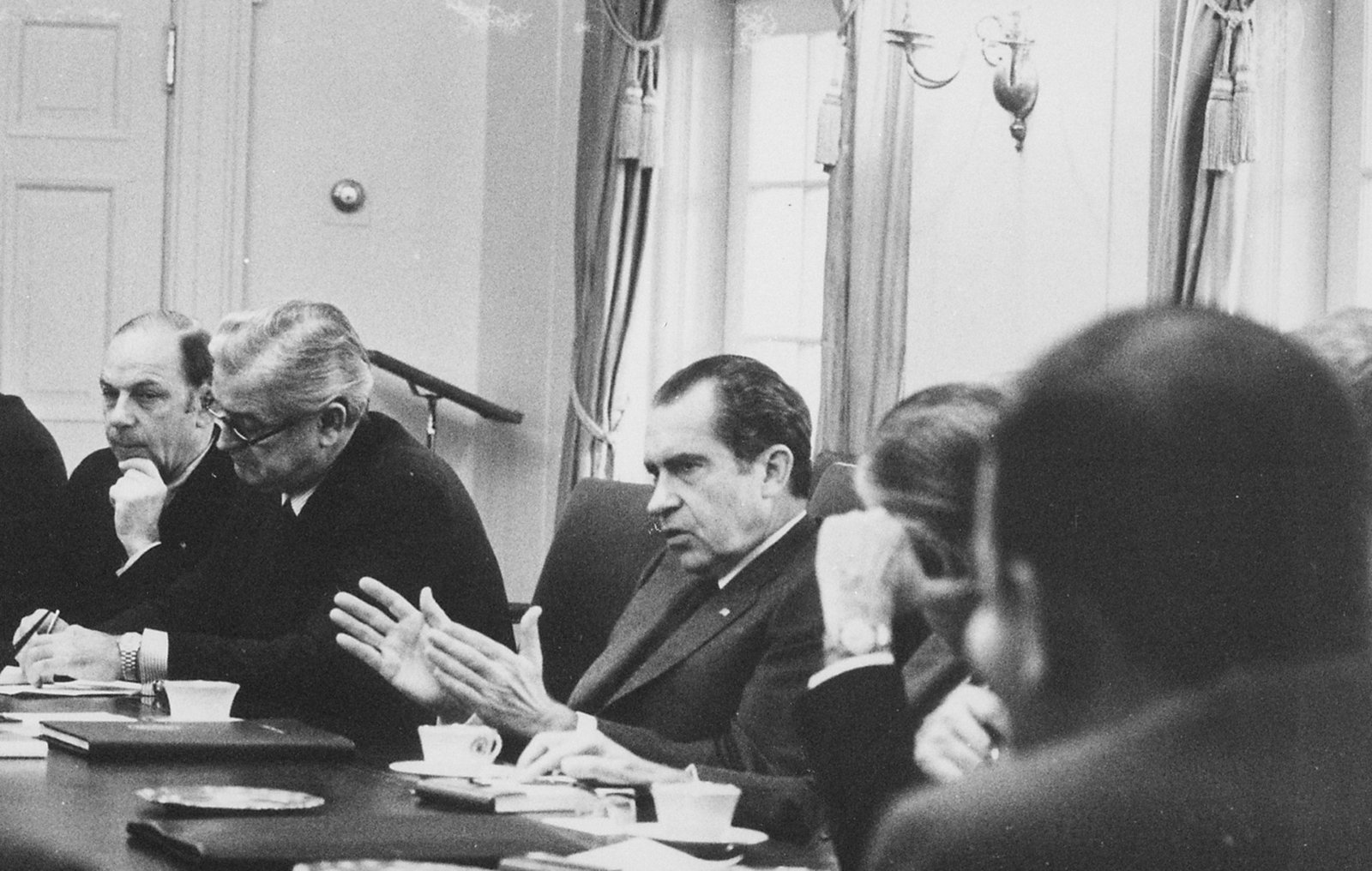
On August 15, 1971, Richard Nixon interrupted Sunday-night television to announce the New Economic Policy. With the Vietnam War winding down, Nixon argued, the economy required federal action to deliver what he called “a new prosperity without war.” Nixon declared that night, “We must create more and better jobs; we must stop the rise in the cost of living; we must protect the dollar from the attacks of international money speculators.”
His policy froze wages and prices for 90 days and thawed a restraint on Washington’s management of money by suspending gold convertibility for foreign governments and central banks.
One policy froze the prices Americans could charge one another. The other released the government from the rule that forced it to redeem its monetary promises. Both followed the same instinct: when the signal becomes inconvenient, suppress it and escape the discipline it imposes.
Nixon called the suspension temporary. It was not.
Broken Promises
Friedrich Hayek had named the vulnerability 28 years before Nixon acted. Writing in 1943, in an essay later collected in Individualism and Economic Order, he granted that “the gold standard as we knew it undoubtedly had some grave defects.” Gold arrived too slowly to track real demand for money, producing deflation before new supply arrived and excess once it did. But the defects were not the point. Gold gave the world an international currency answerable to no single government, a monetary policy that was largely automatic and therefore predictable, and money supply adjustments that generally moved in the right direction. Hayek’s answer was not managerial discretion but a better rule: a currency anchored to a broad basket of commodities rather than one metal, governed automatically, and explicitly not a license to freeze any individual price along the way.
Seventeen years later, in December 1960, economist Robert Triffin told the Joint Economic Committee that the system carried the seeds of its own collapse. The world needed dollars abroad, pushed out by military spending, foreign aid, and capital outflows. Every dollar that left made it less plausible that the United States could redeem them all in gold at $35 an ounce.
Later that decade, the dominoes began to fall. The London Gold Pool, a coalition of central banks trying to defend that price through coordinated selling, collapsed in 1968. Across the English Channel, France spent the back half of the decade converting its dollar holdings into gold, at one point sending a warship to New York to collect the gold. American gold reserves peaked in 1949 at 21,708 metric tons. That August night when Nixon spoke, they stood at 9,069, a fall of some 58 percent.
Treasury Secretary John Connally had been arguing for months that the old policy of benign neglect toward the dollar’s slide had run its course, and Nixon agreed. Meeting with Nixon two weeks before the announcement, Connally predicted, “We may never go back to it. I suspect we never will.” Nixon called the move a defense of the dollar and an attack on speculators. It was, in function if not in name, the opposite: a default, dressed in the language of a temporary suspension. Bretton Woods ended in all but name by 1973, and the dollar has floated on nothing but promises ever since. What replaced the rule was the discretion of whoever held the job next.
By the fall of 1971, with an election about a year out, Nixon was leaning on Arthur Burns, his own appointee to chair the Federal Reserve, to keep money loose. Burns obliged. Tapes declassified decades later show a Fed chairman reporting rate cuts to the president like a subordinate delivering good news, and a money supply that grew faster in 1972 than in either of the two preceding years.
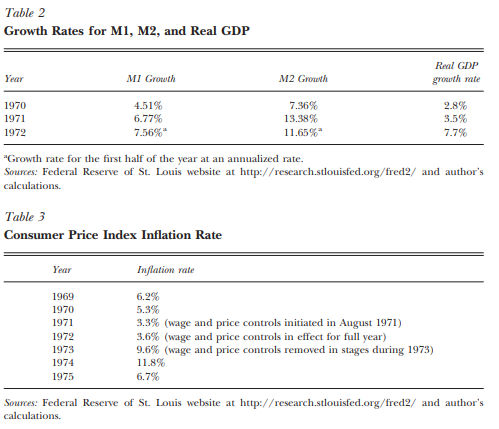
Nixon won in a landslide. The country spent the rest of the decade paying for it, in double-digit inflation and stagflation.
The real lesson of 1971 was never about gold. It was about what happens when the person guarding the currency answers to the person spending it.
The Same Test, 55 Years Later
Since 1971, the Fed’s independence has been questioned many times. Donald Trump had no gold window to close, so he went after the guard instead, a guard he had appointed himself in his first term. Jerome Powell spent most of 2025 as the public target of a president demanding lower interest rates. When Powell refused to bend, a Justice Department criminal investigation opened into cost overruns at the Fed’s building renovation. Trump also moved against the Board itself. He attempted to fire Governor Lisa Cook in August 2025, the first such attempt in the Fed’s 111-year history.
In a video statement, Powell warned of the pressure the Fed was under. He stated, “The threat of criminal charges is a consequence of the Federal Reserve setting interest rates based on our best assessment of what will serve the public, rather than following the preferences of the President.” The Department closed the investigation in April 2026, handing what remained to the Fed’s own inspector general. Two months later, the Supreme Court blocked Trump’s first attempt to fire Lisa Cook by a single vote, 5-4, on the same day it affirmed Trump’s firing of an FTC commissioner.
Powell’s term as chair ended in May but, for the first time since 1948, the former chair stayed on the Board as an ordinary governor. His replacement, Kevin Warsh, walked into the job promising independence and a hard line on inflation. He arrived with his own ties to the White House. His father-in-law, Ronald Lauder, has been one of Trump’s closest friends since Wharton; he is credited with reigniting the Greenland debate and gave $5 million to a pro-Trump super PAC.
Warsh, to his credit, held the line. Two meetings in, he has held rates at 3.50 to 3.75 percent against a president who is pushing for cuts. Three regional Fed presidents, Beth Hammack, Neel Kashkari, and Lorie Logan, dissented anyway, arguing for a hike in an attempt to temper inflation sooner. AIER’s own Monetary Rules Report found 11 of 12 standard rules pointing higher than where Warsh has held; the original Taylor rule prescribes the highest target rate, at 5.91 percent. Warsh is refusing the president’s cuts and still sitting more than two points below what that rule would require. Resisting pressure is not the same as following a rule.
But Burns did not cave in his first two meetings either. He caved in year two, once the approaching 1972 election made Nixon want loose money badly enough to ask for it outright. That incentive is forming again, on a shorter clock. Trump is not on the ballot in November, but his majority is, and since 1934 the president’s party has lost an average of 28 House seats during the midterms. A soft economy heading into them is exactly the condition that makes a president want lower rates.
That is the institutional danger Hayek saw. His objection to discretion was not that every manager would use it badly. It was that a system governed by judgment leaves the currency exposed to a president who wants something from it. Hayek’s point was that the currency should not have to depend on either.
