

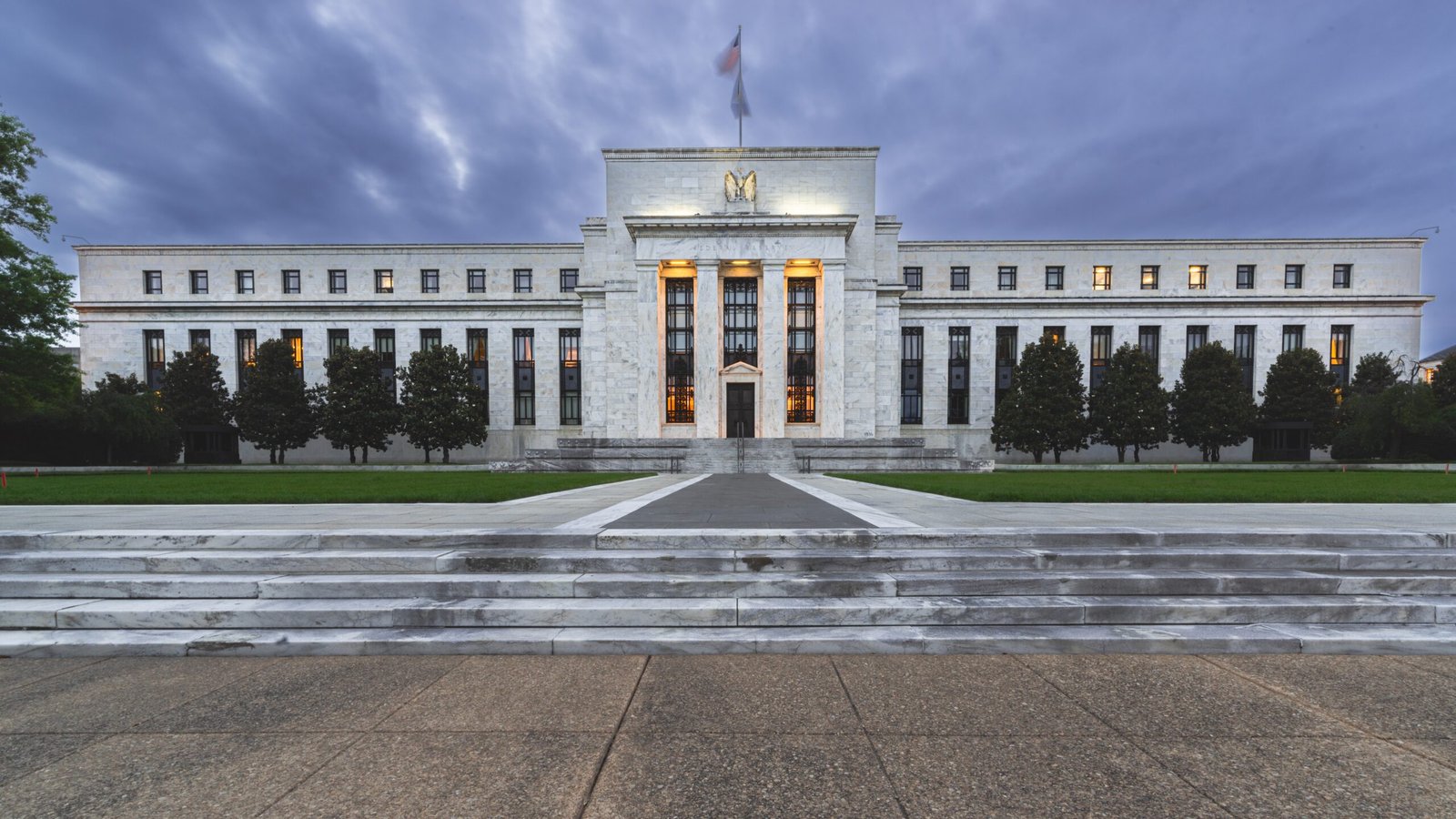
Markets almost never function better when participants know less rather than more. Yet that is where the growing campaign against Federal Reserve forward guidance ultimately leads.
Federal Reserve Chairman Kevin Warsh has argued that the Fed should speak less, publish fewer clues about its future intentions, and move away from many of the communication tools developed over the last three decades. As he told the Senate Banking Committee, “Unlike many of my colleagues past and present, I don’t believe in forward guidance. I don’t believe that I should be previewing for you what a future decision will be.”
The argument sounds sensible enough. Central bankers are often wrong. Forecasts are revised. Policymakers become attached to projections that events quickly render obsolete. Markets sometimes spend more time parsing Federal Reserve speeches than studying the economy itself.
Yet this entire line of reasoning overlooks a basic fact: information does not disappear when it is withheld. Warsh is correct that markets can become overly focused on Federal Reserve communications. But reducing official communication does not eliminate that focus. It merely redirects it. Investors who once scrutinized public statements will instead scrutinize private signals, informal conversations, and perceived access to policymakers. The demand for policy information remains unchanged. Only the transparency of its distribution changes.
The debate over Federal Reserve communication is not really about forward guidance. It is about information.
For most of its history, the Federal Reserve operated behind a veil of deliberate ambiguity. Prior to 1994, it did not routinely announce changes in its target interest rate. Most investors and economists were expected to infer policy changes from open-market operations and subtle shifts in Federal Reserve behavior. Entire industries emerged around deciphering these signals.
This was often described as market discipline. In practice, it frequently rewarded access over analysis. The winners were not necessarily those who best understood inflation, employment, productivity, or growth. They were often those who best understood the habits of central bankers, the mechanics of Federal Reserve operations, and the informal channels through which information traveled.
The move toward transparency occurred because policymakers gradually concluded that this was a poor way to run a modern monetary system. The Fed began announcing rate changes directly. It released more information about its reasoning. Minutes became more detailed. Press conferences became routine. Economic projections became public. Research generally found that markets became better at anticipating policy actions as communication improved and policy surprises diminished.
The intellectual foundation for much of this shift was laid by economists such as Marvin Goodfriend and David Dotsey. In a series of influential papers during the 1980s, Goodfriend challenged what he called the Federal Reserve’s “monetary mystique”—the longstanding belief that secrecy enhanced monetary policy. Dotsey likewise examined the economics of secrecy and concluded that while opacity might reduce some short-run market volatility, it also increased uncertainty by making policy harder to anticipate. Together, their work helped shift the debate from whether central banks should communicate to how they should communicate. Their central insight was straightforward: information not disclosed to the public does not disappear. It simply becomes more valuable to those who possess it, creating incentives for investors to seek privileged access rather than rely on superior economic analysis.
I first encountered these ideas as a doctoral student in economics during the stock-market crash of October 1987. The Federal Reserve of that era was hardly known for openness. Yet when markets were spiraling downward, Alan Greenspan did not choose silence. He issued a brief statement affirming that the Federal Reserve stood ready to provide liquidity to support the financial system.
The statement contained no projections and no dot plots. It simply told markets what they needed to know. The Federal Reserve would act if necessary. One of the most successful acts of forward guidance in Federal Reserve history occurred before economists had even given it a name.
Less than a decade later, I found myself advising central banks and monetary authorities in Kosovo, Afghanistan, Iraq, and Jordan. In each case, the consequences of opacity were impossible to miss. When official information was scarce, markets did not become more efficient. They became more political. Economic analysis mattered less. Access mattered more. Businesses devoted less effort to understanding economic conditions and more effort to discovering what government officials were privately thinking. In weak institutional environments, information itself became a form of currency.
The same dynamic applies to monetary policy.
Suppose the Federal Reserve substantially reduces forward guidance. Will investors stop trying to forecast interest rates? Will banks stop hiring economists? Will hedge funds stop searching for clues about future policy? Of course not.
The demand for information about monetary policy will remain exactly where it is today. Only the supply of public information will decline.
The likely result is not a renewed focus on economic fundamentals. It is a return to a world in which access carries a premium. Investors will spend more time interpreting private signals, cultivating relationships, and searching for clues about policymakers’ intentions. The advantage shifts away from those who are best at analyzing economic data and toward those who are best positioned to obtain information that others cannot.
Supporters of a quieter Federal Reserve are correct that not every speech is useful and not every projection deserves publication. Some communication tools may indeed have gone too far. But the solution to excessive communication is better communication, not deliberate opacity.
Markets are remarkably capable of evaluating information. Investors already distinguish between sound analysis and empty rhetoric. Some Federal Reserve speeches move markets because investors regard them as credible. Others are ignored because investors do not. The real question is whether those judgments should be made using public information or private information.
Markets work best when investors compete on analysis rather than access. The real cost of Federal Reserve silence is not uncertainty. It is privilege.
