


What Is Mandatory Training?
Mandatory training is learning that employers require employees to complete so they can meet legal, regulatory, safety, ethical, or organizational standards. Unlike optional courses or professional development, which help employees gain new skills and advance their careers, mandatory training focuses on reducing risk, keeping people safe, and ensuring organizations meet their responsibilities. In many countries, this is called compulsory training, and it is a key part of managing a responsible workforce.
But just finishing a course is no longer enough. More organizations now see that if mandatory training is not effective, employees may not be ready for real situations. This can lead to compliance problems, workplace accidents, cybersecurity issues, fines, and damage to the company’s reputation. Assigning courses without making sure employees understand and use what they learn misses the point of training.
So what does mandatory training mean in today’s workplace? It is more than just meeting a rule or regulation. It is a chance to encourage safer habits, strengthen company values, and help people make better decisions at work. In this article, we will look at the most common types of mandatory compliance training, explain why organizations cannot make compliance learning optional, share ways L&D professionals can create training that employees remember, and discuss what employers should do if employees do not finish their required training.
Why Mandatory Training Matters Beyond Compliance
Many people see mandatory training as just a legal requirement, but it offers much more. Good training helps organizations lower risks and improve how employees act, make decisions, and perform at work. Instead of treating it as a yearly task to check off, leading organizations use mandatory compliance training to set clear expectations, build a strong culture, and help employees handle real-life situations effectively.
Protects The Organization Legally
A main reason for mandatory employee training is to help organizations follow laws, rules, and industry standards. Training on topics like anti-harassment, data privacy, workplace safety, and ethics is often required. It is also important to keep accurate records of who completed training, as these records can serve as proof during audits, inspections, or legal proceedings. Showing that employees have finished the right training can help protect the organization if its practices are questioned.
Creates Safer Workplaces
Effective mandatory compliance training also helps employees spot and stop risks early. Safety training can reduce workplace accidents, cybersecurity lessons can reduce phishing and data breaches, and violence prevention can teach staff to notice warning signs and act quickly. When employees know the risks and what to do, the workplace becomes safer for everyone.
Builds An Ethical Organizational Culture
Beyond compliance, HR mandatory training supports the values that guide daily behavior at work. Training on respect, inclusion, ethics, and reporting helps employees speak up when needed and take responsibility for their actions. Over time, this builds trust, improves teamwork, and creates a workplace where people feel supported and confident.
Reduces Operational Risk
Organizations that provide mandatory HR training are better able to lower operational risks. When employees know the company’s rules and what is expected, they make more reliable choices. This helps keep customers’ trust, improves security, boosts productivity, and protects the company’s reputation. In this sense, required training is not just about following rules—it is a smart investment in the company’s future strength.
Organizations that benefit most from mandatory training aren’t just those with high completion rates, but the ones whose employees make better decisions as a result. While compliance is necessary, building skills is what truly leads to safer workplaces, stronger cultures, and better overall business performance.
-Christopher Pappas, CEO and founder of eLearning Industry
Types Of Mandatory Training Every Organization Should Consider
Mandatory training works best when it focuses on the specific risks an organization wants to avoid, rather than just checking off regulations. Although legal requirements vary by industry and location, most organizations have similar responsibilities for employee safety, ethical behavior, data protection, and keeping operations running smoothly. Knowing these areas helps L&D professionals choose learning programs that lower risk and support business goals.
Mandatory Compliance Training
Most workplace learning programs begin with mandatory compliance training. This training helps employees learn the laws, rules, and company policies that guide their work. It also reduces the risk of legal issues or unethical behavior.
Common topics are codes of conduct, anti-harassment and anti-discrimination, business ethics, data privacy, anti-bribery, and conflicts of interest. Instead of asking employees to memorize policies, good compliance training uses real-life examples to show how everyday decisions can have legal, financial, or reputational effects. This helps employees see not just what the rules are, but why they matter.
Workplace Health And Safety Training
Health and safety training keeps employees safe and helps organizations maintain a productive workplace. While requirements differ by workplace, many organizations offer training on OSHA standards, emergency response, personal protective equipment (PPE), hazard communication, ergonomics, and incident reporting.
The goal is more than just meeting regulations. Employees should be able to spot hazards, act correctly in emergencies, and use safe work habits every day. For L&D teams, this means designing training that builds practical decision-making skills, not just giving yearly presentations. Regular refreshers and scenario-based practice are especially helpful where safety risks can change.
Cybersecurity Awareness Training
Cybersecurity training is now one of the most common types of mandatory employee training because digital threats are growing more advanced. Any employee, no matter their role, can be targeted by cybercriminals.
Today’s cybersecurity training usually covers phishing, password safety, AI-based scams, ransomware, safe remote work, and handling sensitive information. As Artificial Intelligence makes fake emails and scams harder to spot, employees need to learn how to notice warning signs and respond the right way.
Since cyber threats are always changing, cybersecurity training should happen more than once. Short, ongoing lessons and practice with fake phishing emails help employees build good habits and stay ready for new risks.
HR Mandatory Training
HR mandatory training aims to build a respectful, inclusive, and legally compliant workplace. Depending on company policies and laws, this training may cover behavior standards, diversity, equity, and inclusion (DEI), leave policies, reporting steps, and what managers are responsible for.
For leaders, HR training often goes beyond basic awareness. Managers may need extra help with handling employee concerns, keeping records of workplace issues, responding to complaints, supporting accommodations, and applying policies fairly. These programs lower the risk for the organization and build fairness, accountability, and trust.
Role-Specific Mandatory Training
Not all mandatory training is the same for every employee. Many industries need special training based on job duties, regulations, or risks in their work.
- Healthcare workers may take training on patient privacy, infection prevention, and clinical safety.
- Finance teams often learn about anti-money laundering and financial rules.
- Manufacturing employees focus on equipment safety and handling hazardous materials.
- Retail staff learn about loss prevention and customer safety.
- Education and government jobs have their own training needs, such as safeguarding, ethics, accessibility, and public accountability.
For L&D professionals, it is important to match mandatory training to the risks employees face in their roles. Focusing on role-based training makes learning more relevant, keeps employees engaged, and helps organizations use their training resources where they matter most.
How L&D Professionals Can Design Mandatory Training That Employees Actually Remember
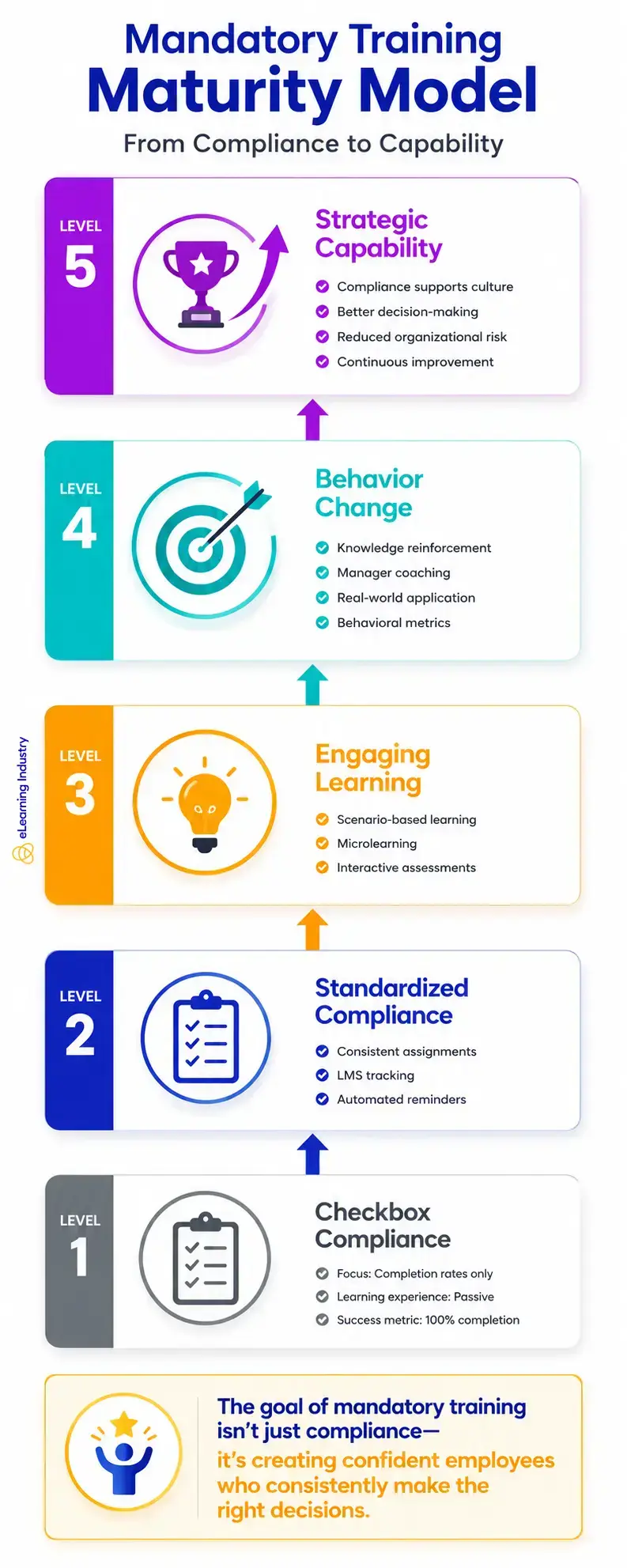
Mandatory training works only when it leads to real behavior change, not just when employees click through a course to get a certificate. For L&D professionals, the main goal is to help people make better decisions in serious situations, such as handling customer data, addressing safety hazards, or recognizing inappropriate workplace behavior. While completing a course may meet compliance requirements, true learning is what actually reduces risk.
Start With Real Workplace Risks
A common mistake is filling mandatory training with policies, definitions, and legal terms that employees find hard to relate to their daily work. Instead, start with the real risks people face in their jobs. What mistakes are most likely? What situations have caused problems before? What choices could put the organization at legal, financial, or reputational risk?
Using real workplace scenarios makes learning more meaningful right away. For example, a phishing email, an unsafe warehouse task, or a tough conversation with a coworker is much easier to remember than long policy documents. Employees can see themselves in these situations and think about how they would respond.
Make Training Relevant To Daily Work
Employees are more likely to engage with mandatory employee training when they know why it matters. Each module should clearly answer three questions: Why is this important? What could happen if I ignore it? How does it affect my job?
Different employees face different risks, so examples should match their responsibilities whenever possible. Tailoring content by department, job, or experience level helps people see compliance as part of doing their job well, not just as a rule to follow.
Use Scenario-Based Learning
Rather than having people memorize policies, encourage them to use what they know in real-life situations. Tools such as branching scenarios, simulations, case studies, and role-based exercises help employees think before they act. When they see the results of their choices in a safe setting, they are more likely to remember the right actions at work.
Keep Learning Short And Reinforced
Even the best HR training loses its effect if employees only do it once and never review it again. Breaking content into short lessons makes it easier to learn, and using reminders and follow-ups helps people remember key ideas over time. This ongoing approach helps people remember more than just doing training once a year.
Measure Behavior, Not Just Completion
Finally, success should be measured by real results, not just by who finished the training. Modern learning systems offer analytics that do more than track completions. L&D teams can assess knowledge through tests, spot trends in performance, review manager feedback, and link learning data to business results such as fewer incidents, better audit scores, or fewer policy violations. When you measure training by behavior change, not just completion, you get a clearer view of whether learning is really reducing risk.
What Happens If Employees Fail To Complete Mandatory Training?
Mandatory training works best when employees finish it on time, but the consequences for missing required training depend on local laws, industry rules, and each company’s policies. Some training is required by law, while other programs are set by company standards or contracts. Because of this, there is no single response to missed training.
Risks For Employees
Usually, employees receive automated reminders, then talk with their manager if they miss training. If they still do not finish, the company might temporarily block access to some systems, stop them from doing certain tasks, or require them to complete the training before returning to those duties. If someone keeps missing mandatory training, disciplinary action may result. All of these steps should follow company policy, employment laws, and the type of training involved.
Risks For Employers
The risks are not limited to individual employees. If HR or other required training is incomplete, organizations can face compliance failures, fines, failed audits, lawsuits, insurance issues, cybersecurity problems, and reputational damage. Keeping accurate training records is just as important as providing the training.
Best Practices Before Escalation
Before initiating any disciplinary action, L&D and HR teams should remove obstacles that prevent employees from completing training. Automated reminders, manager check-ins, easy-to-access courses, deadline extensions when needed, and clear records of follow-up can all help more people complete their training. It is also important to find out why employees are falling behind, whether it is because of workload, technical problems, or unclear instructions.
Conclusion
Leading companies use mandatory training programs to lower risk, build a strong workplace culture, help people make better decisions, build trust, and support shared values. Whether the training is for compliance or HR, the real goal should be lasting behavior change, not just finishing a course. When L&D professionals combine regulatory requirements with engaging and relevant learning, employees are more likely to remember and use what they learn. If people understand why the training matters and how it helps them in their daily work, organizations see better compliance, stronger performance, and a more resilient team.
