


What Is Frontline Training?
Frontline training is now a top priority for many businesses because frontline employees have a big impact on customer satisfaction, operations, safety, and brand reputation. These employees, whether they help customers, run equipment, provide healthcare, or handle logistics, represent the company and are often its biggest advantage. Even though their role is crucial, training for frontline workers has often received less funding than training for office staff. But with labor shortages, new technologies, and higher customer expectations, this is changing. Companies are moving away from treating training as a one-time event and are making it an ongoing effort to boost performance, build resilience, and support long-term goals.
Frontline training is a structured way to give customer-facing and operational employees the knowledge, skills, and habits they need to do their jobs safely, efficiently, and consistently. This training covers onboarding, compliance, technical skills, customer service, and ongoing development for those who work closest to customers, products, and daily operations.
A frontline employee, also called frontline staff, is anyone whose job directly supports customers or the main business operations. This group includes retail workers, nurses, warehouse staff, manufacturing operators, hospitality workers, logistics teams, field technicians, and customer service agents. If you’ve ever wondered what a frontline employee is, it’s simple: these are the people who provide essential products or services and represent the company every day.
In this guide, we’ll look at what frontline training is, why it’s important, the best training methods, common challenges, and real-world examples to help organizations build stronger frontline teams.
Why Frontline Training Matters More Than Ever
Frontline training is now a top priority as companies face labor shortages, fast digital changes, and higher customer expectations.
Closing Skills Gaps
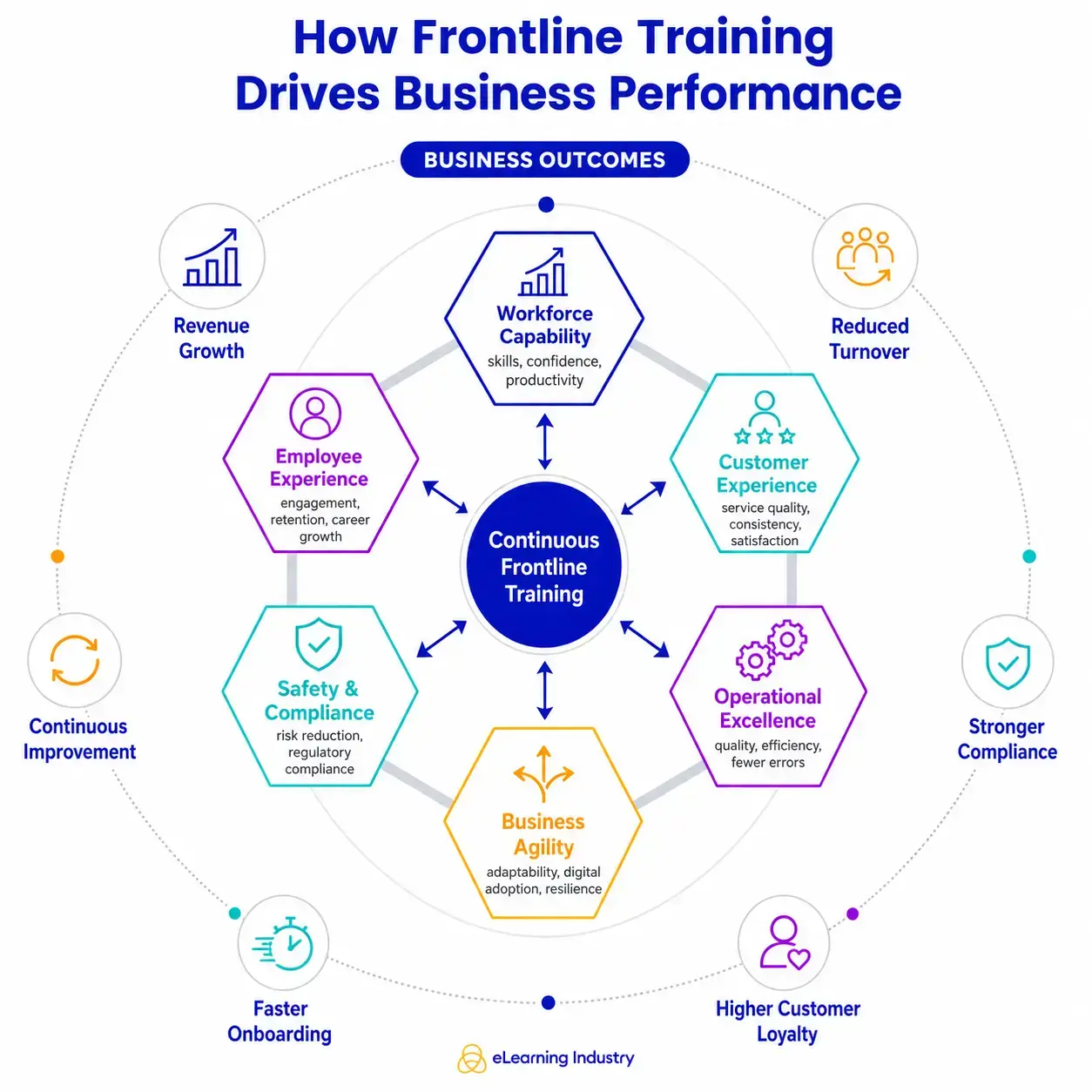
Today’s frontline staff need to learn new technologies, provide steady service, and keep up with changing processes, often with less time for traditional training. By investing in frontline training, organizations can close skill gaps more quickly, boost workforce readiness, and cut down on productivity losses from high turnover.
Ensuring Compliance
Business leaders also face more pressure to keep up with compliance and workplace safety. In regulated fields like healthcare, manufacturing, logistics, and food service, even small mistakes can cause fines, disrupt operations, or hurt a company’s reputation. Good frontline training helps employees understand the rules, follow standard procedures, and use best practices with confidence on the job.
Operational Consistency
Operational consistency is also key. No matter if a company has five locations or five hundred, standard training helps employees do their jobs the same way, provide reliable service, and keep up brand standards. This kind of consistency is even more important as companies grow or add new technologies and workflows.
Improved Employee Retention
Learning also plays a big part in keeping employees. When workers get real chances to grow, they tend to feel more confident, engaged, and loyal to their company. Recent Gallup research still shows a strong link between learning opportunities, employee engagement, and business results.
Core Skills Every Frontline Training Program Should Develop
Frontline training works best when it helps employees build the skills they need to work confidently, handle change, and deliver steady results. While technical skills differ by industry, every good training program should include a mix of operational, people, compliance, and decision-making skills.
Technical And Operational Skills
Frontline employees need to know how to use the tools, processes, and systems they work with each day. This means using equipment safely, following standard procedures, working with digital systems, and keeping workflows smooth. Since technology and business processes change, technical training should happen regularly, not just during onboarding. Ongoing training helps employees stay productive and avoid mistakes or disruptions.
Customer And Communication Skills
No matter who employees interact with—customers, patients, or coworkers—good communication affects service quality and results. Training should include active listening, clear speaking, empathy, handling conflicts, and ways to fix service problems. These skills help employees handle tough situations, build better customer relationships, and work well with others.
Safety And Compliance
Safety and compliance are key parts of frontline training, especially in industries with strict rules. Training should cover the right topics for your workplace, like OSHA rules, food safety, healthcare laws, or cybersecurity. Regular compliance training not only meets legal requirements but also helps prevent accidents, lowers risk, and builds a culture of responsibility.
Problem Solving And Decision-Making
Frontline employees today are often expected to make decisions on their own, without always waiting for a manager. Whether they are handling a customer complaint, fixing equipment, or dealing with surprises at work, they need to feel confident acting within company guidelines. Building skills like critical thinking, good judgment, and problem-solving helps them respond quickly while keeping up quality and safety. As companies become more flexible and customers expect more, giving frontline staff the tools to make good decisions is now a key part of strong training programs.
Effective Methods For Delivering Frontline Training
Frontline training works best when it matches how employees really do their jobs: moving around, working quickly, and adapting to changes. Instead of using just one training method, organizations get better results by mixing different approaches that help people remember what they learn and use it on the job. The aim is not just to finish training, but to make sure frontline workers can use new skills with confidence and consistency.
Mobile Learning
Many frontline employees do not use desktop computers during their workday. People working in retail, healthcare, field service, or manufacturing usually learn through smartphones or tablets. Because of this, mobile-first training is now a key part of frontline worker training. Mobile learning lets employees check procedures, watch short videos, or do quick refresher lessons whenever they need help. This makes learning easier to access and keeps work running smoothly.
Microlearning
Microlearning works well with mobile training by turning complex topics into short, focused lessons that are easier to understand and remember. This method fits with research showing people learn better when information is given in small pieces. Rather than long training sessions, organizations can use five- to ten-minute lessons spread out over time. This helps employees remember what they learn and makes frontline staff training easier to fit into shift work.
On-The-Job Training
Some skills are best learned right where employees use them every day. Classroom training gives basic knowledge, but on-the-job coaching lets managers watch how employees work, give quick feedback, and fix mistakes before they become habits. This is especially helpful for jobs that need good judgment, customer service, or equipment use. Learning at work also helps employees use new knowledge in their daily tasks more quickly.
Scenario-Based Learning
Employees who work with customers often face situations that a checklist cannot solve. Scenario-based learning helps them practice handling complaints, safety issues, tough conversations, or surprises at work by letting them make decisions in realistic situations. When employees build confidence before facing these challenges for real, organizations can improve service quality and keep operations running smoothly.
Peer Coaching And Mentoring
Experienced employees are some of the best learning resources a company has. When new hires are paired with skilled coworkers, they learn faster because they get practical tips that formal training might miss. Peer coaching also builds teamwork, supports good habits, and helps keep important knowledge in the company, especially where staff turnover is high.
Blended Learning
The best frontline training programs mix digital learning with classes led by instructors, hands-on practice, and coaching from managers. An LMS can deliver online lessons, track progress, and assign refresher courses, while in-person activities help employees practice and discuss important skills. This blended approach gives employees the flexibility they need and keeps the personal touch that helps them learn and perform well over time.
Common Challenges In Frontline Training And How To Overcome Them
Frontline training should match the real situations employees face. Many frontline workers move between locations, work different shifts, and have little time for formal learning. Unlike office teams, they have to juggle daily tasks with learning new skills, so traditional training often does not fit. To help frontline staff learn better, companies should find out what gets in the way and use training methods that fit smoothly into their daily routines.
Challenge |
Best Practice |
High turnover |
Implement continuous onboarding that extends beyond the first few weeks. Ongoing learning helps new hires become productive faster while reinforcing skills for existing frontline workers. |
Shift work |
Offer mobile learning so frontline staff training is accessible anytime, regardless of schedules or locations. |
Limited computer access |
Use QR codes, mobile apps, and digital performance support tools to deliver learning where frontline workers need it most. |
Time constraints |
Break training into short, focused microlearning modules that employees can complete during natural breaks in the workday. |
Multiple languages |
Provide localized content and culturally relevant examples to ensure all frontline employees receive consistent, understandable training. |
Knowledge retention |
Reinforce learning through spaced repetition, refresher modules, and manager coaching to improve long-term recall. |
Low engagement |
Increase participation with interactive learning, realistic scenarios, quizzes, and collaborative activities that make training relevant to daily responsibilities. |
The best organizations know that frontline worker training needs to be flexible. They keep improving their programs by listening to employees, looking at performance data, and responding to changing business needs. This way, learning stays practical, accessible, and useful at work.
Conclusion
Frontline training is no longer just an operational need. It has become a key part of business strategy. When organizations invest in ongoing learning, they not only build stronger frontline teams but also improve customer service, boost resilience, and help employees adapt to new technologies, rules, and market changes. The best training programs go beyond onboarding. They mix manager coaching, data insights, and easy-to-access learning that helps people build skills over time. As workforce needs and business conditions keep changing, companies that focus on frontline learning will be better able to close skill gaps, improve performance, and build a more flexible, future-ready team.
