

This year’s Centerpiece and Special Presentations section of the Toronto International Film Festival featured a striking postwar drama from Danish-Egyptian director May el-Toukhy, a tender narrative debut from documentarian Kim Bartley, and the follow-up film from last year’s breakout star Chase Infiniti.
Venice Film Festival Golden Lion winner “Woman Unknown,” the latest from writer-director May el-Touky, immerses you directly in the psyche of a woman doing her best to survive post-WWII Danish society. Before we meet Marie (Mathilde Arcel, who also took home the Volpi Cup at Venice for her shattering performance), we’re introduced to the haunting specter of the woman who came before her. The fabric of a silk wedding dress cascades through the darkness, the moon illuminating its pristine, white sheen. Marie awakes before the sun rises, leaving her partner to his slumber. We soon learn she is a maid and nanny in this well-to-do household. She’s also on the cusp of marrying her boss, rising above her station to become the new lady of the house.
Anyone in this position would already be walking on eggshells, but in Marie’s case she’s also harboring a dark secret from her past during the German occupation of Denmark. Like many women, she did what she had to do to survive. As the film progresses, we learn she’s haunted not just by the fear that her past will be exposed and, like other women branded collaborators, she’ll be violently stripped in the street, her hair shorn like a sheep, and her body painted with a red swastika, but also with physical pain and a personal anguish that will never leave her. The film is punctuated by several sequences of these women being violently humiliated in the streets, with el-Touky holding her camera on their faces as they are dehumanized. In one such interlude, the actress at the center evokes the great Falconetti in Dreyer’s “The Passion of Joan of Arc.”
El-Touky’s deft script not only exposes the hypocrisy of a society that is so quick to punish these women but turns a blind eye on the businessmen like her fiancé who continued operating—and selling to Germans—during the occupation. It also explores the way in which for many women, occupation or no, their bodies do not belong to them. Staying uncomfortably close to Marie’s battered psyche, this is a brutal film about the insidious violence of occupation, the many ways we can lose our humanity, and a sharp rumination on whether or not resilience is always admirable.
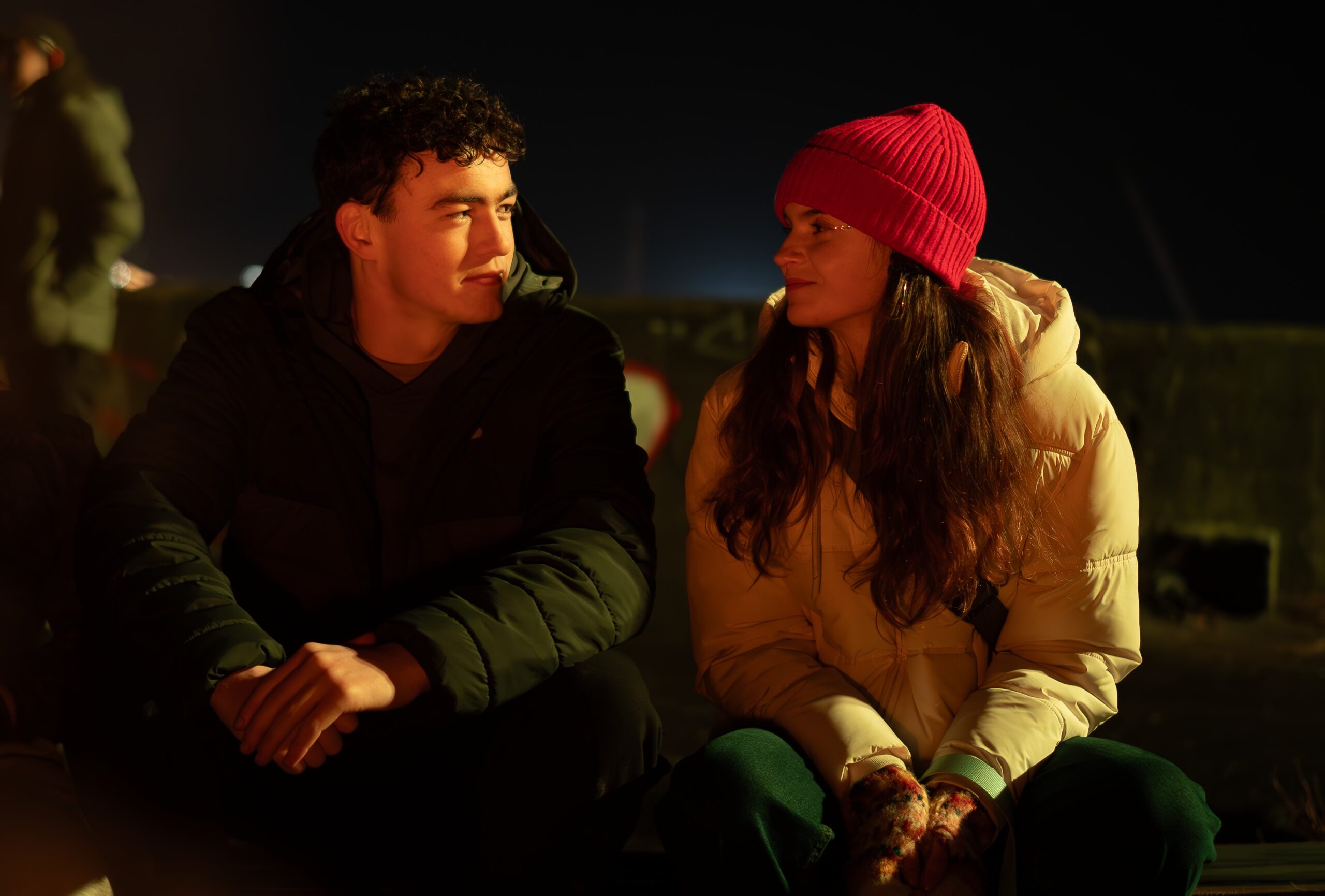
With her first narrative feature film, documentarian Kim Bartley’s “Lemonade” is a tender, if somewhat cliched, look at perseverance in the face of a hard childhood. Lewis Brophy stars as Danny, a young man who’s been in the social services system most of his childhood. Separated from his brother for years and just shy of his 18th birthday, Danny makes a bad choice that lands him in jail. After turning eighteen, not only does he have to leave the youth home where he’s been living for the past few years, he also faces his court date as an adult.
Just as Danny must face the world on his own for the first time, Josh (Barry Keoghan, soulful as always), the caseworker who he thinks is responsible for his separation from his brother, re-enters his life. The two have much in common; Josh and his older brother also went through the system as kids. Like Danny’s mother, Josh’s older brother Gav (Graham Earley) is an addict. The film is at its strongest when it explores the similarities–and pointed differences–between these two sets of brothers. Unfortunately, the script teeters between exposition heavy dialogue and cliched plot points that pull down its otherwise clear-eyed vision of Danny’s world.
A side plot involving a girl named Mila (Carla Tous), who is unfortunately little more than a Gen Z twist on the manic pixie dream girl trope. She’s got a magic bag that seems to have everything you might need at any given moment (including batteries??) and even has a tattoo on her arm that reads: When life gives you lemons; make lemonade. Brophy and Tous have very little chemistry, and their scenes together fit incongruously with the emotional journey Danny is on with Josh, with his estranged mother, and most importantly with the little brother he so desperately wants to reconnect with. That said, the final reunion between the brothers is staged so beautifully, it could make a stone cry.
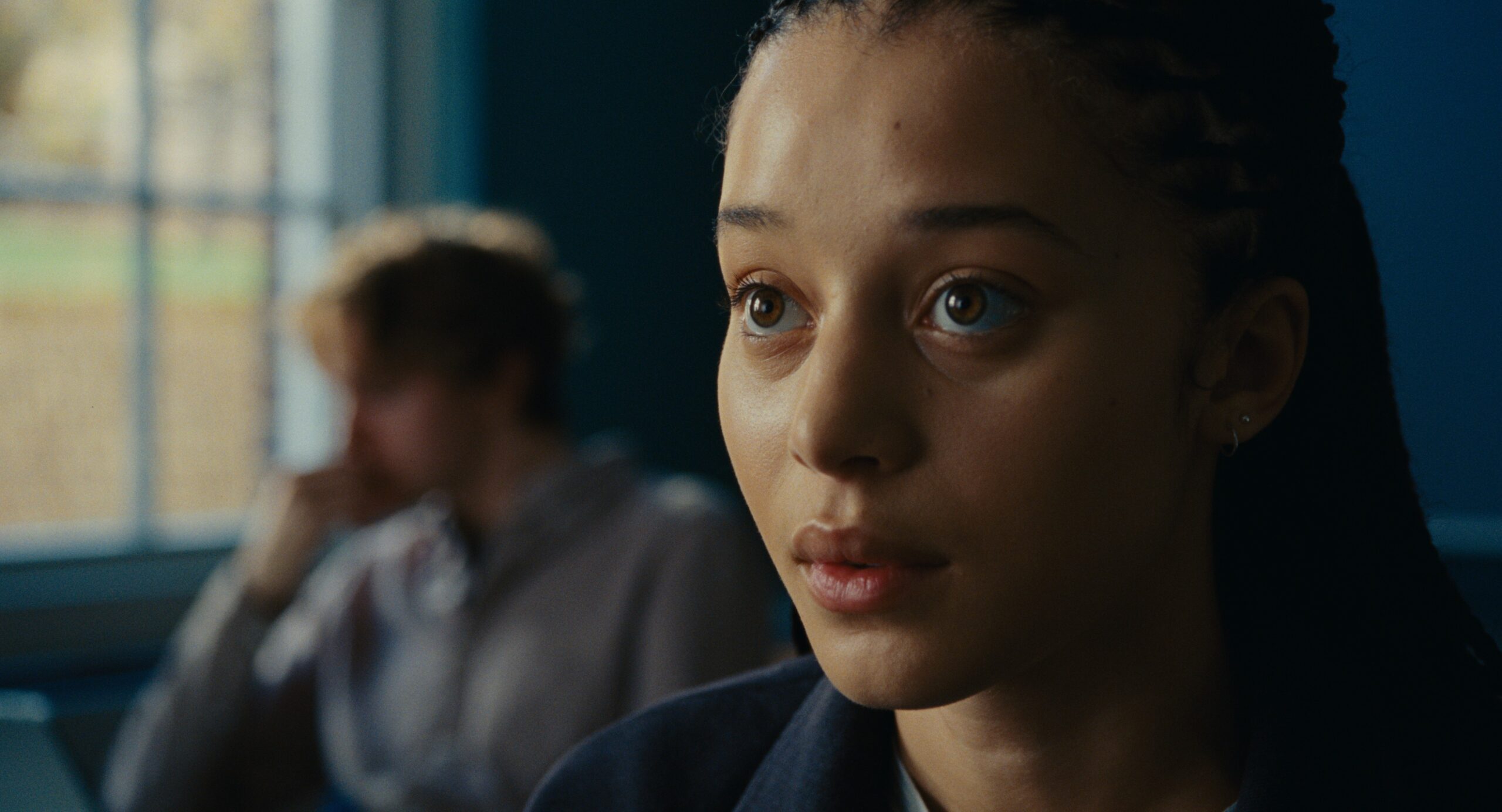
Following up her breakout turn in Paul Thomas Anderson’s Oscar-winning “One Battle After Another,” Chicago’s own Chase Infiniti stars as a young math whiz who finds herself in a bad romance during her freshman year of college in Nicki Byrne’s “The Julia Set”. Set at a fictional called GBU, Infiniti is the titular Julia, a promising young mathematician who chose a school near home instead of the many spots she’d earned at Ivy League schools in order to be near her family and her older brother, who has Down Syndrome.
She soon stands out among her peers and is tapped by her TA Pascal (Christopher Birney) to join an elite study group led by a brilliant, award-winning professor (Nina Hoss) as they prepare to take the Putnam Exam, which could help define all of their futures. For Julia, this could mean a full ride to one of her dream schools. For Pascal, it’s his chance to prove the apple didn’t fall that far from the tree; his father (Jason Isaacs), we soon learn, is an overbearing Fields Medal winner who has a building named after him on campus, and has also done on a number on Pascal’s self-worth.
Julia is clearly much more naturally gifted than Pascal, and I winced the first time she made herself smaller so he could get the spotlight. As their relationship gets more intense, his jealousy of her talent manifests in more and more violent and manipulative ways. While their story arc borders on cliche, Byrne finds a refreshing way for Julia to come into her own.
Birney is an interesting young actor, who brought a lot of depth and sensitivity to his breakout role as Conrad in the streaming hit “The Summer I Turned Pretty,” and brings a similar complexity to a role that could have just been a stereotype. Infiniti imbues Julia with a rich interiority largely through her sharp eyes and body language. Gillian Anderson is perhaps a little under-used as Pascal’s mother, who let her own light dampen so her husband’s alleged genius could shine, but she gives one hell of speech to knock some sense into Julia that, while didactic, is something a lot of young women need to hear: Live your life for yourself while you’re young. There will be plenty of time to make compromises later on.
