

In his 1984 book The Dark Side of Genius, Donald Spoto claims that Alfred Hitchcock pitched what would be his 1946 film “Notorious” as “the story of a woman sold for political purposes into sexual enslavement.” And now, as the film celebrates its 80th anniversary, that seems even more apt in a landscape where Women’s Rights are under attack. Add to that the film’s powerful depiction of Nazis amongst the populace just one year after WWII ended, and it becomes the launchpad for the story of Alicia Huberman (Ingrid Bergman), the American daughter of a convicted spy who gets drawn into a game of cat and mouse with federal agents hoping to take down a Nazi ring in Rio de Janeiro.
“Notorious” is ostensibly about stopping Nazis, but its real tension lies in how easily Alicia becomes expendable to the men claiming to save the world, and how agent Devlin’s (Cary Grant) love emerges only when he’s finally forced to see her as a person rather than bait.
Released a year after WWII had ended and the Nuremberg trials started, Hitchcock’s “Notorious” ultimately says that while the war may be over, the threat hasn’t disappeared. His Nazis, personified through the likes of Claude Rains’s Alexander Sebastian, are cultured and sophisticated people not hiding in the shadows but hosting dinner parties. That anxiety only intensifies the spy-thriller elements.
Yet for all its emphasis on Nazis, even the Allies are presented as flawed, bringing us back to Hitchcock’s original pitch for the movie. Through the eyes of Bergman’s Alicia, the movie also gives us the equally threatening realization that supposedly respectable men, the heroes who fought for freedom, are just as willing to use women for their own aims, especially if that woman is morally compromised.
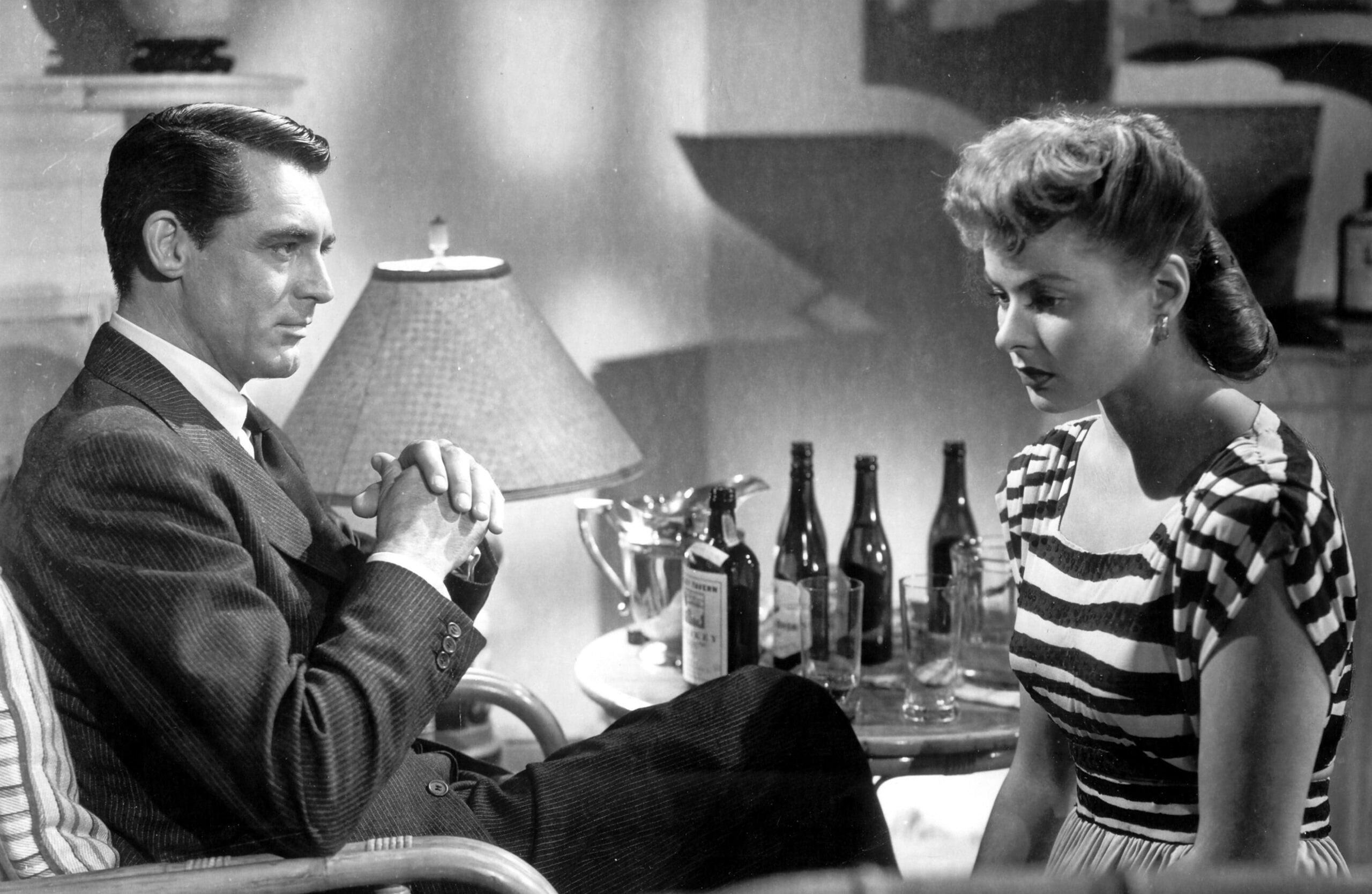
In a post-Hays Code era, Alicia Huberman is a wanton woman. It isn’t enough that her father is a Nazi, and that she’s recorded openly disagreeing with his way of life. She proudly calls herself an American. She’s single, drinks heavily, parties, and wears midriff-revealing clothes. As she tells Devlin, she’s a woman seeking “Good times. That’s what I want, and laughs with people I like.”
Though Alicia’s father’s reputation stains her character, it feels less of a problem than how others perceive her promiscuity. She’s recruited into the Sebastian scheme because of his past infatuation with her, and the shadowy government figures presume that a woman who parties with men should have no problem feigning love. She’s simultaneously shamed for her familial legacy and for being an unpristine woman. Hitchcock plays with the irony inherent in that. She’s seen as morally corrupt and compromised, yet those very qualities make her attractive.
Her ability to attract men is immediately seen in how quickly Devlin admits he could fall in love with her. The early days of their romance aren’t shown on screen; they almost seem to develop off-screen, in private. When they finally make it to Rio, they’re already loved up, their sexual intimacy palpable. One of the most famous scenes is the one touted as “the longest kiss in history,” in which Grant and Bergman talk between kisses. This was meant to subvert the Hays Code, which didn’t allow for a continuous kiss to last more than a few seconds, but it also illustrates Devlin’s lust for her. As much as he tries to resist her kisses, he can’t.
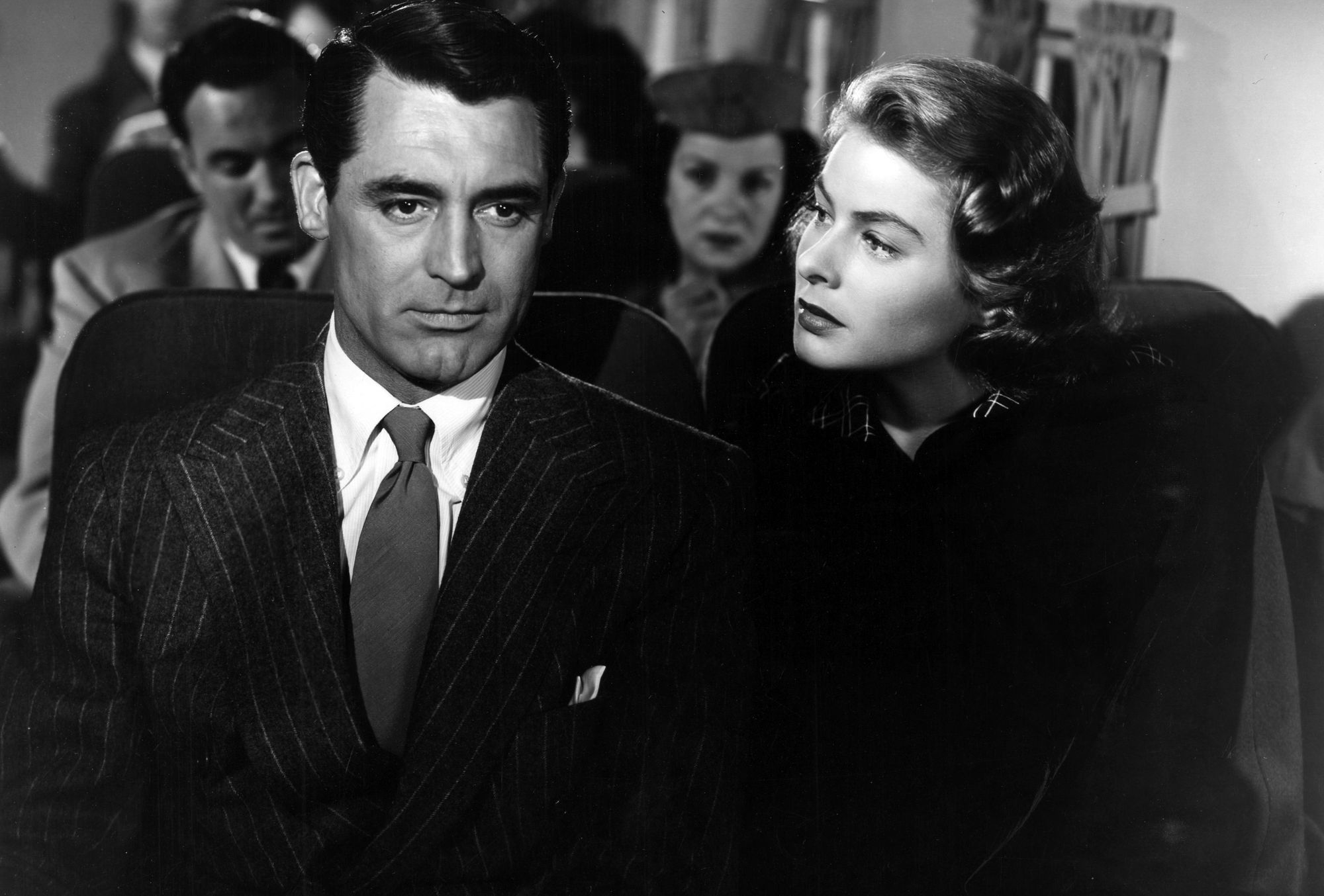
Devlin is a frustrating character, quick to defend Alicia in private while humiliating her to her face. When he’s told that her mission is to seduce Alexander, he responds, “I don’t know if she’ll do it…Well, I don’t think she’s that type of woman.” They’re not asking Alicia to risk her reputation in the abstract, but to use her body and romantic past as tools for espionage. Unable to convince his superiors to call the job off, he takes it out on Alicia, casting everything that happens from here on out as a test of her loyalty to him.
When he returns to deliver Alicia her assignment, he’s cold and distant. She jokes, “The time has come when you must tell me that you have a wife and two adorable children and this madness between us can’t go on any longer,” and he responds, “I’ll bet you’ve heard that line often enough.” He immediately starts tearing her down to absolve himself of guilt for the mission he’ll compel her to take. Her past dynamic with Sebastian makes Devlin highly insecure. “He had quite a crush on you,” Devlin tells her, to which she replies, “I wasn’t very responsive.” To Devlin, it doesn’t matter. He wants Alicia to be simultaneously sexually desirable yet pure.
“Did you say anything? I mean, that maybe I wasn’t the girl for such shenanigans?” Alicia asks. “I figured that was up to you. If you’d care to back out,” Devlin responds. Alicia knows she needs to stay in the feds’ good graces, and she knows Devlin does, too. There’s no way she wins, regardless of her decision. What surprises her though, is Devlin’s harsh retort that it’s nothing more than his assignment, leaving the pair to constantly suspect the other of not loving them.
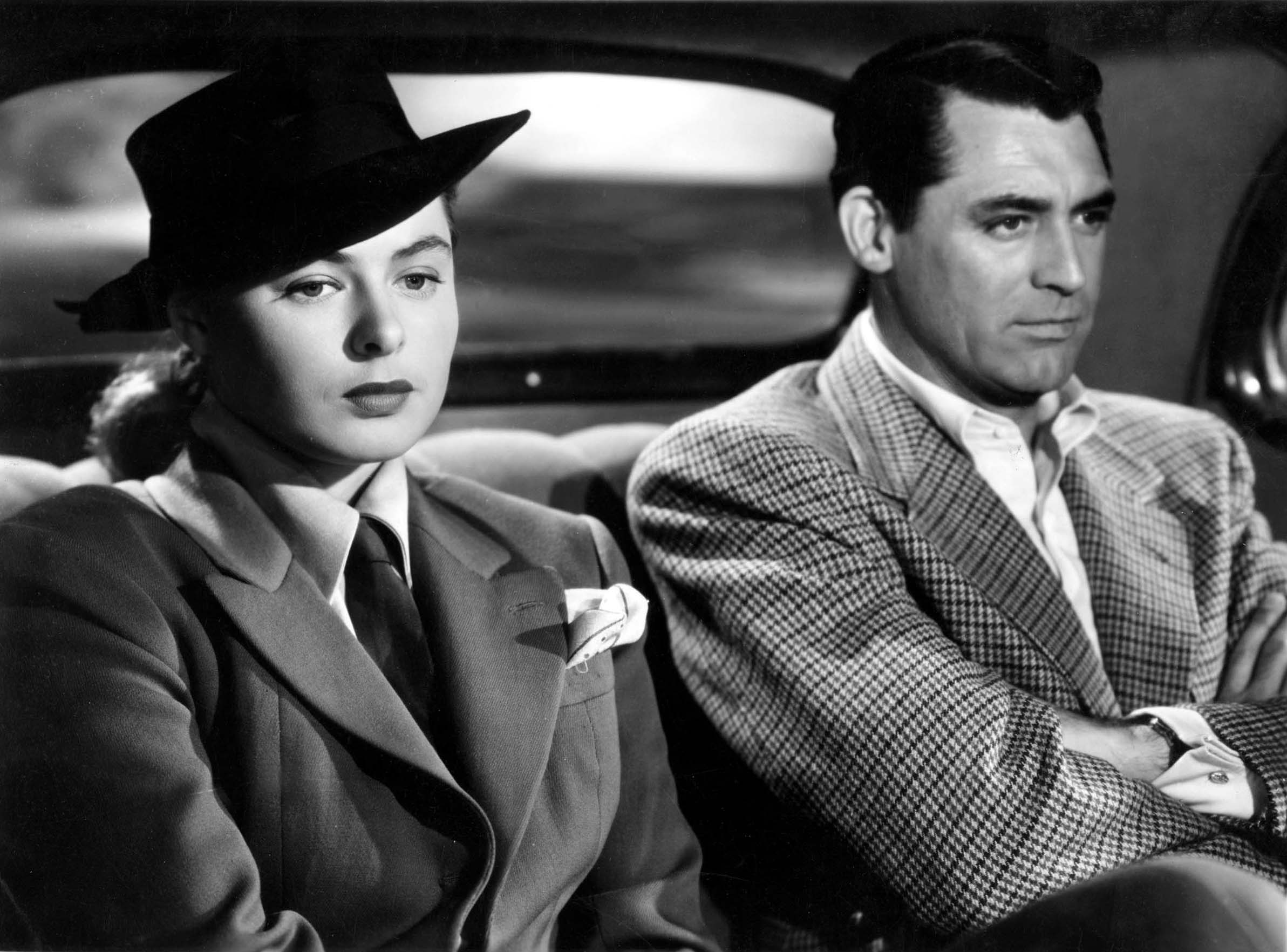
And yet there is certainly love, or lust, found in Alexander Sebastian. A man whose only female companion is his mother, Sebastian isn’t the typical mustache-twirling Nazi of previous features. Neither are his companions. They’re erudite, chic people who don’t discuss politics out in the open. They do all their nefarious deeds in private rooms, and to the outside world they’re just regular people. But Sebastian is like Devlin in many ways, particularly in his suspicion of Alicia. Where Devlin always sees her as a fallen woman, Sebastian sees her through jealousy, asking her to marry him after he sees her interacting with Devlin.
But when her cover is blown, both sides discard her. The Americans distance themselves from her inability to complete the mission, while Sebastian and his mother plan to poison her in the hopes his Nazi pals won’t realize he married a spy. Her poisoning becomes a manifestation of everyone’s willingness to consume her for their own purposes. When Devlin comes to rescue her, it isn’t just him proving his love; it’s the emotional punishment for her past that puts her in this dangerous situation. Now Devlin takes the risk, unlike Alicia.
The Nazis are the obvious villains, and their normality in this world at a time when the world was still grappling with their horrors is fascinating. But the more insidious danger of “Notorious” is how both villains and (presumed) heroes treat women. War is Hell, but the women who endured it came out with all manner of additional horrors exclusive to them. Hitchcock illustrates that so brutally here.
