

A few months ago, I was privileged to tour the Michigan steel mill where my daughter works. A month or so later, I toured a brewery in North Carolina. Both establishments would have been recognizable to Adam Smith, whose description of the pin factory perfectly captured the division of labor fundamental to manufacturing. Yet the sage of Kirkcaldy would have been astonished at how much of the manual work of manufacturing is done today by machines — and by the level of capability needed by those who supervise those machines.
It is a major part of the administration’s policy to “reshore” American manufacturing to bring back jobs, and a tenet of the national conservatism movement that America needs blue-collar jobs that pay a good wage. Yet both of these propositions rest on the idea that manufacturing needs to be labor-intensive. The best chance for reshoring manufacturing capacity is actually based on increased automation. That means more robots, but the administration has recently moved to restrict the import of robots, specifically humanoid robots from China. The more hostile the administration is to automation, the more it will drive manufacturing back offshore. Something has to give.
This is made apparent when we look at the labor supply. Far from there being a huge supply of untapped manufacturing labor, the Manufacturing Institute estimates it will need 3.8 million workers between 2024 and 2033, and that half of those positions are likely to go unfilled because workers today expect much more flexible working arrangements than their grandfathers did. Automation is the surest way to bridge the gap.
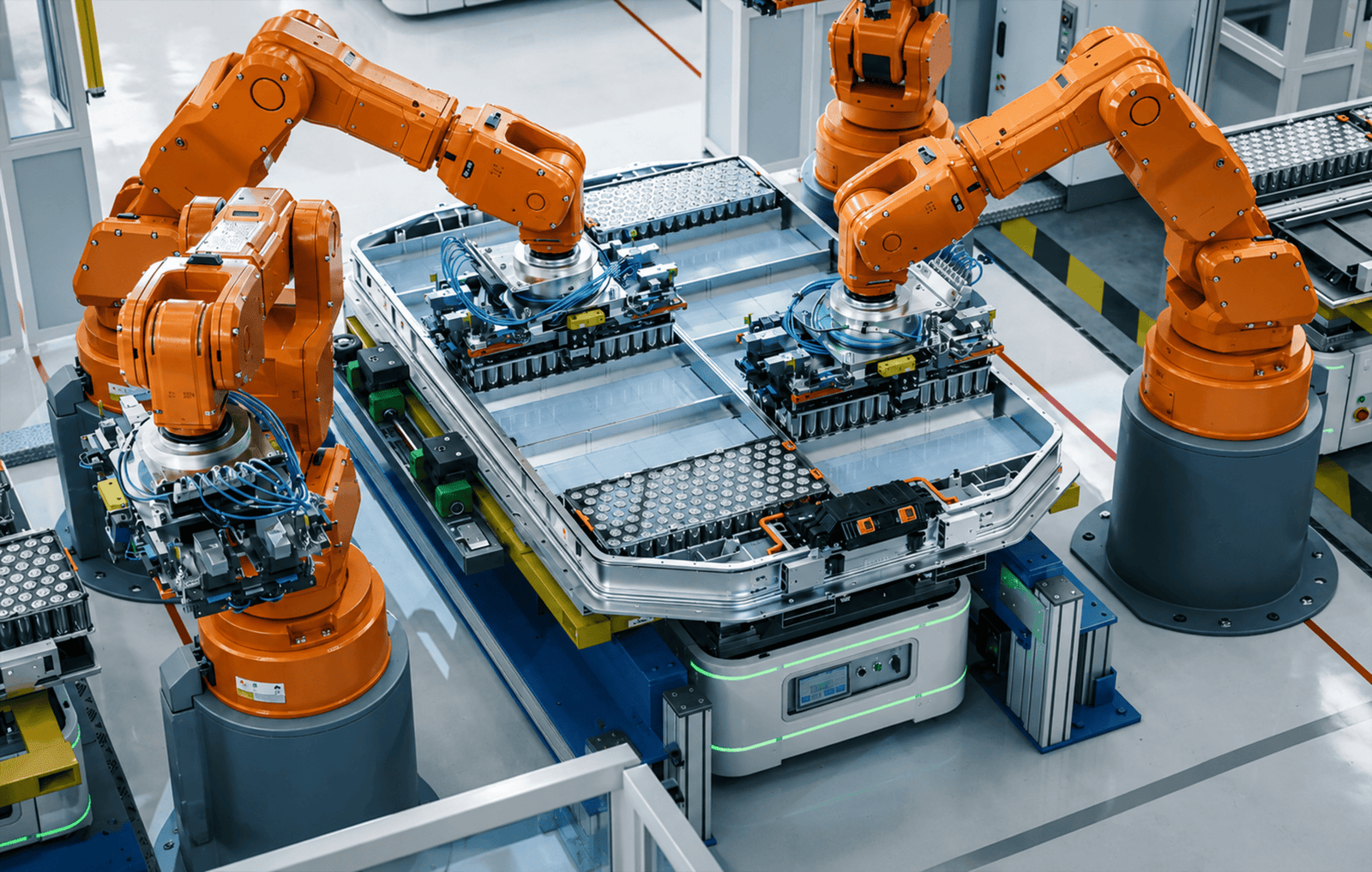
That’s certainly the current direction. The factory floor is increasingly staffed by robots. Industrial robot installations rose 11 percent in 2025, but America is behind the curve internationally. China installed over half of the world’s new robots last year, ten times the US figure. America lags well behind, ranking only eighth in robot density. This is part of the reason manufacturing productivity growth has lagged recently.
Yet there are few domestic robot suppliers. We import almost all of our robots from Japan and Europe, but those robots act as an input into American manufacturing, enabling us to produce more of the stuff we are good at producing.
So if we are going to reshore manufacturing, we must recognize that the factory that comes back to America will not — and indeed should not — look like the sepia-tinted factory that closed down 20 or 30 years ago. Milton Friedman reportedly visited China in an earlier age and was shocked to see people digging a canal with shovels rather than modern earthmovers. He was told that this was for a jobs program, to which he responded, “Oh, I thought you were trying to build a canal. If it’s jobs you want, you should give these workers spoons, not shovels!”
China learned its lesson, yet to hear American politicians speak today, many of them would seemingly rather ban forklifts and have American workers carry boxes around a warehouse floor. Much of the current anti-China rhetoric is actually based on that earlier Chinese model, assuming that the reason China has gotten ahead is that it relies on cheap, even forced, labor. This fundamentally misdiagnoses the problem. China is automating rapidly.
To respond, America needs to up its automation game – and this will be good for the factory worker too. The Bureau of Labor Statistics expects production occupations (workers operating manufacturing machinery and equipment) to drop over the next ten years, but it expects the technical occupations associated with installing, calibrating, maintaining, and repairing machines to grow. These blue-collar, non-degree jobs pay a median annual wage of $63,500, more than most production occupations.
Jobs like robotic technicians, which generally require an associate’s degree, and industrial and mechanical engineers are equally likely to grow in importance, and these jobs pay well. The National Institute of Standards and Technology (NIST) agrees. Its analysis of the manufacturing workforce sees a host of different careers with transferable skills opening up in manufacturing, all based around high-technology systems.
So American reindustrialization requires two things — a highly educated, well-rewarded, flexible workforce and advanced automation and robotics. America does not need to staff its factories with PhDs, but the factory jobs of reshored production won’t be the repetitive jobs that Adam Smith feared would numb workers’ creativity, minds, and capacities. These jobs will require technically sophisticated, non-college career paths, perhaps involving apprenticeships and privately certified credentials rather than expensive college degrees.
So the romantic picture of the plant gates reopening and thousands of workers starting and ending their shifts at the same time is not going to be painted throughout the Rust Belt. The picture should be far rosier, with higher wages, more flexible working conditions, and a much safer environment.
Yet that all depends on the second part of the equation – the widespread deployment of robotic technology, which is the fundamental requirement of reshored industrialization.
Factory robots today are not some form of steampunk C-3POs – they are primarily dedicated arms and tools. So the Federal Communications Commission’s ban on imported humanoid robots from China doesn’t look immediately relevant. Deployment of humanoid robots in factories is very much in the demonstration and pilot stage. Yet that’s what makes the FCC’s action so insidious to American reindustrialization. It will preempt the next stage of development. If China is currently deploying older-style robots by the hundreds of thousands, America should be leapfrogging that and experimenting with much more versatile humanoid robots, which can embody the artificial intelligence at which America leads the world and engage in all-purpose mobile manipulation.
Ah, says the objector worried about national security, but won’t using Chinese-manufactured robots present an inherent security risk? Not if the hardware is run by American software. For example, a couple of months before the FCC action, NVIDIA, the American leader in global chip technology, announced its Isaac GR00T reference robot, giving fans of Real Steel and Guardians of the Galaxy equal thrills. The robot combines a Chinese-manufactured Unitree H2 Plus humanoid robot with NVIDIA onboard compute and software. As NVIDIA CEO Jensen Huang said, this “will bring physical AI to the world’s largest industries.”
The GR00T platform also supports other Unitree products and was slated to be used by Stanford, UC San Diego, and other research institutions. The relatively inexpensive physical hardware was Chinese, but all the value-added aspects, such as chips, AI models, software, and the research programs were to be American. In a very real sense, the physical AI leap forward is American.
The FCC’s action puts all this in jeopardy. As Reuters noted, Unitree is expected to be one of the principal casualties of the import ban. A case can certainly be made on national security grounds that the FCC ban was necessary. The hardware includes sensors that can map areas, can connect to networks, and potentially be commandeered.
Yet those risks are probably better addressed by measures already taken into account by NIST in its cybersecurity guidance, such as network segmentation and tightly controlled remote access for industrial systems. As so often, the question is one of appropriate response to risk. Risk can be mitigated by strict rules for defense and critical infrastructure, cybersecurity certification, network segmentation, and approval for demonstrably secure platforms. This would allow American R&D in the emerging field of humanoid robotics without forcing American companies that are ready to go now to wait until American-based suppliers reproduce every technology already manufactured affordably overseas.
China has the advantage in affordable humanoid robotics for the same reason it has the advantage in so many other manufacturing areas. Its companies cut costs relentlessly throughout the supply chain. The current speedy robot deployment is one of the contributing factors. America has plenty of innovative robot developers – from Boston Dynamics to Figure to Agility Robotics – but their capabilities are different from the mass Chinese manufacturers like Unitree.
If America is to remain the global manufacturing powerhouse that, contrary to assertions by so many, it actually is, it needs to come to terms with the fact that China is installing robots at extraordinary speed. Restricting access to robot hardware cannot be the answer. The sensible response is to make America the best place to invent, improve, and deploy robots in new and remarkable ways.
For the moment, that requires access to state-of-the-art technological inputs. The FCC should rethink its actions and allow American companies to jiu-jitsu Chinese hardware into sustainable American competitive advantage.
American factories, and American workers, will reap the benefits.
