

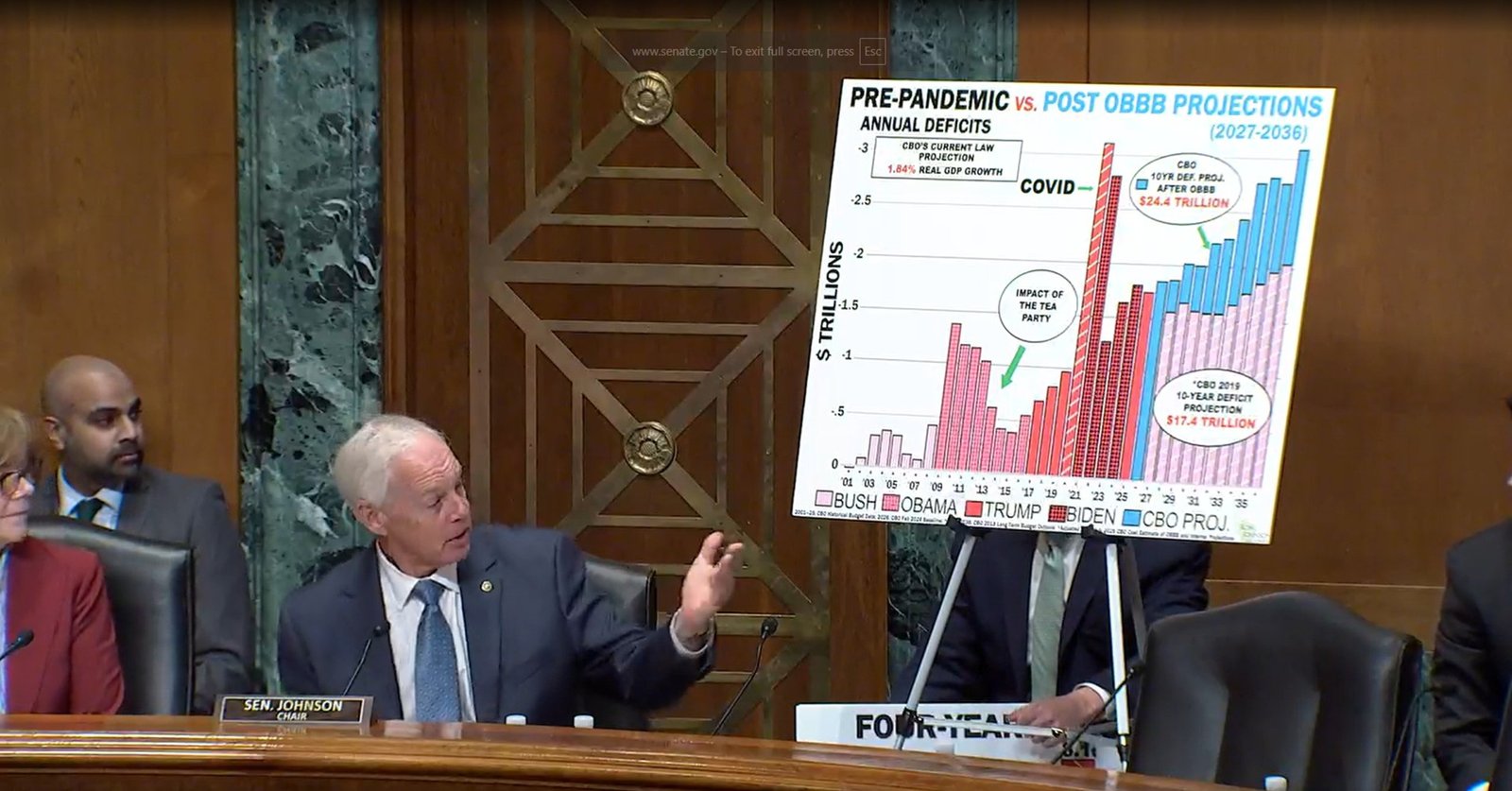
At a recent Senate hearing on the fiscal outlook, legislators and budget experts said the quiet part out loud: the United States is running historically large deficits in non-crisis times, and we need to stop pretending that we can grow our way out of it.
Washington’s problem isn’t ignorance. It’s that the only politically safe position is to acknowledge the debt crisis — and then do nothing to fix it. Congress lacks an effective mechanism to make politically difficult decisions possible.
The message from the hearing was stark: this is not a crisis caused by recession or war. It is the result of policy choices lawmakers refuse to confront.
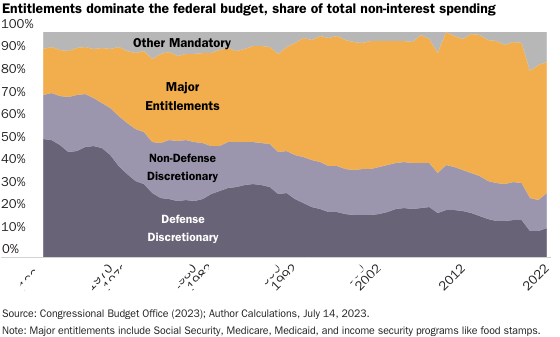
The federal budget is increasingly tilted toward unsustainable promises made to older Americans, financed by borrowing that imposes the costs on younger Americans. Earlier CBO projections show that by 2029, the federal government will spend roughly 50 cents of every budget dollar on benefits for Americans 65 and older.
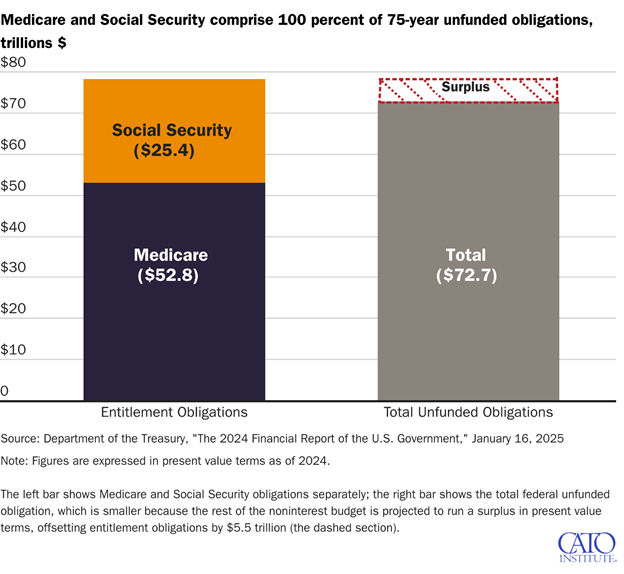
The long-term picture is even worse. According to the government’s Financial Report, more than 100 percent of long-term unfunded obligations stem from just two programs: Medicare and Social Security (their combined shortfalls reflect the difference between their dedicated taxes and projected spending, which exceed the total because the rest of the budget shows a small projected surplus over the same period).
Hosted by the Senate Subcommittee on Fiscal Responsibility and Economic Growth, the hearing featured Congressional Budget Office (CBO) Director Phillip Swagel, Committee for a Responsible Federal Budget (CRFB) President Maya MacGuineas, and Yale Budget Lab founder Martha Gimbel.
Sen. Ron Johnson (R-WI) offered a blunt assessment of the political stalemate during opening remarks. Democrats “insist the solution is simply making the rich pay their fair share,” he said, but then don’t follow through on meaningful tax increases. Republicans argue there’s a spending problem, yet “when they had the power to return spending to a reasonable pre-pandemic level, the One Big Beautiful Bill simply did not meet the moment.”
In other words, Washington’s fiscal debate is a performance: each side criticizes the other for choices it is unwilling to reverse when it has the opportunity.
The day of reckoning is no longer far off. Social Security faces financing constraints in just six years, triggering automatic benefit cuts of roughly 25 percent. Medicare’s hospital trust fund is not far behind. Whether Congress chooses slower benefit growth, means-testing, eligibility changes, higher taxes, or some blend, delay only increases the eventual scale of the adjustment.
One illusion common to both sides of the political aisle is the idea that tough choices can be avoided with faster economic growth. As CBO Director Phillip Swagel noted, stronger growth raises revenues but also increases interest costs on a truly massive debt. Interest costs are already higher than defense spending and rising quickly.
As debt rises to excessive levels, even good economic news can come with a fiscal price tag.
The hearing also highlighted a generational injustice that Washington tiptoes around: the budget increasingly redistributes from younger, poorer Americans to older, wealthier ones. Swagel (CBO) noted that children ultimately bear the cost of borrowing that today’s voters authorize. MacGuineas (CRFB) and Gimbel (Yale) underscored how the federal government spends far more on seniors than on children. What’s more, today’s elderly, as a cohort, are not the economically precarious group they once were: senior poverty has declined below that of the general population.
That’s because the budget doesn’t redistribute based on need. Spending favors the most politically organized constituency, while deficit financing shifts costs to those with the least political power.
And acting to fix the fiscal imbalance requires something that Congress would rather avoid: imposing concentrated political pain today to prevent much larger, but more dispersed economic pain tomorrow.
Every fix to the US debt path has identifiable losers — industries that benefit from tax preferences, higher-income retirees facing slower benefit growth, and special interests whose gravy train of federal taxpayers’ money might get cut off. Those groups show up, mobilize, and threaten to punish politicians at the ballot box. Beneficiaries of reform, however, including younger taxpayers, busy working families, and even future Congresses, rarely advocate on their own behalf.
As economist James Buchanan observed in Democracy in Deficit, fiscal restraint rarely produces political rewards. Voters immediately feel spending cuts or tax increases, but they never see the crises that responsible policy prevents — the inflation that never erupts, the interest rates that never spike, the austerity that never becomes necessary.
That is why the most valuable conclusion one can draw from this hearing is that the United States needs a process that can make economically necessary (but politically difficult) tradeoffs possible.
I have argued for exactly that: an independent fiscal commission, modeled on the Base Realignment and Closure process. BRAC allowed Congress to close military bases it knew were unnecessary but couldn’t politically touch, and succeeded because it created political cover for difficult decisions Congress knew needed to be made.
A fiscal BRAC would apply the same logic to the budget’s third rails and sacred cows. Congress would establish the commission, set specific guidelines and targets for what commissioners must accomplish, and reverse the status quo’s default of inaction. The commission’s recommendations could take effect automatically, with presidential approval, unless Congress voted to reject them. That shift — from requiring affirmative action to requiring affirmative obstruction — changes the political calculus.
Critics object that commissions are a way to dodge accountability. This commission would do the opposite: return spending accountability to a system built to evade it. Congress abdicated control when it put the largest entitlement programs on autopilot. An effective commission is our best shot at correcting these programs’ unsustainable and unaccountable growth.
Washington knows it has a spending problem. This Senate hearing made that clear. What it lacks is the will, and an effective mechanism, to do something about it. A BRAC-like fiscal commission won’t make tough choices easy. But it could finally make them possible.
Discipline will come eventually. The question is whether Congress chooses it or waits for a crisis to impose it.
