

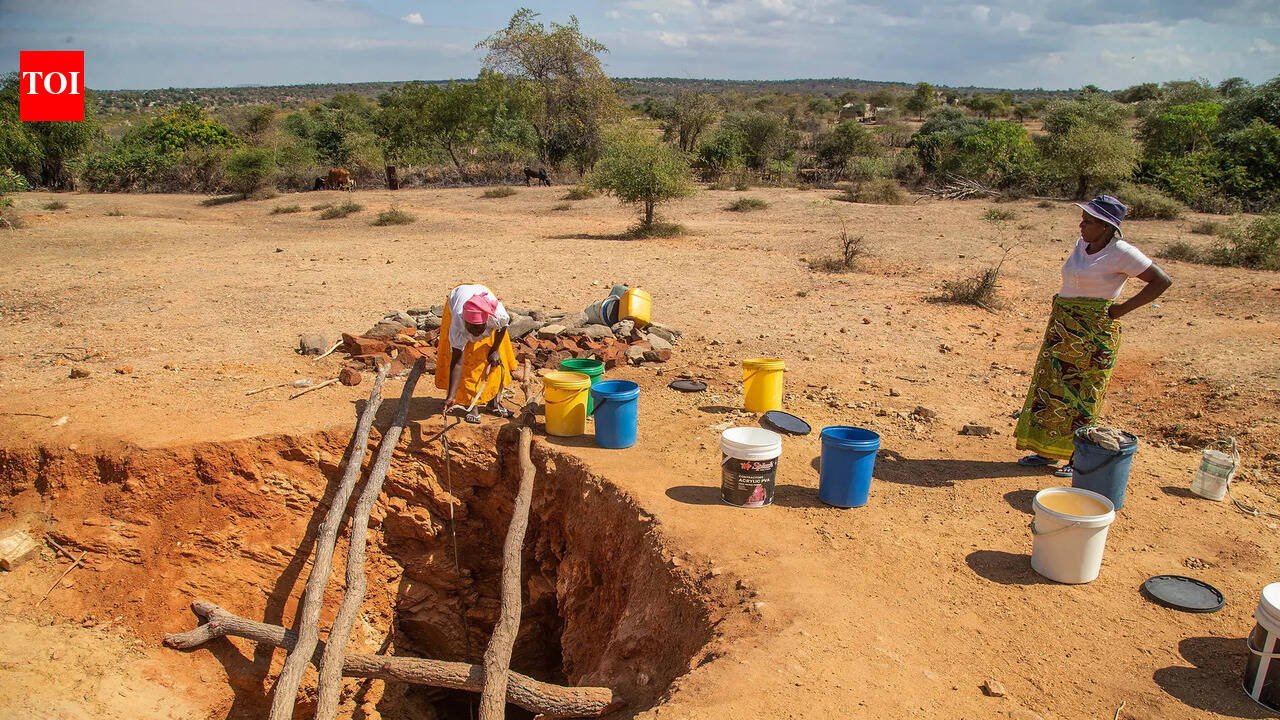
El Niño begins thousands of kilometres away from India, with an unusual warming of waters in the central and eastern equatorial Pacific Ocean. But its effects can reach Indian farms, household budgets, power grids and, eventually, the wider economy.By altering atmospheric circulation, El Niño can weaken or disrupt India’s southwest monsoon. The result may be delayed sowing, lower crop output, rising food prices, depleted reservoirs and increased electricity demand during hotter-than-usual conditions.The stakes are particularly high for India, where nearly half of the net sown area remains dependent on rainfall and the monsoon supplies around 70–75% of the country’s annual rainfall. A poor or uneven monsoon can therefore travel rapidly through the economy—from shrinking farmers’ incomes and rural consumption to raising inflation and putting pressure on government finances.However, El Niño does not automatically mean drought. Its impact depends on several other climate factors, including the Indian Ocean Dipole and the distribution of rainfall across regions and over the monsoon months.So, how does warming in the distant Pacific influence India’s monsoon and why do economists, policymakers and markets track it so closely?
The concept in simple terms
El Niño is a naturally occurring climate phenomenon marked by the unusual warming of sea surface temperatures in the central and eastern equatorial Pacific Ocean. It is one phase of the El Niño-Southern Oscillation (ENSO), a recurring climate pattern that influences weather across the world.Although El Niño develops in the Pacific Ocean, it affects atmospheric circulation and often weakens India’s southwest monsoon. A weaker or uneven monsoon can disrupt agriculture, reduce water availability, and trigger economic ripple effects. However, El Niño does not always result in drought, as factors such as the Indian Ocean Dipole (IOD) can influence the final monsoon outcome.
How it works
Under normal conditions, trade winds push warm ocean water towards the western Pacific, while colder water rises near South America. During an El Niño event, these trade winds weaken, allowing warm water to spread eastwards.This alters global atmospheric circulation, including the Walker Circulation, which influences the strength of the Indian monsoon. As a result, India may experience below-normal or uneven rainfall, particularly during the kharif season.
How does El Niño affect India’s economy?
1. Agriculture: The first link in the economic chainAgriculture remains one of the sectors most exposed to monsoon fluctuations. Nearly half of India’s net sown area still depends on rainfall rather than assured irrigation.A weak or erratic monsoon can delay the sowing of kharif crops such as rice, pulses, cotton, soybean, and maize. Lower crop production reduces farmers’ incomes and weakens rural demand for goods ranging from fertilisers and tractors to consumer products.Since agriculture supports a significant share of India’s workforce, a poor monsoon often has spillover effects on the broader economy.2. Inflation: Why food prices riseOne of the most immediate economic consequences of a weak monsoon is food inflation. Reduced production of cereals, vegetables, pulses, and oilseeds limits market supply, while demand remains largely unchanged. This can push up retail food prices, increasing overall inflation.As food carries a significant weight in India’s Consumer Price Index (CPI), persistent food inflation can complicate the Reserve Bank of India’s efforts to maintain price stability.3. Power supply and energy costsEl Niño also affects India’s energy sector. Lower rainfall reduces water levels in reservoirs, limiting hydroelectric power generation. At the same time, above-normal temperatures often increase electricity demand as households and businesses use more cooling appliances.To meet this demand, utilities may rely more heavily on coal-based thermal power, increasing fuel consumption and generation costs. This can place financial pressure on electricity distribution companies (DISCOMs) and, in some cases, lead to higher power procurement costs.4. Government financesA poor monsoon can increase public expenditure in several ways. Governments may have to allocate additional resources for drought relief, irrigation support, crop insurance payouts, food subsidies and rural employment programmes. At the same time, slower agricultural growth can reduce tax collections from related economic activities.This combination of higher spending and slower revenue growth can put pressure on the government’s fiscal position.5. Economic growthAlthough agriculture contributes around one-sixth of India’s Gross Value Added (GVA), its influence on the economy extends well beyond its direct share.Lower agricultural incomes reduce rural consumption, affecting industries such as fast-moving consumer goods (FMCG), automobiles, fertilizers, and agricultural equipment. Weaker rural demand can also slow manufacturing and services, making the monsoon an important determinant of overall economic growth.6. External tradePoor agricultural output may require India to increase imports of certain food commodities, particularly edible oils or pulses, in years of severe shortages. Higher imports can widen the trade deficit and influence the current account balance, especially when combined with elevated global commodity prices.
Important institutions
- India Meteorological Department (IMD): India’s nodal agency for weather forecasting and monsoon predictions.
- Ministry of Earth Sciences (MoES): Coordinates climate and meteorological research.
- Indian Institute of Tropical Meteorology (IITM), Pune: Develops climate models and seasonal monsoon forecasts.
- Reserve Bank of India (RBI): Monitors inflationary pressures arising from food prices and frames monetary policy accordingly.
- World Meteorological Organization (WMO): Provides global climate outlooks and monitors ENSO conditions.
India angle
India’s economy remains closely linked to the monsoon despite rapid industrialisation. A large share of agricultural land is rain-fed, and food prices significantly influence household inflation. Consequently, the performance of the southwest monsoon affects not only farmers but also inflation, electricity demand, fiscal management, rural consumption, and overall GDP growth.To reduce climate-related risks, India has expanded micro-irrigation under the Pradhan Mantri Krishi Sinchayee Yojana (PMKSY), promoted climate-resilient farming through ICAR’s National Innovations in Climate Resilient Agriculture (NICRA), and strengthened weather advisory services for farmers.
Prelims fact box
UPSC Mains Practice Question“El Niño is not merely a climatic phenomenon but also an economic challenge for India.” Discuss its impact on agriculture, inflation, energy security and macroeconomic stability.MCQs for UPSC1. El Niño is primarily associated with:A. Cooling of the Indian OceanB. Warming of the central and eastern equatorial Pacific OceanC. Weakening of the Arctic Ocean currentsD. Increased snowfall over EurasiaAnswer: B2. Which of the following institutions is India’s nodal agency for issuing weather forecasts?A. ISROB. IMDC. ICARD. CPCBAnswer: B3. The Indian Ocean Dipole (IOD) refers to:A. A cyclone over the Arabian SeaB. A difference in sea surface temperatures between the western and eastern Indian OceanC. Seasonal winds over the Bay of BengalD. Ocean currents in the Southern OceanAnswer: B4. Which season in India is most directly dependent on the southwest monsoon?A. RabiB. ZaidC. KharifD. Winter croppingAnswer: C5. Which of the following sectors is likely to be affected first by a deficient monsoon?A. Information TechnologyB. AgricultureC. TelecommunicationsD. Civil AviationAnswer: B
Frequently Asked Questions (FAQs)
What is El Niño?El Niño is a climate phenomenon characterised by the abnormal warming of sea surface temperatures in the central and eastern equatorial Pacific Ocean. It is one phase of the El Niño-Southern Oscillation (ENSO) cycle.Does every El Niño lead to a weak monsoon in India?No. While El Niño often weakens the Indian southwest monsoon, its impact varies from year to year. Other factors, such as the Indian Ocean Dipole (IOD), local weather systems and atmospheric conditions, can influence the final monsoon outcome.Why is El Niño important for India’s economy?A weak or erratic monsoon can reduce agricultural production, raise food prices, increase electricity demand, affect hydropower generation, lower rural incomes and slow overall economic growth.How does El Niño contribute to inflation?Poor monsoon rainfall can reduce the supply of food crops such as rice, pulses and vegetables. Lower supply with steady demand may push up food prices, contributing to higher retail inflation.Which sectors are most affected by El Niño?Agriculture, power, water resources, food processing, fast-moving consumer goods (FMCG), fertilisers, rural retail and sectors dependent on rural demand are among the most affected.Which institutions monitor El Niño and its impact?Globally, the World Meteorological Organization (WMO) and the US National Oceanic and Atmospheric Administration (NOAA) monitor ENSO conditions. In India, the India Meteorological Department (IMD), the Ministry of Earth Sciences (MoES) and the Indian Institute of Tropical Meteorology (IITM) monitor and forecast its impact on the Indian monsoon.How can India reduce the economic impact of El Niño?Measures include expanding irrigation, promoting climate-resilient agriculture, strengthening weather forecasting, improving reservoir management, enhancing crop insurance coverage and adopting water-efficient farming practices.
