

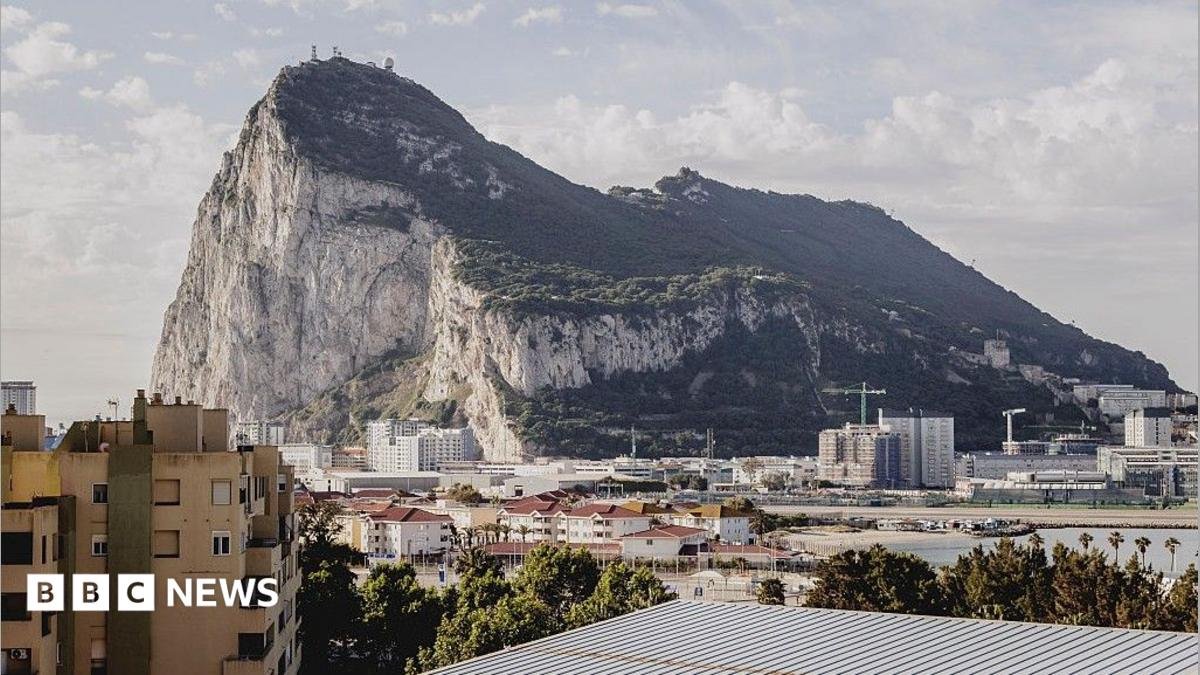
The Chief Minister of Gibraltar, Fabian Picardo, says the new arrangements, which are due to be provisionally implemented with their approval by the UK and European Parliaments still pending, represent “a huge change” for the territory.
“One of the key things which has defined the past eight generations of Gibraltarians is the restrictions at the frontier,” he told the BBC in the Gibraltarian government’s headquarters.
Picardo describes the agreement as introducing “complete and utter fluidity of people and goods” between Gibraltar, on the one hand, and Spain and the EU on the other.
The most obvious economic benefit for Gibraltar, Picardo says, will be an increase in arrivals.
“Business will now be able, in Gibraltar, to see a footfall increase which is not going to be restrained by a potential queue on the way in or frontier queue on the way out.”
With Spain contesting the UK’s sovereignty of Gibraltar, it is an issue that occasionally flares up in the political arena. In the most notorious episode of bilateral tensions in recent times, Spain’s dictator, Francisco Franco, introduced a blockade of the Rock in 1969, which was only lifted in 1982, well after his death.
The chief minister casts the new arrangement as the opposite of the blockade – a logical, mutually beneficial opening up of a border.
“This will be huge for human relations, it will be huge for business, it will be huge for frontier workers, it will be a new dawn” for Gibraltar’s relationship with Spain and the EU, says Picardo.
Spain’s foreign minister, José Manuel Albares, has cast it in a similar light, speaking of “a new era” for the Rock.
However, the deal also means that goods sold in Gibraltar must comply with EU regulations, something that had not been the case until now.
