


We must find another word for what happens to us during the films of Béla Tarr. We don’t observe them without them observing us right back. We don’t listen to them; the sounds and songs creep around us, the manifestation of unhinged but repressed emotion in endless repetitions. The movies become music boxes. Even in the dark, bitter nowhere he made his cinematic home—the same phantom towns beset by wild dogs and barflies with faces like old gourds and uncured meat—we hear a town’s every thought. We don’t consider them, because he insists we think about life instead of the cinema. Béla Tarr’s art lay in something deeper, heavier, wilder than plot or images. Béla Tarr tamed time itself, uncovered the world like a pre-industrial cartographer, wrote poetry in the abyss while madmen danced to his tune. We are become Béla Tarr, who freely gave himself away.
Tarr was the son of a showbiz family, after a fashion. His father was a set designer, his mother was hidden away in theater curtains in Budapest, ready for actors to call “line.” She took her oldest boy to audition for a part in a TV movie when he was 10, an adaptation of Tolstoy’s “The Death of Ivan Ilyich.” Acting wasn’t for him, but the film set was, as was the sweep of Tolstoy’s novella, in which a man injures himself and slowly dies, wondering just what it is that life is supposed to be. Tarr would ask the same question in exactly Tolstoy’s fashion, as deliberately as it takes to write one and with as much on one’s mind as one work can express.
Anyone looking for a tidy narrative of his life could call it quits right there, but as in his films, the journey is the destination. He started making documentaries around Budapest with the 8mm camera his father bought him, and was so good at it he was courted by the Béla Balázs Studio in Budapest aaaaand the secret police. His films (like 1978’s Hotel Magnezit”, about an eviction from a worker’s hostel) seemed a little left-wing. After that, no respectable school would touch him. Film and anarchy it was.
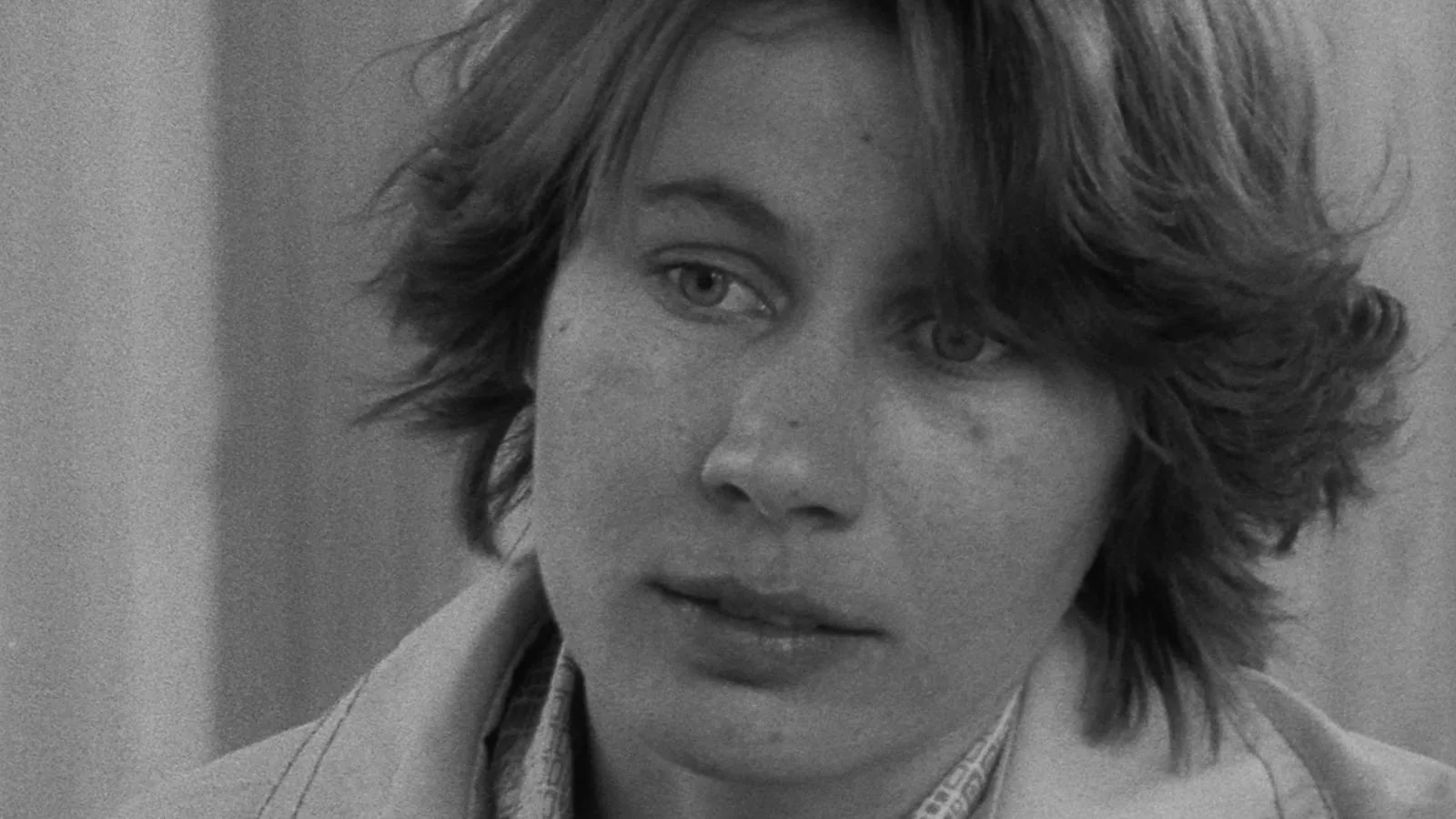
Tarr’s first fiction feature, “Family Nest,” was playing at the film festival in Rotterdam when he met his hero, Jean-Luc Godard. He couldn’t help himself. He needed to ask him where he got one of his ideas in “Breathless.” Godard had no answer for him. Tarr couldn’t imagine a time when you wouldn’t want to talk about the cinema. Unsurprisingly, the too-eager Godardian “Cinemarxism” trifle is all talk, a diatribe delivered in a never-ending shower. It wouldn’t be important were it not for the fact that it was the first film Tarr’s future wife Ágnes Hranitzky edited for him. They were inseparable after that, with her on set timing his shots, and finally getting an overdue co-directing credit with 2000’s “Werckmeister Harmonies”.
The early Tarr films build his style like a mechanical man, one limb at a time. “Family Nest” juxtaposes domestic comedy with harrowing social realist drama. The ironically named “Diplomafilm” (Tarr wasn’t an ironic man so much as he was irony itself hidden in a trench coat, like two kids trying to sneak into an R-rated movie), his thesis project, was a dry run for the excruciating “The Prefab People” about a family living a nightmare of scarcity and domestic squalor. There’s a brief reprieve when they head downtown for a local variety show at a beer hall. So the chipper chittering of a lounge act momentarily drowns out the crying. This was Tarr’s first motif.
“The Outsider” finds a sullen violinist searching for meaning. He has an argument with a girlfriend during a DJ set, with earsplitting disco music playing over their fight. The spat refuses to end, as it becomes obvious they should have waited before fighting. She takes the volume as a challenge, and Tarr won’t let him or us off the hook. A made-for-TV “Macbeth” opens with a curtain-raising shot that lasts five minutes. The next one lasts fifty-six. Perhaps the TV production values masked its ambition at the time, but there wasn’t much else like it. His long takes, which became the second curlicue of his signature with “Hamlet,” turned behavior into spectacle and narrative into a matter of space and time.
Tarr becoming the preeminent Hungarian and, along with Chantal Akerman, the showroom model for what would later be called Slow Cinema or Durational Cinema coincided with the days when serious arthouse programming in the United States was starting to be cordoned off to big cities. His crown fell off the head of Hungary’s first prince of the pictures Miklos Jancsó, whose pastoral parables also transpired in careful, generous takes (Jonathan Rosenbaum: “Bela Tarr would be inconceivable without him”).
Tarr arrived for the death rattle of Godard’s kind of art film (he even named his high school film collective after Dziga Vertov, as Godard had done when he renounced post-modernism for modernist indeterminacy), replaced Jancsó as he faded from the spotlight, and retired when he was at his most popular.
When he was making his first classics, his fans included Susan Sontag, Tilda Swinton, and directors Rob Tragenza and Fred Keleman, both of whom would later serve as Tarr’s cinematographers. He did very well at festivals, critics loved him, and at the time, that was enough. In 2011, when he retired to start his short-lived film.factory school, he was one of the most beloved artists alive with a new generation of critics, directors, and cinephiles. Apichatpong Weerasethakul, Sofia Coppola, Gus Van Sant, Peter Strickland, and Carlos Reygadas had all made movies in his shadow.
According to the European Film Academy, about 1 in 20 people in Amsterdam attended his 2017 gallery show. He was the honorary president of the Hungarian Filmmakers’ Association and an honorary professor in Wuhan and Beijing; he picked up enough honoraria to fill the pied-à-terre in ”Family Nest.” He was celebrated like a traveling dignitary or pop star, all while maintaining a Falstaffian irascibility as a cover for a profound care for the human race.
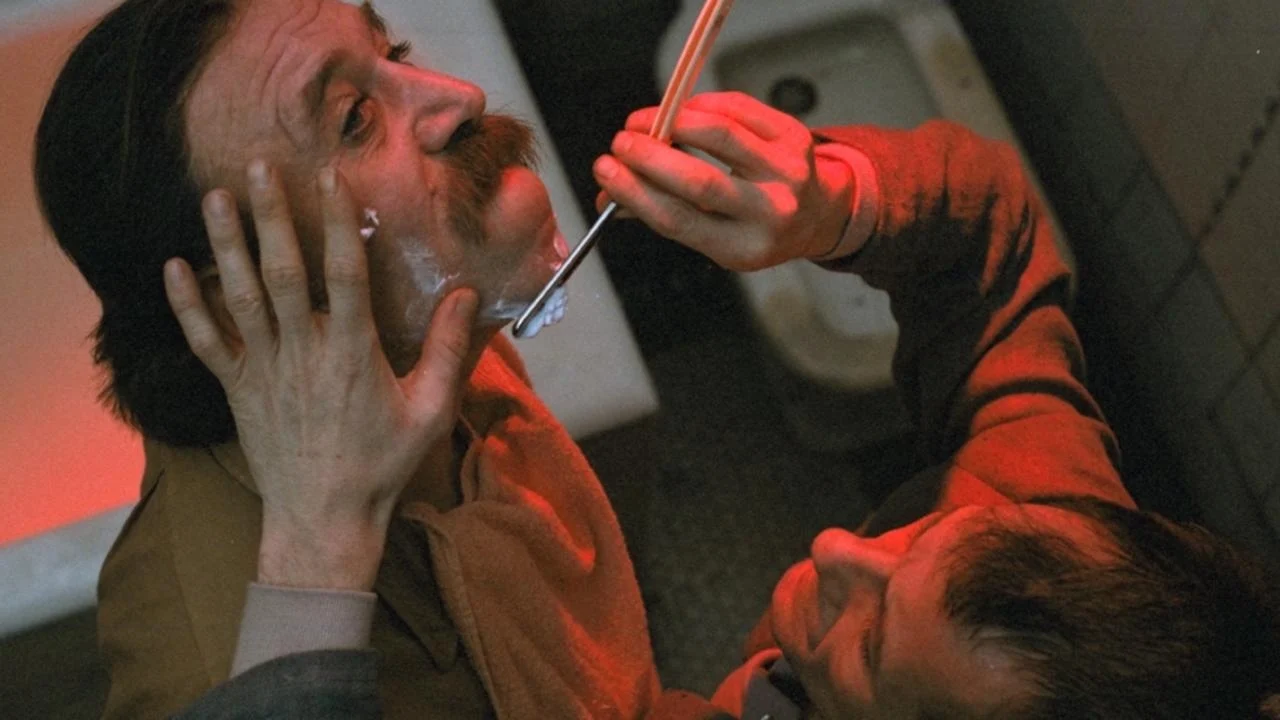
After “Macbeth” followed “Autumn Almanac,” which is the only one of his films that feels long. Its mixture of Bergman psychodrama and Fassbinder burlesque sure looks beautiful (it was his last feature in color), but it can only be seen as a formal exercise. “Damnation” is the first real Béla Tarr movie, transpiring over narcotic dolly shots, peering around corners, retreating back through windows, surveying funereal bar rooms and wandering off only to find the same barroom alive with the minimalist jazz music Tarr loved so much (you will find people dancing drunkenly in most of his movies, most famously in “Werckmeister Harmonies’” cosmic ballet). Tarr’s shots represent not the progression of a narrative (nevertheless present) but a different mapping of cinematic incident. As he would reiterate in his magnificent 1994 “Sátántangó”, which took the entirety of the interim after “Damnation’s” premiere to make.
“Sátántangó’s” 7-hour, 19-minute runtime is exactly the kind of wry barroom mind game Tarr so loved. It’s the longest narrative film of the 1990s, and everyone walks the full distance to their destinations, but it’s also an Eastern Bloc Marx Brothers movie. Fools trot around impossibly windy alleys (Tarr used to fly helicopters over his actors), sleeping with each other’s wives and hatching dumb criminal schemes. The best one: a con artist hijacks a funeral to shame the town for their part in the death. He insists they give him all their money so he can build them a new collective. Hope for a fallen community! The next day, they realize he just stole the money and won’t be giving it back. Classic joke structure. Tarr being Tarr, there’s also some harrowing stuff involving a cat and a little girl, but the joys of the picture are great enough to transcend their apparently miserable etagere.
This is where Tarr reveals that his Godard influence didn’t vanish with the quick edits and agitprop stylings of his early work. With “Damnation” and especially “Sátántangó,” based on a book by his friend, Nobel Laureate László Krasznahorkai, he’s reorienting dramaturgy. A camera whirling around a barroom, seeing the people speaking when Tarr needs them to be heard, is his version of a Godardian jump cut. In Godard, the camera finds the subject, and the edit excises the predicate. In Tarr, the camera is the editor.
There is no such thing as negative space in Tarr’s major works. It is in the vastness that the action transpires, and the camera allows your gaze to become the movie’s and vice versa. Your mind and your eyes are meant to wander, and the movie gives one plenty of time and acreage in which to become lost. Tarr directs, and Hranitzky edits not like they’re adapting a novel, but rather the form of a novel, where a sentence can take you through time; a single take can collapse hours, and, as in a play, a single line of dialogue explains away years.
One action can send ripples through a community (like the arrival of a macabre circus in “Werckmeister Harmonies,” his second Krasznahorkai adaptation) to the point of its own destruction. Something has to have brought us to the end, and though his movies show you what that is, he’s much more interested in the inexorability of defeat as the antithesis of empathy.
“Werckmeister” was instantly beloved and canonized. 2007’s Georges Simonon adaptation “The Man From London” was not. The producer killed himself, an unpaid contractor sued them out of the sets he’d built, and the movie’s ownership defaulted to a French bank. After all that, the film was pretty conventional. There is joy watching Tarr and Hranitzky turn a novel by Simonon (the Tolstoy of European crime fiction—adapted by everyone from Renoir to Melville) into pure mechanics and drudgery, the hope of a better life never even presenting itself to the man who finds stolen money. But it lacks their usual joie de vivre, even with Swinton in a supporting role.
“The Turin Horse,” on the other hand, is a perfect farewell. Based not on a work by Friedrich Nietzsche but rather on the myth that he went insane after seeing a horse whipped in the street. No, the movie isn’t about Nietzsche. It’s about the horse. It’s become as much of a cliche to remind people that this filmmaker is very funny as it was to say that he was humorless. The man never hid who he was, and that is an exquisite joke, Bressonian though it may be. The film has its most despairing texture as a father and daughter lose their sanity over a long week on the Pannonian steppe, in unforgiving, nasty gusts of debris-choked wind. Nietsche would have loved it. As always, the film has paragraphs for you read in its dissociation. We’re in this little cabin at the end of the world together.
Once upon a time, his earthy urban folk tales, with a yearning for freedom from Hungarian communism, went unmet and turned into a roiling black cloud over the land. With The Turin Horse, it finally covers all, leaving father and daughter in mystic, angry darkness.
And like that, Tarr was gone.
He would show up for hilarious Q & As; he contributed his time and talent to installations used to raise money and awareness for charity and humanitarian funds, he wrote letters calling for the end to nationalism and a ceasefire in Gaza, remained a committed socialist and anarchist to the end, and, like Godard, he stopped explaining his art. His death was a reminder that no one had a bad word for him. A friend recalled someone asking him about hopelessness once. He described a day on set, every hangover, rehearsal, van ride, and snafu, and asked, “Would I put myself through all of this if I didn’t have hope?”
Maybe there isn’t any hope in his movies, but he gave us plenty of it. In darkness, we can always dance to the music of apocalypse and stop time to find the heavens inside a Hungarian bar.
