

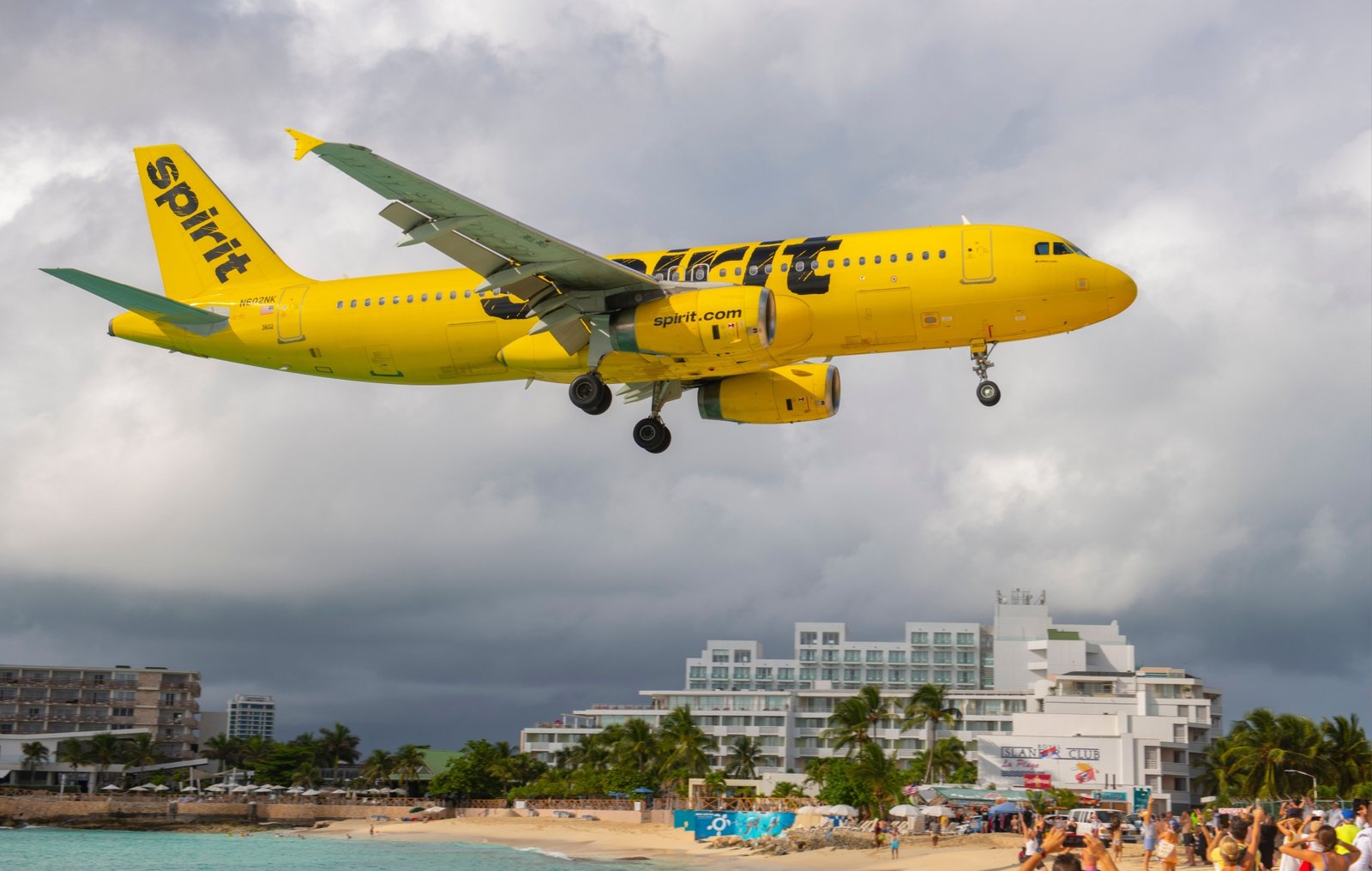
“Spirit in the Sky” may be a song about departure, but Spirit Airlines’ demise was no natural passing. It is a warning about a government that first broke the market’s legs, then offered it a wheelchair. Washington blocked the private merger that could have kept Spirit’s planes, workers, routes, and customers inside a functioning carrier. Then, after the damage was done, Washington even considered whether taxpayers should help clean up the mess.
Spirit was not a luxury airline. It was often mocked for its fees, cramped seats, and bare-bones service. That was precisely the point. Spirit served price-sensitive travelers who cared less about comfort than access. For many students and working families, Spirit helped make flying possible. It filled a niche that larger airlines had little incentive to serve with the same price discipline.
On Saturday, May 2, 2026, Spirit CEO Dave Davis said, “For more than 30 years, Spirit Airlines has played a pioneering role in making travel more accessible and bringing people together while driving affordability across the industry.” The airline at its peak operated hundreds of daily flights and employed about 17,000 people. Although rising oil prices following the onset of the Iran conflict may have delivered the final blow, the fight to keep Spirit flying had been underway long before then.
In 2024, JetBlue and Spirit called off their $3.8 billion merger after a federal judge blocked the deal on antitrust grounds. Reuters reported that the merger would have created the fifth-largest airline in the United States, but the Biden administration argued that it would harm consumers by reducing competition and raising ticket prices. JetBlue paid Spirit a $69 million termination fee. But the failed merger left Spirit in a difficult position, with analysts already discussing bankruptcy risk.
Senator Elizabeth Warren celebrated the government’s position at the time. On March 5, 2024, she wrote that she had warned for months that a JetBlue-Spirit merger would have led to “fewer flights and higher fares,” adding that DOJ and DOT were right to fight airline consolidation. She called it “a Biden win for flyers.”
Roughly two years later, Spirit’s exit has left fewer low-cost flights, fewer ultra-low-cost seats, and a thinner market for consumers who once relied on its model.
Warren’s argument, like the DOJ’s, rested on a fragile assumption. The government compared the merger to an idealized world in which Spirit remained an independent, viable low-cost competitor. The realistic comparison was different: merger, bankruptcy, liquidation, or bailout. A weak airline does not become competitive because regulators insist it remain independent. A grounded airline does not discipline fares. A bankrupt airline does not serve consumers.
Both Noah Gould and Tarnell Brown reached the same basic conclusion: Spirit’s consolidation into JetBlue threatened the largest airlines more than it threatened consumers. The real threat was not that JetBlue-Spirit would dominate the market, but that it could create a stronger fifth competitor against Delta, American, Southwest, and United. Even after acquiring Spirit, JetBlue would not have become dominant. The court found that the merged carrier would have become the nation’s fifth-largest airline with 10.2 percent of the domestic market. That is not dominance. It is scale enough to challenge dominance. If the purpose of antitrust law is to protect competition rather than competitors, why should the government prohibit a smaller airline from scaling up to challenge entrenched incumbents?
This also explains why Delta or American did not buy Spirit. Their absence does not prove Spirit was worthless. It suggests Spirit made strategic sense for JetBlue in a way it did not for the giants. Delta, American, United, and Southwest already have national networks, major hubs, international routes, corporate travel customers, loyalty programs, and enormous scale. JetBlue needed Spirit to become a more serious national competitor. The Big Four did not need Spirit to become national competitors. They already were.
In fact, the absence of a Big Four bid strengthens the case for the JetBlue merger. Why would a dominant airline buy Spirit’s debt, leases, labor obligations, and business-model problems if it could wait for distress and compete for its passengers, pilots, aircraft, gates, or routes later? The larger airlines did not need to acquire Spirit to benefit from its disappearance. They only needed to wait for Spirit to exit the market.
Now that the crash landing has occurred, the consumer-protection case looks upside down. The merger was blocked because regulators claimed it might mean fewer flights and higher fares. Yet Spirit’s collapse produced canceled flights, stranded passengers, fewer ultra-low-cost seats, and less pressure on the remaining airlines. AP reported that United, Delta, JetBlue, and Southwest offered $200 one-way flights for passengers holding Spirit ticket confirmations. Other airlines also said they would help stranded Spirit employees and give them preferential employment applications.
This market failure is a direct result of government meddling in the airline industry. Had the JetBlue deal been allowed, Spirit’s customers may not have been left facing a sudden wind-down, disappearing customer service, and emergency rebooking. The Spirit brand may have disappeared, but its aircraft, workers, routes, and customers could have been integrated into a functioning carrier. Instead, the government chose antitrust purity, and passengers were left with the consequences.
The Trump administration’s reported bailout interest only completes the irony. The National News Desk reported that Trump said his administration had given Spirit Airlines a “final proposal” as the carrier considered ceasing operations, amid debate over a possible taxpayer-backed rescue. But that would have been the wrong response. JetBlue would have risked private capital. A bailout would risk taxpayer capital. Spirit did not need Washington to become its owner. It needed Washington to stop blocking its buyer.
Using American money to rescue Spirit after blocking private capital would be especially absurd because the US government cannot even manage its own balance sheet. The Congressional Budget Office projects a $1.9 trillion federal deficit in fiscal year 2026, rising to $3.1 trillion by 2036. It also projects debt held by the public rising from 101 percent of GDP in 2026 to 120 percent in 2036. A government running chronic deficits should not pretend to be a disciplined capital allocator for failed airlines, especially after the same government denied a private merger. Washington helped create the problem it later claimed only public intervention could solve.
Washington’s meddling in airline markets is not an isolated episode. It is the latest example of a broader interventionist turn across American industry. In semiconductors, Washington has become a shareholder, with the US government taking a 10 percent equity stake in Intel by converting public grants into stock. In steel, the same logic appears through governance rather than equity. The US government secured veto power over key US Steel decisions as part of Nippon Steel’s takeover, including a non-economic golden share and presidential authority to name a board member.
In chips, government becomes shareholder; in steel, government becomes veto holder; in airlines, government blocks a private merger and then considers taxpayer-funded public rescue. That is not neutral regulation. It is government inserting itself directly into corporate decision-making.
Spirit should not be saved by taxpayers. But it should have been allowed to seek survival through private capital. The tragedy is not that the government refused to rescue Spirit at the end. The tragedy is that the government helped block the market’s rescue before the end came. From JetBlue and Spirit to Intel and US Steel, the lesson is clear: when government enters the market as planner, owner, veto-holder, or rescuer, it does not make firms stronger. It makes capitalism weaker. Spirit Airlines did not need Washington to buy it. It needed Washington to let capitalism work.
