


Until quite recently, depictions of motherhood in cinema were limited to a handful of archetypes: The long-suffering martyr, the angelic caretaker, the fierce protector, perhaps even an absent working woman. That last option was usually presented as negative, if not downright villainous. And darker, more nuanced emotions—ambivalence, doubt, even regret about having children—were not depicted at all.
Mary Bronstein’s film “If I Had Legs I’d Kick You” dives fearlessly into a tangled morass of emotions, dramatized in the unsettling, surreal style of a horror movie and punctuated with moments of tragicomic mirth. Bronstein immerses viewers in the perspective of Linda (Rose Byrne), a woman who may as well be a single mother—her husband, perpetually away on business, is heard but not seen—whose relationship with her daughter is fraying under the strain of the daughter’s (also unnamed, but serious) illness and the immense responsibility of her care. And then there’s the massive hole in the ceiling of their apartment that doubles as a portal into the unknown…
Byrne gives a stunning performance in the film, which is based on Bronstein’s own experiences; those who find it relatable will feel seen and understood, while those who don’t would do well to absorb its lessons and deeply empathetic point of view. We met Bronstein in an empty karaoke room above the chaotic Highball bar at this year’s Fantastic Fest, an eye-of-the-storm location that suited the nature of Bronstein’s film.
One thing that struck me about this film is that everyone around Linda tells her that she’s doing everything wrong, but no one offers her any actual help. Can you say more about that?
This is a woman in crisis in every way, shape, and form, yet purportedly surrounded by helpers. Mr. Rogers had something he would say. “Look for the helpers.” That’s supposed to offer you comfort, that there are people there whose job is to help.
In this movie, there’s an abundance of helpers. There’s doctors, there’s therapists, there’s husbands, there’s friends, and she is asking all of them for help. Sometimes literally, and sometimes in ways that people should intuit. Sometimes she’s screaming in someone’s face, “Please help me,” and they’re still not.
There’s a whole thing embedded in that for me, which is this idea of women not being listened to—especially a woman who is in crisis, whether it be physically or mentally in the medical or psychiatric system. “You have to calm down. It’s not that bad. You have to get a good night’s sleep.”
Everyone’s always giving her breathing exercises.
“Take some deep breaths.” This is not helpful. Sometimes what’s helpful (which Linda also doesn’t receive) is you need to have somebody who is just empathetically listening to you without offering a solution.”Yeah, that does suck. Yeah, that fucking sucks. That is unfair. What’s happening to you is unfair.” And she doesn’t get that either. It’s extreme in the film, but when it happens in real life, it feels even more so. And that’s what I was trying to capture.
It all ties in with these societal ideals of motherhood. When you’re a mother, you have to handle everything yourself. There’s a taboo against saying, “I can’t do this.”
There are a lot of taboos when you’re a mother, and a lot of things you’re not allowed to say. And even in the privacy of [talking] one woman to another, who are both mothers, you would never say some of those things. You said, “I can’t do it,” but there’s the other side of that: “I don’t want to do it.” Or “I can’t deal with being around my child right now,” or “I want to get away from my child.” Those are things that mothers are not supposed even to think, let alone say, let alone do. And if you do it, you’re a monster or you’re a crazy person.
[My film] is getting at that. Who does it scare [when you say these things], and why? As with any other life experience, women and mothers should be able to be honest with each other and themselves. It’s not a betrayal of your love for your child. It’s not. But it’s seen that way. Sometimes a friend will annoy you, or sometimes you don’t like something that they did, and you need a break from them. Your relationship to a child is no different than that, but it’s supposed to be [different].
Linda is in a place where she can derive no joy from her child. It doesn’t matter if she put herself in that place by victimizing herself or seeing herself as a victim of her child, or whether that’s actually true. She can’t, because she can’t take her kid to the playground. She can’t take her kid on a vacation. They can’t go to Disney World. She can’t even play with her kid.
Maybe she could, but she’s not in a place where she can derive joy from the relationship. So it does become a burden. And you’re supposed to be able to talk about [difficult things] in private with your therapist, but even that’s considered inappropriate in the film. It’s something that I think is a problem. When you can’t express things, they don’t go away.
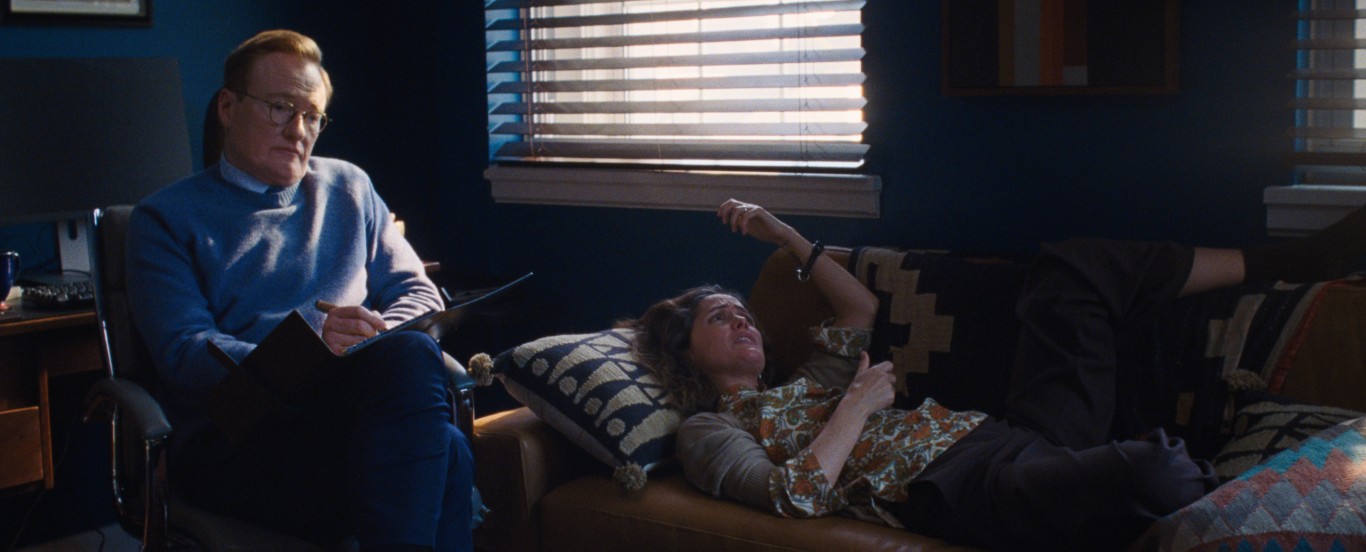
Why do you think it’s so taboo? Personally, I think it has something to do with this misogynist idea of biological determinism. “This is your natural role. This is what you’re made for.”
Exactly. There’s this whole bill of sale that women are sold falsely, which is that just because you have a baby, you know how to be a mother, and you know what to do. It’s supposed to be your instinct, and you know what to do, and you can just do it from dawn to dusk for the rest of time. Mothers are human beings. My mother was a human being. Your mother is a human being. They had feelings that we didn’t know about, but that was okay. That’s okay. It’s okay. It only becomes not okay if you’re abusing your child, but having thoughts and feelings and expressing them in private is still so scary.
And I think it’s exactly what you said; this is a woman who doesn’t know what to do, and quite literally screams in somebody’s face, “tell me what to do!” And his answer is, “You already know what to do.” No, I don’t!
Does that tie into the cosmic aspects of the film? It’s almost mystical, this rhetoric about mothers “falling in love” and then immediately, instinctually knowing what to do for the rest of their lives.
The portal will have a different meaning for every viewer, and that’s very exciting for me. But certainly, for Linda, it’s a scary place. A lot is going on there. There are a lot of voices in there. It’s the part of herself that she can’t run away from.
When you have trauma, you can try to put it [away] somewhere, but it’s going to get you. It’s going to keep getting bigger. It’s going to keep growing, and you can’t get away from it because it’s inside of you, and you can’t get away from yourself. That’s the existential terror that’s at the heart of the movie, and what Linda has to contend with in order to get to the place [she’s in] at the end of the movie. To get to that place, she needs to have her trauma smack her in the fucking face. “I exist. Deal with me. Deal with it.”
It reminds me of that famous monologue from “Network.” “I’m mad as hell, and I’m not going to take it anymore!”
The similarity is that it’s yelling into the ether. “Does anybody hear me? Does anything I say mean anything to anybody?”
“Hi, I’m a person!”
“I am a person. Can you see me?” It’s all of that, and the magic of just being heard. The human experience [of being listened to] is so important, and it’s completely absent for this character.
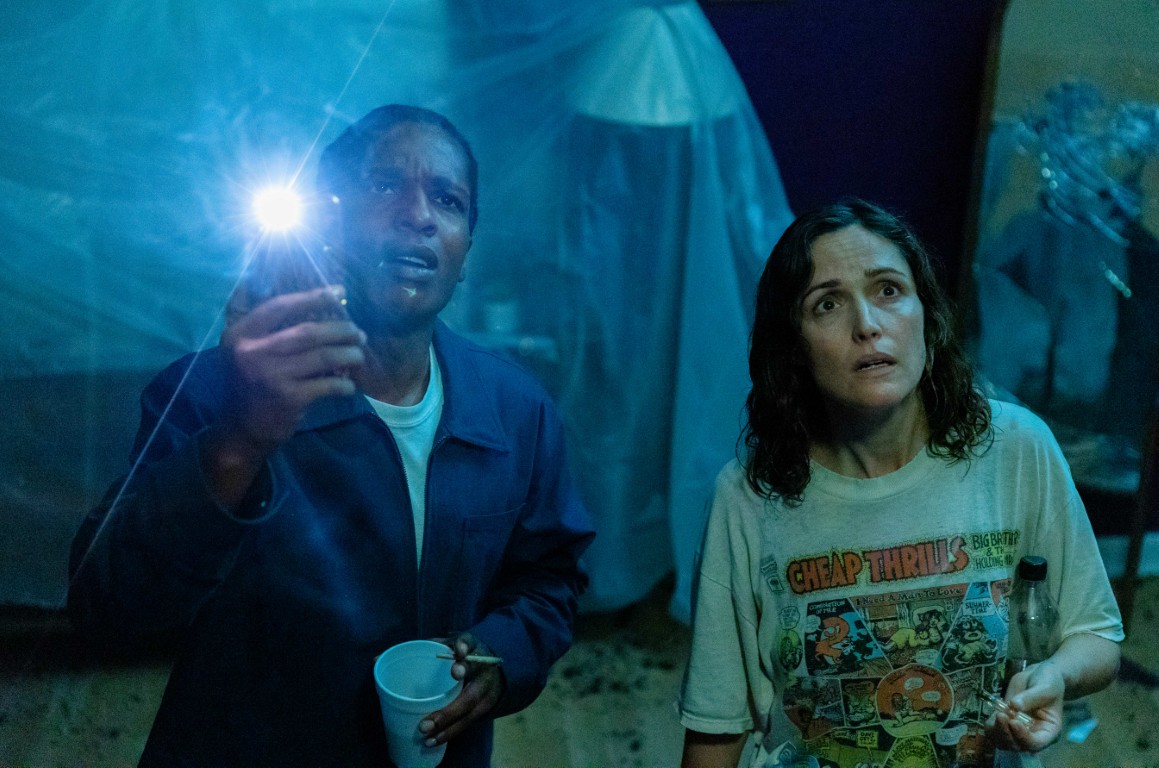
Let’s go back to the hole for a second. The sound design in those sequences is so oppressive; can you tell me about creating that, and what you were going for there?
The voices we hear in those scenes are all kinds of things. It’s the recordings that I did with Rose [Byrne] and my wonderful child actor, Delaney Quinn. It’s the sound of them playing. It’s clips of my own child playing when she was little. It’s clips of other children that I’ve worked with; I went through my phone, all the way back.
It’s also voices from Linda’s trauma. It’s “mom, mom, mom, mom! You’re not doing it! Mom! Mom!!” Plus the voice of her therapist, all of these things swirled together. Sometimes you can hear it clearly, and sometimes you can’t. Sometimes it just creates a soundscape.
The movie has no score in a traditional sense. The score is the sound design. It’s a soundscape. It’s always hyper-realistic, but the clock in her office is a little louder than a clock should be. The birds outside are a little louder. It builds and builds and builds until everything in her mind is surrounding us. When we did the sound design, we used the position of the speakers in the theater as a tool: If something is behind Linda, it’s in the speaker [in the back of the theater]. And if I want you to be enveloped, it’s all around.
Most of a movie’s life exists outside of a movie theater. Its first life is in the theater, and then it goes into different forms. But if you can see it in a theater, you should, because that’s the only time when you’ll get the whole experience. It’s an experiential film.
You’re talking about real experiences, and the events in the film are realistic. But over the course of the film, it reaches this heightened, surrealistic state. How did you achieve that?
The first draft of the script was pure vomiting on paper. Pure expression. Then the refining of it was quite mathematical. The humor I’m using is completely calculated.
I see the movie as a machine. It’s chugging along. And I need the machine to sustain itself for the amount of time I need it to, and to reach the point I need to get to. To do that, you have to release a steam valve. You have to give the audience that little release, and then the audience will go further, go further, go further, go further. Then you’re all the way with me.
Say I made the same movie completely devoid of humor, which could exist—I don’t think an audience would go all the way with me. Because the machine would explode.
Sure. There’d be too much pressure.
It would not sustain itself. And I am a person who, as a human being, will find the joke in any tragedy. That’s my coping mechanism. I grew up that way. That’s how my house was. If you’re going to laugh, you’re going to cry. That is something I wanted to have embedded in the film. And also that it’s okay! Sometimes the right reaction, when something is so bad that it’s absurd, is to laugh. It’s a tricky line, and I hope that I achieved it. But it was the necessary line to tell this story.
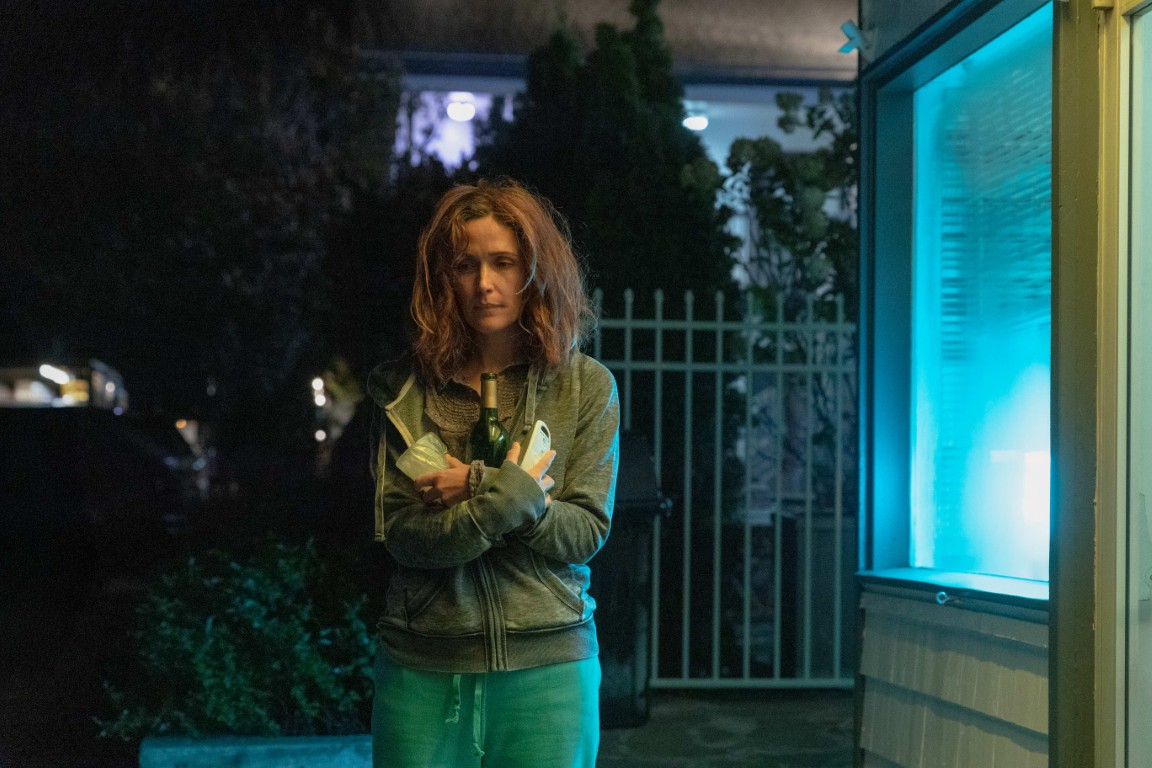
For me, the most upsetting part of the film was when Linda is on the phone with the husband of one of her clients, asking him to come pick up his baby —
— Played by my husband, by the way —
And he says, “This is not my emergency.” I was so enraged by that.
Because guess why? It’s not his job to take care of the baby,
To take care of his own baby,
What he says is, “That’s her fucking job. That’s why I’m here working.” It’s not his emergency because he’s not the mother.
In terms of the men and the children in the film, was there a line for you where you thought, “Oh, I’m making them too annoying, too frustrating, too enraging?” Did you ever feel like you needed to pull it back?
No. If somebody feels that way, that’s none of my business. This is the story I wanted to tell, and the way I wanted to tell it. When a movie comes out or any piece of art is released into the world, that’s what you’re supposed to do.
Art is a form of communication, whether it’s a painting, a song, a movie, whatever. That’s how human beings have always used art. So I am communicating something, and then I’m putting it out into the world. I also feel, in a postmodern way, that once I put it out into the world, it’s none of my business. It’s not mine anymore. It’s yours. And I trust you. I trust the viewer who comes to see my movie. I trust them implicitly. That’s why I don’t hold their hand. That’s why I ask more questions than give answers. And if somebody feels like it’s too much, that’s okay. It doesn’t scare me, because it’s okay to be uncomfortable.
It can’t be something that I worry about, or else it would impede what I’m doing creatively. If you’re trying to anticipate what people will think while you’re creating, you’re going to get all muddled up. And I was trying in a very pure way not to do that.
How does that tie into what you said about this being an experiential film?
There are some things that you consume, and there are some things that you experience. This film is something you experience. You don’t passively consume it. As a viewer, those are the kind of movies that I love best. And I’ve had amazing responses to [the film], so I think people are up for it.
