

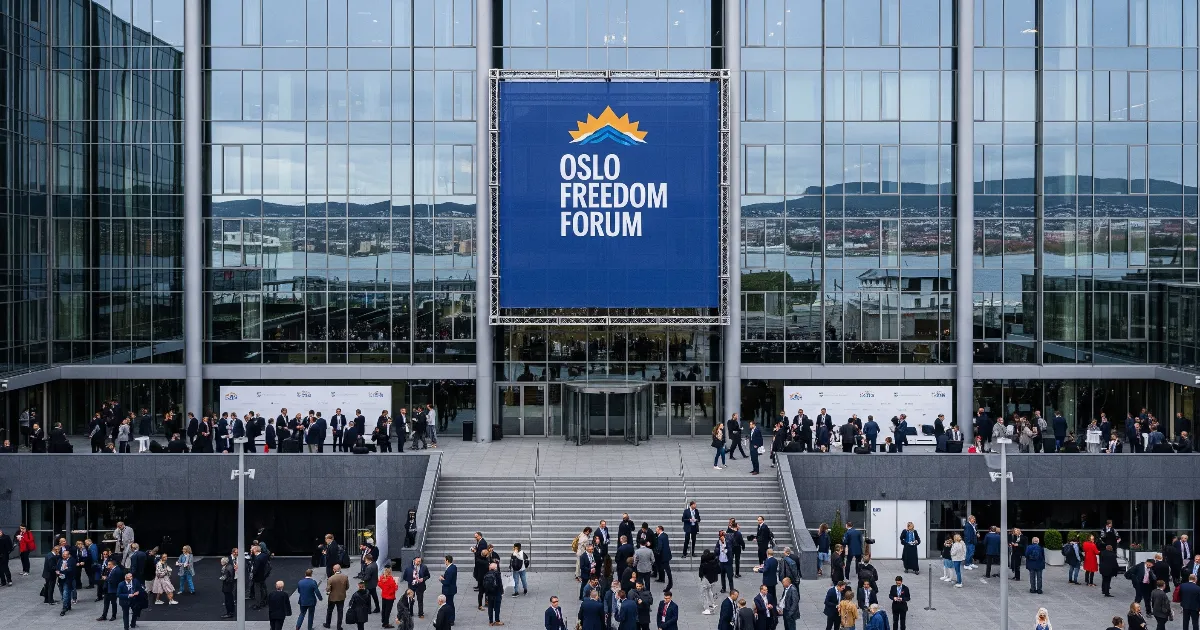
As I step onto the plane leaving Gardermoen Airport in Oslo, Norway, the weight and warmth of the past week settles into my chest.
The Oslo Freedom Forum is not a conference. It’s not a summit. It’s something harder to name and even harder to describe — a convergence of courage, truth and defiance that burns through the noise of the modern world and gives you no choice but to listen, feel and act.
For the second time, I leave this city more convinced than ever that something unstoppable is rising. That amid the censorship, surveillance and state repression spreading across the globe, there is a countervailing force rooted in humanity, accelerated by technology and led by those who’ve already paid the price for speaking out.
The Forum doesn’t trade in empty optimism. It delivers a different kind of hope, forged from lived experience and stitched together by people who have been in the dark and still choose to see the light. A hope borne from the stories of individuals who have lived through the worst an authoritarian regime can do and still choose to fight for the freedom of others. The experiences shared were hard. At times, devastating. But they weren’t offered for pity. They were calls to action.
Just days after she was abducted, blindfolded, tortured, and sexually assaulted in a Tanzanian prison cell, Agather Atuhaire stood in front of a crowd of strangers and told her story.
Her voice did not tremble.
The Ugandan journalist and lawyer had traveled to Tanzania in solidarity with fellow East African dissidents, only to be disappeared in a black van alongside Kenyan activist Boniface Mwangi.
And yet, against all odds, she came back. Not just to her home in Uganda, but also to the stage in Oslo, where she spoke calmly and clearly about what it means to tell the truth under a dictatorship.
Her presentation, “The Digital Free Speech Crackdown in Uganda,” laid bare the authoritarian playbook: social media blackouts, propaganda campaigns, surveillance of journalists and the slow financial asphyxiation of independent media. When the government doesn’t like a story, it simply blocks the platform or website. When a journalist digs too deep, they disappear for a while. Or forever. Atuhaire painted a picture many struggle to even imagine.
And yet, after everything, she didn’t just recount these struggles. She looked out at the crowd and thanked the open source builders and contributors who write code and create tools that make it possible for activists like her to speak, move money and organize under regimes that want them silenced, or worse.
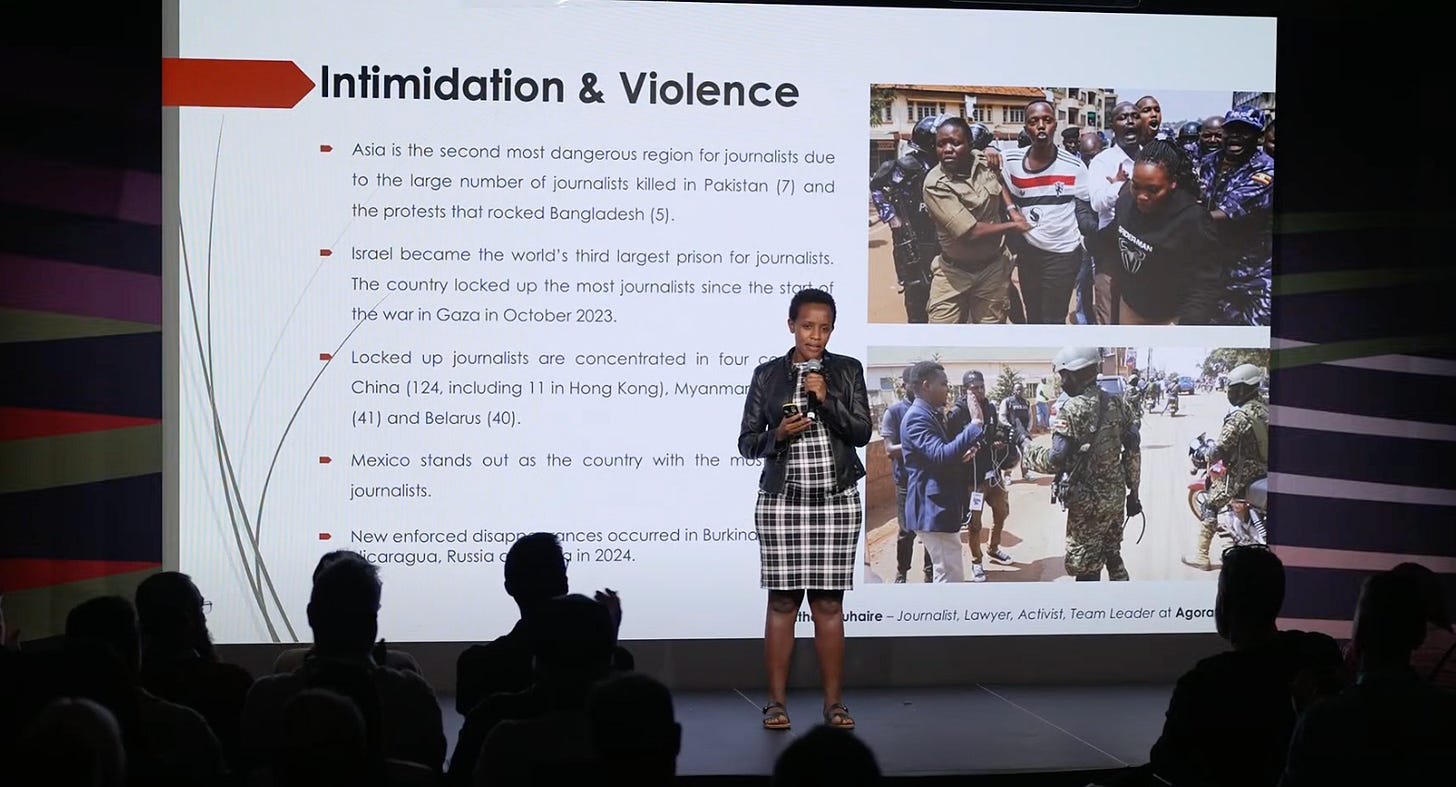
(Ugandan journalist and lawyer, Agather Atuhaire, speaks during the Freedom Tech track at the 2025 Oslo Freedom Forum.)
From Iran, independent Bitcoin educator Ziya Sadr reminded us that financial privacy is not a luxury but a necessary lifeline for those facing the financial repression by oppressive rulers. Sadr’s detainment during the 2022 Women, Life, Freedom movement following the murder of Mahsa Amini by the Iranian regime is a testament to that. Without financial privacy, activists’ actions, connections and finances are exposed to a regime equipped with widespread financial controls and a sophisticated, restrictive internet firewall that rivals even China’s.
The result is one of the most repressive digital environments in the world. And if that wasn’t enough, the Iranian rial currency has lost more than 80% of its value in just a few years.
Against this backdrop, Iranians are using bitcoin as undebasable savings, and to buy digital services like VPNs in order to access the open internet. But even that act, just reaching the outside world, requires a level of privacy most of us take for granted.
In his presentation, “Securing Lifelines: The Bitcoin Privacy Imperative,” Sadr shared that many Iranians turn to Bitcoin Coinjoins, a privacy technique that breaks the link between Bitcoin transaction inputs. Coinjoins preserve user transaction privacy and, more importantly, shield Iranians from the surveillance and retaliation of a regime who punishes anyone trying to access information beyond its tightly controlled digital spaces. The use of Coinjoins is becoming more difficult as global legal pressure mounts against open source developers, and in the aftermath of the Samourai developer arrests, privacy protocols like Whirlpool are unworkable.
Today, Sadr is learning more about additional Bitcoin privacy tools, including Paykoin, a privacy method that allows two users to contribute an input to a Bitcoin transaction. Payjoin breaks common chain analysis heuristics and conceals the sender and receiver of a transaction as well as the payment amount. Then there is ecash, a form of digital cash backed by Bitcoin that enables very private, everyday payments with the custodial trade-off of trusting mints (entities that issue and redeem ecash tokens) to store user funds.
The continued development of these protocols is crucial for Iranians, who live under a government that not only tracks and surveils digital behavior, but also imposes automatic fines on women for violating hijab rules and manipulates currency exchange rates to profit off citizens’ savings. For millions in Iran, bitcoin offers a last line of defense against a collapsing currency, intrusive surveillance and total financial repression.
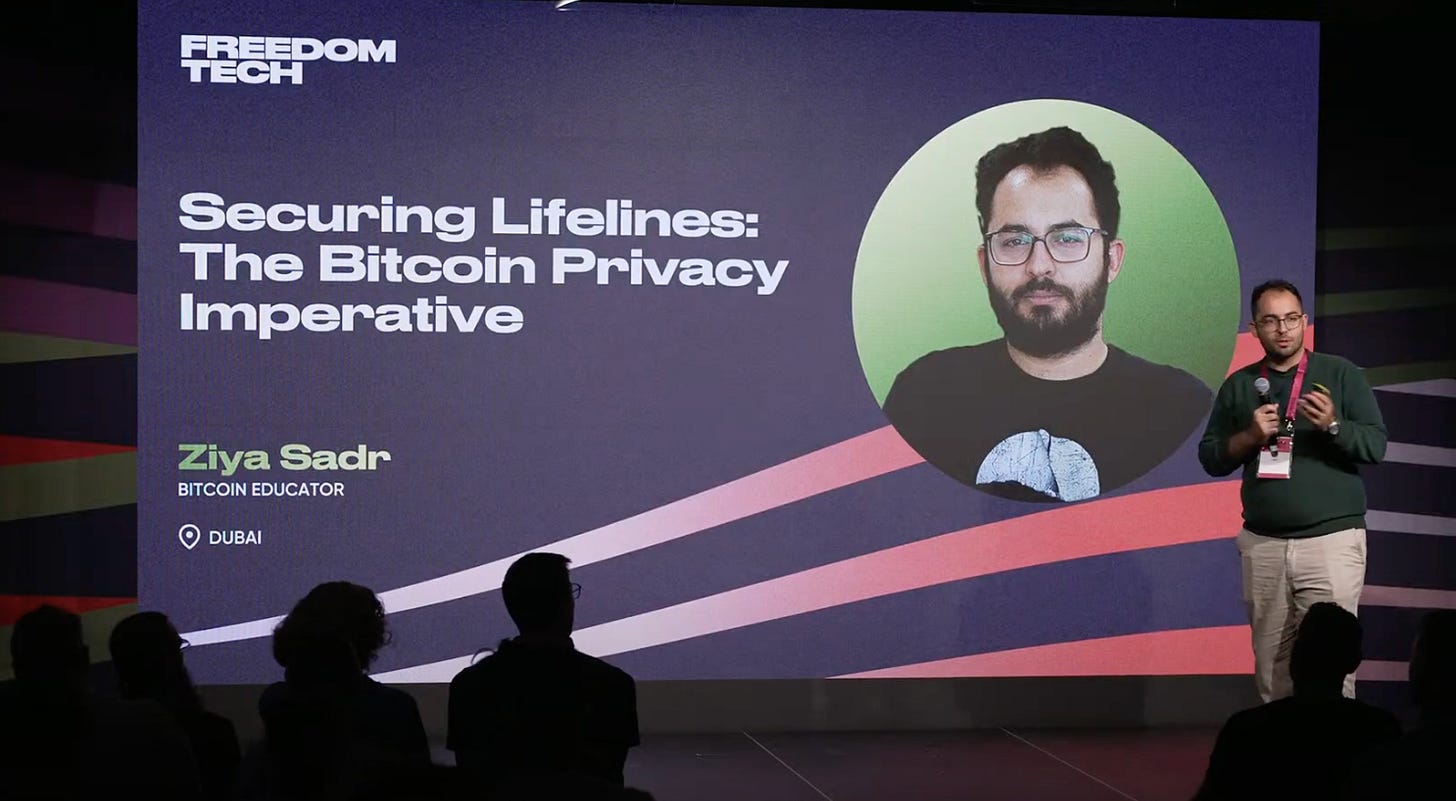
(Independent Iranian Bitcoin educator, Ziya Sadr, speaks during the Freedom Tech track at the Oslo Freedom Forum.)
Venezuelan opposition leader Leopoldo López took the stage at the 2025 Oslo Freedom Forum not as a politician, but as a witness to what happens when a state turns its institutions into further tendrils of its repression machine.
After Nicolás Maduro stole Venezuela’s 2024 elections, López watched thousands of his fellow people — activists, students, journalists, opposition members and lawyers — get arrested, disappeared or forced into exile. The regime blocked access to social media, revoked passports, criminalized dissent and used the financial system as a means of controlling the population.
Amid this digital repression and Venezuela’s 162% inflation rate, López sees bitcoin (decentralized money) and Nostr (decentralized social media) as lifelines. When dictators shut down the internet or freeze your bank account, alternatives that are open source, decentralized, uncensorable and accessible become more important than ever for the survival of democracy and freedom.
“Decentralized resistance is the convergence of people, Bitcoin, Nostr, and AI.
People, it’s about the center and the end of what we are doing.
Brave women and men who sacrifice their freedom, who take risks, who are willing to fight for other people.
If it’s not about people, technology wouldn’t be something worth fighting for.
Bitcoin is freedom money. It’s decentralized, nobody controls it, nobody can stop it, it can move around without borders.”
(Venezuelan Opposition Leader Leopoldo López during the Freedom Tech track at the 2025 Oslo Freedom Forum.)
For decades, Paraguay’s greatest natural resource, hydroelectric power, has flowed out of the country through international contracts, fueling development in neighboring countries like Brazil and Argentina while one in four Paraguayans remained trapped in poverty. Paraguay’s Itaipu Dam, one of the largest in the world, has long symbolized this paradox: a river of energy diverted away from the very people who need it most.
Björn Schmidtke and Delia Garcete of Penguin Group are flipping that script.
In a landmark move, they secured Paraguay’s first 100-megawatt power purchase agreement, marking the beginning of a bold experiment to reclaim that energy for the people of Paraguay. Instead of selling it off to foreign powers, they use it to mine Bitcoin — and the proceeds go to Paraguay’s youth.
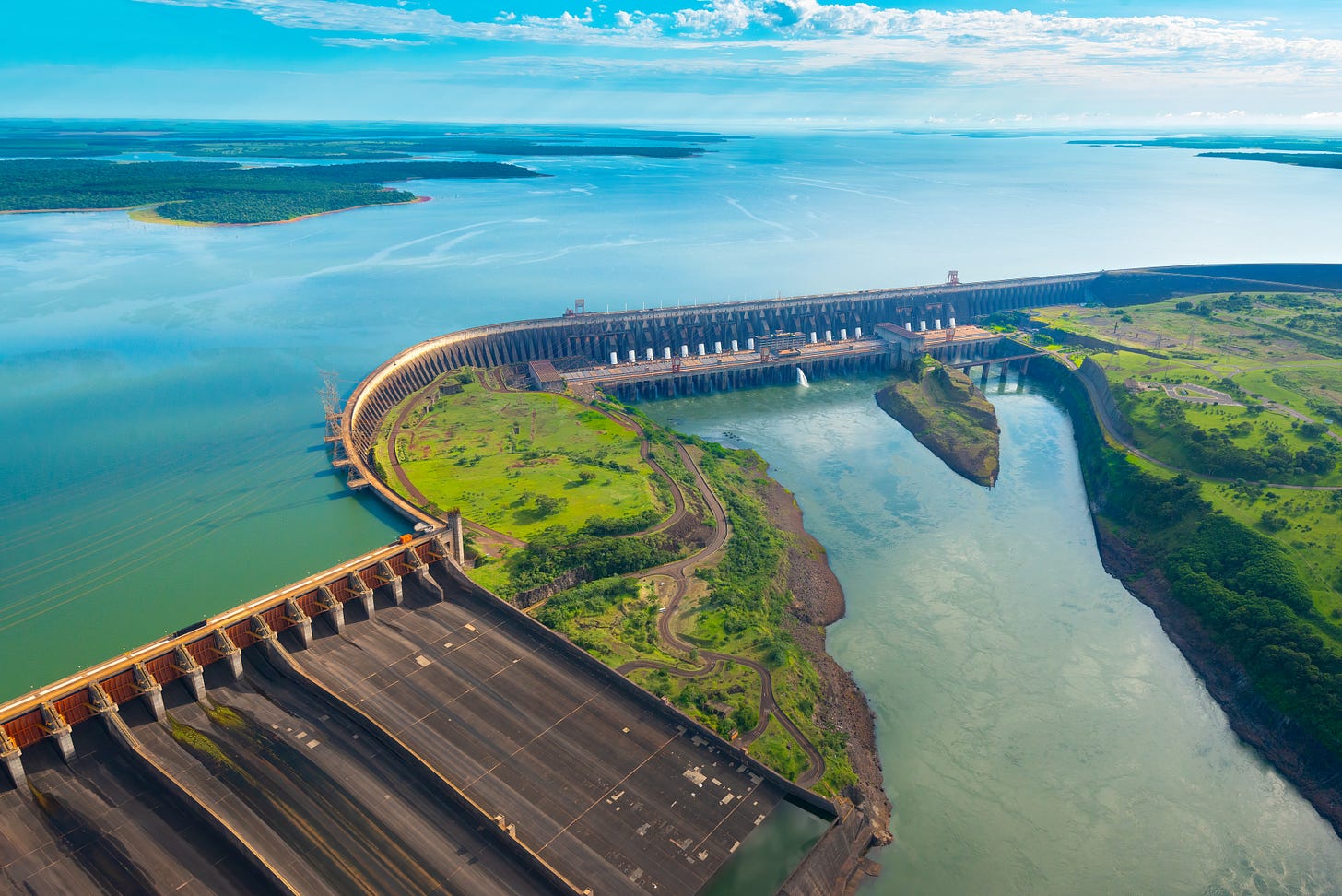
(Itaipu dam, Paraguay)
Out of the heat of humming ASICs and the roar of the Itaipu turbines rises Penguin Academy, a free software development school that equips young Paraguayans with coding, development and technical skills. Over 10,000 students have applied, including 800 women; more than 3,000 have already graduated. And over 85% of the graduates from their Code Pro program now work in the tech industry.
What was once wasted or exported is now being transformed into freedom and a future. Through bitcoin, Paraguay’s stranded energy is finding its way home.
Rushan Abbas is a Uyghur activist who has spent years raising the alarm about the Chinese Communist Party’s campaign to erase her people. During the Freedom Tech track, she spoke not just as a human rights advocate but as a sister whose sibling, Dr. Gulshan Abbas, was abducted by the CCP in 2018 and hasn’t been heard from since. Her voice was calm, but her words were heavy.
Abbas described a region turned into a digital and physical prison. The Uyghur homeland, East Turkistan, has been intentionally transformed into one of the world’s most sophisticated police states, where mass surveillance, facial recognition systems, police checkpoints, asset seizure, arranged marriage, sterilization and forced labor are used not just to control the Uyghur population, but to suppress them out of existence.
As Rushan describes it: “Break their lineage, break their roots, break their connections, and break their origins.”
Rushan made clear that monetary control is central to the CCP’s strategy. Uyghurs have their assets and bank accounts frozen, their land seized and their homes stolen. They are stripped of any ability to save, transact or build generational wealth, and are forced into government-run labor schemes under the guise of “poverty alleviation.”
Rushan reminds us that what’s happening to the Uyghurs is not abstract. It’s a targeted, systematic erasure carried out with weaponized technology and financial repression. Her sister’s disappearance is one of millions of silenced lives, but she refuses to let it be forgotten. In Oslo, Rushan stood not just as a witness, but her words served as a warning: When a government can monitor every transaction, surveil every citizen and control every movement, it doesn’t just repress but entirely dismantles the foundations of a people’s identity, autonomy and future.

(Uyghur activist Rushan Abbas speaks during the Freedom Tech track at the 2025 Oslo Freedom Forum.)
For these reasons and more, you don’t leave the Oslo Freedom Forum feeling defeated. You leave reminded that truth is more powerful than propaganda, that code can protect life and that resistance isn’t just possible — it’s already happening.
And if you’re fortunate enough to live in a place where speaking freely or moving money isn’t a life-risking act, you’re reminded of the privilege that comes with that freedom and the responsibility you have to stand with those who are still fighting for it.
This year, I felt a noticeable pulse of momentum around freedom tech. As we saw above, human rights defenders and dissidents didn’t just talk about the repression they endured. They emphasized the optimism about the tools that help them peacefully fight back: Bitcoin, Nostr, privacy tools, open source AI models, uncensorable VPNs — tools that work in the shadows, beneath firewalls, around embargoes and beyond borders. Tools that build a parallel system, where the right to transact, communicate, organize and resist cannot be revoked at the press of a button.
These are the instruments keeping movements alive, getting money to dissidents and protecting voices at risk. And behind every tool is a quiet builder, a pseudonymous contributor or an open source developer who may never take the stage but is just as much a part of the story.
The Oslo Freedom Forum is not just a gathering of voices. It’s a frontline, a place where the future is crafted by those who refuse to give in. And what emerges from that convergence is a simple, undeniable truth: Authoritarianism adapts, but so do we. With Bitcoin, with open source tools, with decentralized networks, with unstoppable courage.
At 30,000 feet, well above the noise and borders they try to enforce, one thing is clear: No authoritarian regime, no matter how brutal or well funded, has ever succeeded in stamping out the human desire to be free. The Oslo Freedom Forum is proof of that. And if you’re paying attention, it’s also a glimpse into what comes next.
This isn’t the end. It’s just the beginning of the next chapter. One written not by the powerful, but by the free.
Onward.
