

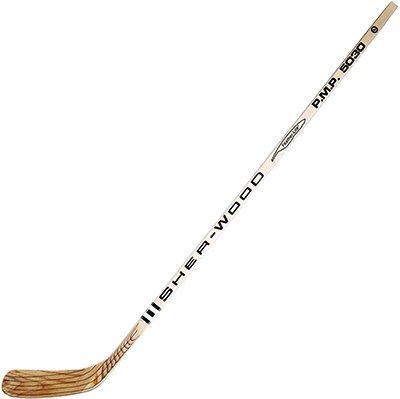
From seasoned hockey players and coaches to fans fascinated by the sport’s gear, understanding how hockey sticks have developed over time offers more than just trivia — it’s a look into how performance, precision, and innovation have changed the game.
This guide walks through the history, milestones, and trends that have shaped one of hockey’s most integral pieces of equipment.
The Journey of Hockey Stick Evolution
From the frozen ponds of the 1800s to today’s NHL arenas, the evolution of hockey sticks has shaped how the sport is played. Once carved from hardwood and swung by hand-crafted pioneers, the hockey stick has become a high-performance tool of precision, power, and personalization. Understanding its history reveals how materials, design innovations, and technological breakthroughs have changed the game—forever.
More than just a piece of equipment, the hockey stick reflects the evolution of the sport itself. As strategies, training methods, and athleticism have advanced, so too have the tools of the game. And of all hockey gear, the stick remains the most customized, scrutinized, and performance-critical item in a player’s arsenal.
To see the full picture of the hockey stick’s journey, let’s take it back to the very beginning.
The Wooden Era
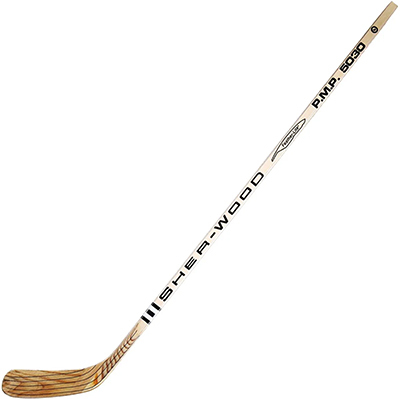
The earliest wooden hockey sticks were crafted by the Mi’kmaq people in Nova Scotia as early as the 1830s. Made from single pieces of hornbeam, and later ash, these sticks were durable but heavy. The Mi’kmaq were known for their fine woodworking, and their designs laid the foundation for mass production. By the 1860s, Starr Manufacturing Company in Dartmouth, Nova Scotia began commercializing these sticks for the growing sport of ice hockey.
Stick design varied regionally in early days, with players shaping the blade curve and shaft length to suit personal preference. The heavy construction provided strong slap shots but limited agility and finesse. Wooden sticks also absorbed moisture, making them heavier over time and prone to warping. This meant that stick performance could vary significantly even within the same game, depending on ice conditions and wear.
Despite these flaws, wood remained the go-to material through most of the 20th century due to its accessibility and affordability. Enthusiasts today still debate the feel and balance of wood vs composite hockey sticks — an enduring topic in the sport. While modern materials dominate today’s game, many players and collectors still revere traditional wood sticks for their nostalgic value and natural puck feel.
Technological Advancements: From Fiberglass to Aluminum
In the 1960s, the first major change in stick technology came with fiberglass-wrapped wooden sticks. This layer improved durability without significantly increasing weight, meaning that players could count on more consistent flex and a longer lifespan. This era marked the start of experimentation; manufacturers began testing alternative materials and hybrid constructions, laying the groundwork for major breakthroughs in stick design.
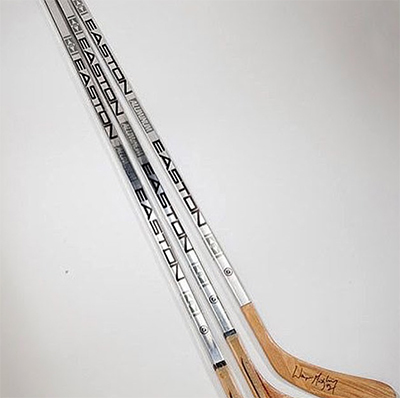
The 1980s and 1990s saw the introduction of aluminum shafts with replaceable wooden blades. Players like Wayne Gretzky and Brett Hull famously used aluminum sticks. These sticks offered a futuristic look and boasted unmatched durability, especially appealing to power forwards and defensemen who prioritized slapshot strength. The modular design allowed for blade replacement and shaft reuse, making them a practical innovation. It was a forward-thinking step that challenged the hockey world to rethink what sticks could be—and how they could be built.
However, despite their durability, aluminum sticks were criticized for poor puck feel and an unnatural stiffness. Casual and youth players were slow to adopt them, preferring the traditional feel of solid wood. Even elite players noted that aluminum sticks lacked the subtle feedback they relied on for stickhandling, passing touch, and puck control. In short, aluminum never reached dominance but paved the way for better material engineering.
The Composite Revolution
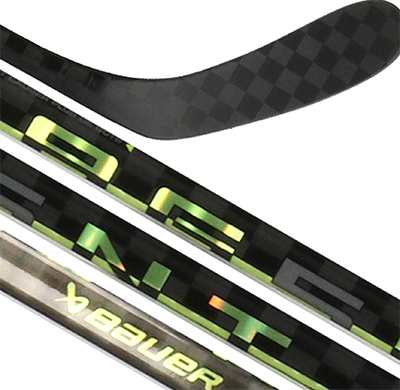
The 2000s brought a seismic shift: the rise of composite hockey stick technology. Built from carbon fiber, fiberglass, and Kevlar, these one-piece designs drastically reduced weight while boosting shot power and consistency. This allowed players to unleash quicker, more accurate shots with less energy, transforming offensive strategy at every level of the game. Today, nearly every NHL player uses a composite stick.
The advantages became clear: lighter sticks enabled faster reaction time, greater control, and improved endurance. Composite shafts also returned more energy during shots, enhancing velocity and accuracy. Combined, these benefits elevated the pace of play and gave rise to new scoring techniques rooted in precision over brute force.
Yet not all players immediately converted. Early composites were expensive, prone to breakage, and less familiar in hand feel. Over time, as the technology improved and the costs came down, composite adoption soared across junior leagues, college teams, and recreational play. Amateur athletes now benefit from elite performance once exclusive to professionals.
Soon after, customization also boomed. Players can now choose from a vast range of lengths, curves, grips, and flex ratings. This degree of personalization means a stick can now be fine-tuned to a player’s position, strength, shooting style, and even handedness. Explore some of today’s top player stick options available to both pros and amateurs alike.
Design Innovations: Flex, Curve, and Kick Point
Performance design has evolved to offer players pinpoint control over how their stick behaves. The hockey stick flex rating—measuring the stiffness of the shaft—is one of the most important factors. A 75-flex stick, for instance, bends more easily than a 100-flex, giving quicker wrist shots but less raw power.
The blade curve evolution added another layer of precision. Early blades were straight; now, most blades have a toe, mid, or heel curve to accommodate wrist shots, slapshots, and backhands. The specific curve affects how the puck sits on the blade, influencing puck control, shooting angle, and ease of lifting the puck off the ice.
The now-iconic first curved hockey stick, popularized by Bobby Hull in the 1960s, created a revolution that led to shot accuracy and puck lift—though it also forced leagues to regulate curve depth for safety. NHL rules now limit blade curvature to three-quarters of an inch to maintain fairness and reduce the risk of unpredictable puck trajectories.
Another key factor is the kick point—the location on the shaft where the stick flexes most. Low-kick sticks offer rapid release for quick shots close to the net, while mid- or high-kick sticks are preferred for heavy slapshots from the blue line. Understanding kick point helps players match their stick to their style—whether that means a quick release in tight spaces or full-power shots from a distance.
With so many variations, player preference now drives design as much as engineering. To learn more about how to select the right option, check out our full breakdown on hockey stick flex rating.
Impact on Player Performance
Today’s top players are continuing to maximize performance through equipment. The impact of stick materials on performance is evident in shot statistics and gameplay analysis. Composite materials allow for more accurate passing, faster shots, and enhanced puck feel. These improvements not only enhance individual skills but also elevate overall team performance by enabling faster, more fluid offensive play.
Studies have shown that composite sticks generate shot speeds up to 10–15 MPH faster than their wooden counterparts. For example, Connor McDavid uses a low-kick composite stick to complement his quick-release wrist shot, while defensemen often use stiffer, longer models for power and reach. Position-specific stick preferences help players fine-tune their game—whether it’s quick-release sniping for forwards or long-range outlet passes for defenders.
Biomechanics also matter. Lighter sticks reduce fatigue, particularly in high-minute players. Over the course of a game—or season—this can mean better stamina and reduced injury risk. This is especially valuable in back-to-back games or overtime-heavy matchups, where fatigue can influence game outcomes.
That said, composite sticks are more expensive and can be prone to sudden breakage. This creates cost barriers for casual players and raises concerns about sustainability. For younger players just learning the game, youth hockey sticks offer balanced entry-level options. These sticks often blend affordability with scaled-down versions of pro-level features, giving young players room to grow into their gear.
Even goaltenders have had to adapt. Faster shots and deceptive puck movement from curved blades have changed how goalies train, leading to sweeping changes in goalie gear evolution. Today’s goaltenders must also anticipate unpredictable puck trajectories, which has led to refined blocker angles, glove positioning, and new save techniques.
The Future of Hockey Sticks
So, what’s next in the evolution of hockey sticks? Several manufacturers are exploring smart sticks with embedded sensors to measure shot velocity, angle, and fatigue. These tools are already in prototype stages for use in performance coaching and scouting. If widely adopted, these smart sticks could transform how players train and how coaches evaluate stick effectiveness in real time.
Sustainability is also gaining traction. Some companies are developing recyclable or biodegradable stick components, while others are working to reduce carbon emissions in manufacturing. Initiatives like Bauer’s partnership with researchers at McGill University reflect a growing push for environmental responsibility. As sustainability becomes a larger concern in sports, eco-conscious stick designs may soon become the industry standard rather than the exception.
Customization will only increase, with AI helping players choose specs based on playing style, body mechanics, and even data from wearable sensors. Coaches and manufacturers alike foresee a future where every stick is tailored, all the way down to the grip texture.
For broader historical context on these innovations, explore our archive of NHL gear history, which tracks how equipment has evolved alongside player needs and league regulations.
FAQs
How has the hockey stick evolved?
The hockey stick has transformed from heavy wooden shafts made from ash and hornbeam to lightweight, carbon fiber–reinforced composites. Alongside this material shift came innovations in flex, curve, and shaft geometry that allow for vastly superior performance.
What are the four stages of hockey stick growth?
- Traditional solid wood sticks
- Fiberglass-coated wood
- Aluminum shafts with wood blades
- Composite one-piece sticks with carbon fiber and Kevlar
How did hockey sticks become curved?
In the 1960s, players like Bobby Hull and Stan Mikita began experimenting with heating and bending blades, discovering that a curve gave them better lift and control. Their success popularized the curve and led to league regulations on blade specifications.
Are hockey sticks longer than they used to be?
Not necessarily. While length hasn’t changed dramatically, modern materials allow for thinner shafts and lighter builds without compromising durability. This makes today’s sticks feel more responsive and less taxing to use.
