

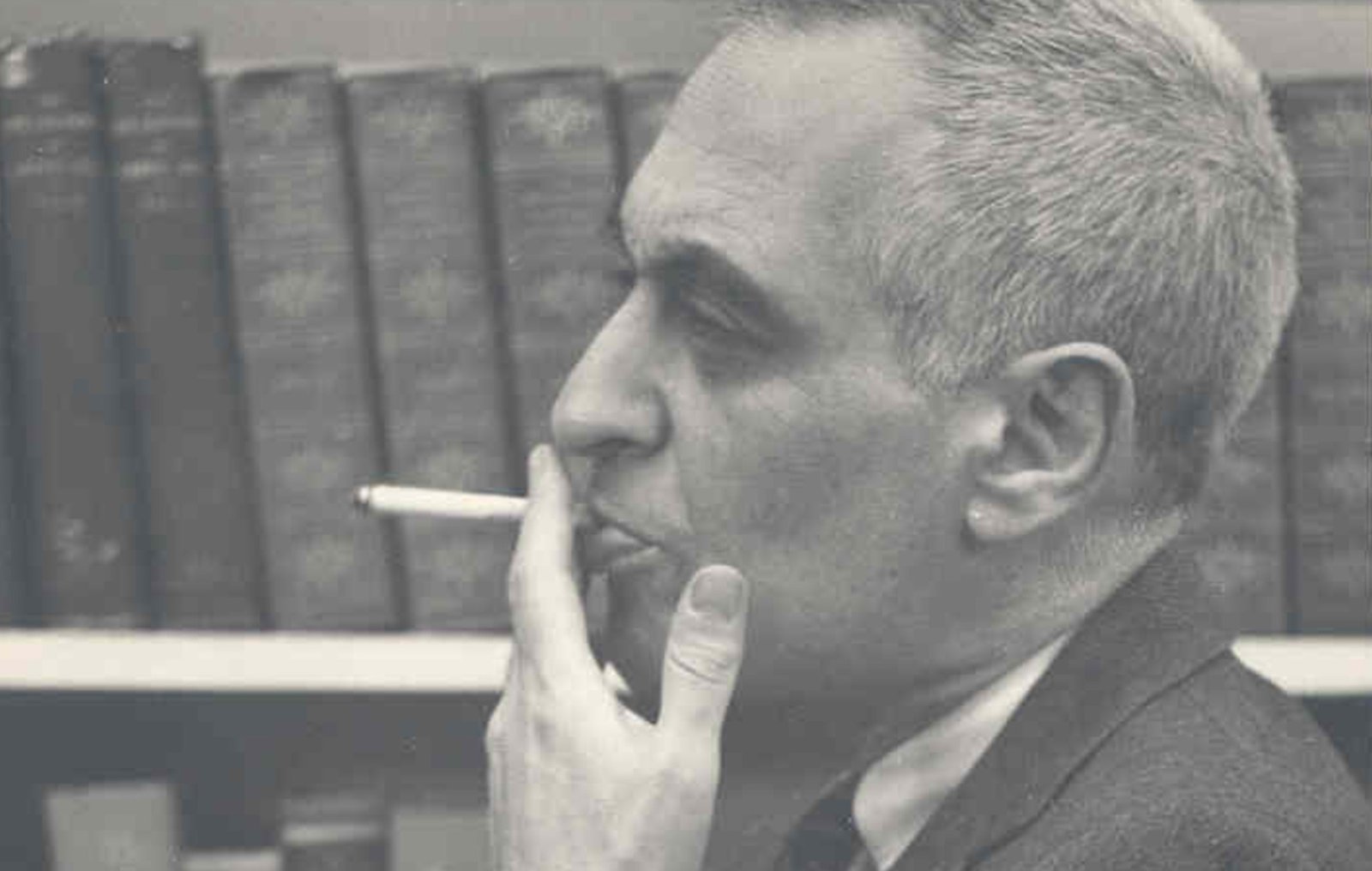
Daniel Flynn’s recent biography, The Man Who Invented Conservatism: The Unlikely Life of Frank S. Meyer, sheds an interesting light on the origins of American conservatism. It also provides an account of the unlikely life of a communist organizer turned architect of a conservative political movement.
Flynn found boxes of hitherto unknown correspondence and files that highlight particularly colorful and revealing conversations and relationships within the nascent conservative movement of the 1950s and 1960s. Although “conservative” might be a bit of a misnomer.
Meyer famously wrote In Defense of Freedom: A Conservative Credo and single-handedly developed and pushed the idea of “Fusionism” between conservative and libertarian thought. He thought that the “sharp antithesis between reason [libertarians] and tradition [traditionalists] distorts the true harmony that exists between them and blocks the development of conservative thought.”
Hayek wrote along similar lines in “Why I Am Not A Conservative.” Traditionalists protested that they were being caricatured. Russell Kirk described (classical) liberal principles in his handbook on conservatism: “[j]ustice means that every man and every woman have a right to what is their own” and “So far as possible, political power ought to be kept in the hands of private persons and local institutions.” Kirk’s first principle of conservatism basically describes natural law: “Men and nations are governed by moral laws; and those laws have their origin in a wisdom that is more than human—in divine justice.”
Much of his contribution to the conservative movement stems from his longtime position as a senior editor at National Review. He also helped found the American Conservative Union and its subsequent Conservative Political Action Committee, and later the Philadelphia Society with Friedman, Buckley, Feulner, and Evans.
Meyer’s conservatism, much like Whittaker Chambers’, was forged in the crucible of the Communist Party. While Meyer never acted as a spy for the communists as Chambers did, he was one of their more influential boosters in 1930s England and in the US. He was in deep enough to be called to testify in several trials and hearings of communists in the 1950s.
Frank, along with his wife Elsie, lived an eclectic life in Woodstock, New York. The family (including their children at all ages) never went to bed before midnight. Friends and guests of all stripes would talk into the wee hours of the morning. Meyer famously spent exorbitant sums on his phone bill — in some years as much as a fifth of his reported income — and was notorious for calling people at two or three in the morning to discuss his latest idea.
Meyer and National Review, like Russell Kirk, were much taken with Barry Goldwater and his 1964 presidential campaign. But unlike Kirk, who retreated from political activism in light of Johnson trouncing Goldwater in the election, Meyer doubled and tripled down on building a successful conservative political movement. Thus. the ACU and later CPAC were born.
While Flynn presents Meyer as “the man who invented conservatism,” the biography provides scant detail around how and why Meyer’s thinking developed. One of the key events, however, was his reading of Friedrich Hayek’s The Road to Serfdom, which he briefly tried to reconcile with communism. Another key thread was Meyer’s patriotism. While still a booster of the Communist Party in America, Meyer worked to reconcile communism with the founding ideals of the country. The attempt failed spectacularly. Meyer then shifted to a more libertarian and individualist stance, yet still desired to marry his political philosophy with the American tradition.
That attempt, as well as rubbing shoulders with other conservatives at National Review and the Philadelphia Society, moderated his libertarian impulses and elevated the conservative ideals of tradition and custom in his thinking. Meyer’s larger-than-life personality led him to feud with anyone and everyone: Russell Kirk, Harry Jaffa, James Burnham, and even Bill Buckley. Yet the impression one gets from reading his writing and correspondence was that these disputes were driven almost entirely by his ideas rather than by grievances or personal animosity.
Meyer’s contribution also came indirectly. In his role at National Review, he largely commissioned reviews of books and art. His desire for quality, rather than for ideological purity, in his contributors is surprising and apparently made his section of the magazine particularly good. He was a man with strong political beliefs who also cared deeply about culture, art, and excellence.
There can be no doubt that Meyer was an important figure in American conservatism. While his primary contribution seems to be institution building (NR, ACU, CPAC, etc.), he was no doubt an important interlocutor for other conservatives. And the Fusionist project, though falling on hard times recently, has been an important constitutive element of modern American conservatism.
Meyer’s book on freedom also remains relevant to the modern conservative thinker. He advocated a free market perspective at home and in international development:
Nor can active benevolence, charity, be an aim of foreign policy, since charity is the privilege and responsibility of individual persons, not of the custodians of money taken from people by taxation; and, in the specific case relevant today — backward nations — the only way seriously to advance their economies, in any case, is through investment under the controls of the market system.
Flynn perhaps exaggerates Meyer’s intellectual contribution to conservatism. Russell Kirk, Leo Strauss, Friedrich Hayek, Milton Friedman, and their many disciples populate conservatism today. These men are still read carefully and broadly by conservatives. Meyer, much less so.
Yet his life has some extraordinary qualities to it, beyond his idiosyncratic eccentricities. . His influence on others was substantial but hard to quantify. So, too, his impact forming long-lasting conservative organizations. Flynn’s book reminds us that hard work, intellectual passion, and a bit of eccentricity can go a long way toward advancing the cause of freedom.
