

Trade negotiations are often mischaracterized as adversarial contests akin to warfare or chess. (The latter is increasingly invoked in varying degrees: 3d, 4d, and nth degree). Headlines speak of countries “battling” over tariffs or “outmaneuvering” each other in the global marketplace. But while those analogies may be emotionally satisfying and undergird ideological fervor, they fundamentally misunderstand and distort the nature of trade itself.
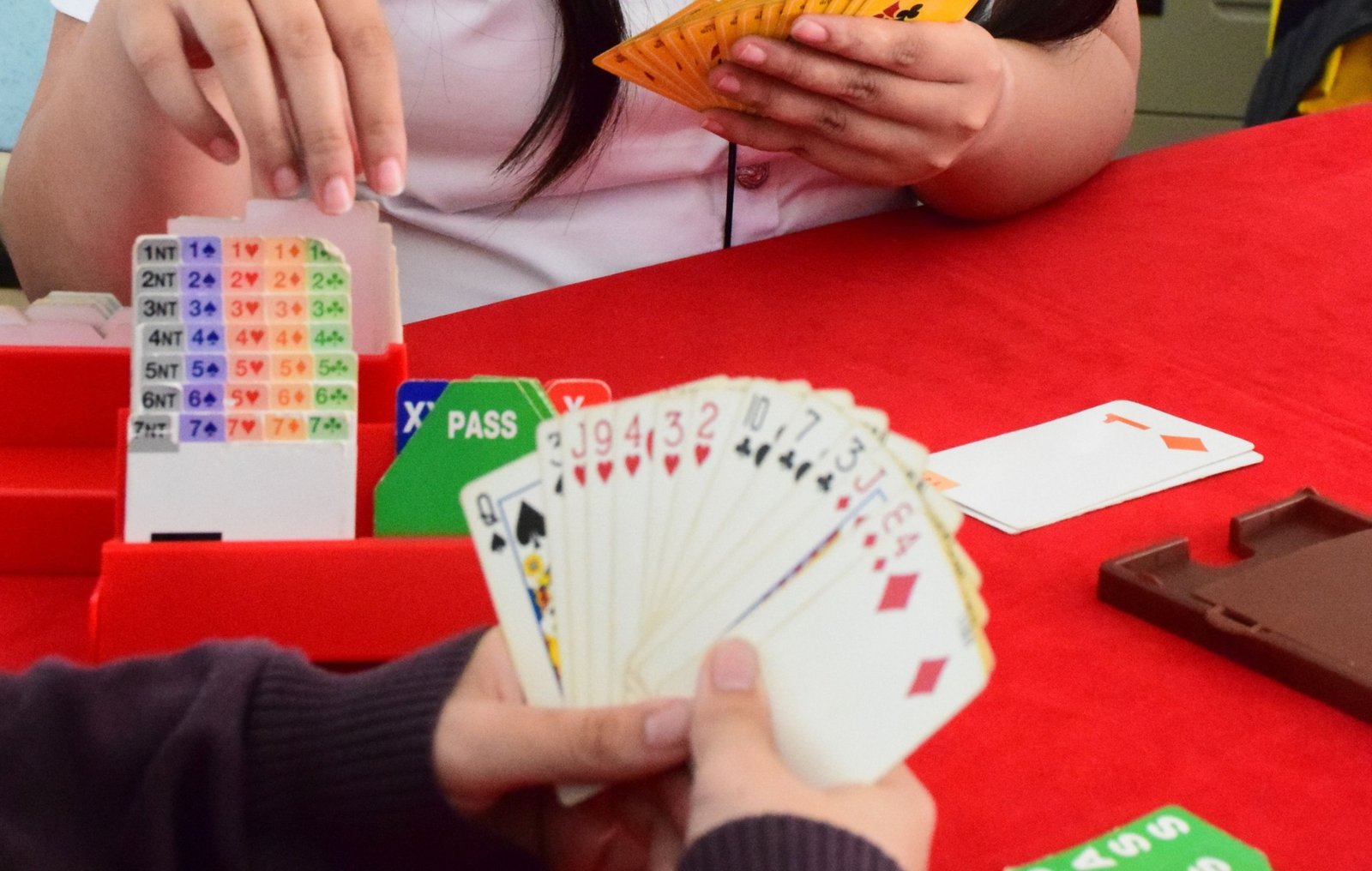
Unlike war, trade is not about conquest; it’s about cooperation under constraints. While no analogies are perfect, within the gaming milieu, a better model is to be found in contract bridge, where strategy, communication, and shared outcomes dominate the pursuit of mutual gain.
First and foremost, trade does not inherently require government interference. In its most natural form, trade arises spontaneously — sua sponte — as individuals, firms, and even nations engage in voluntary exchange to pursue their own interests, each party judging for itself whether a given transaction is mutually beneficial. The complexity and strategic posturing captured in-game analogies only enters the picture when states either seize the authority to control trade from private actors or when a population willingly delegates that authority to a political entity. It is in this shift — from decentralized decision-making to centralized negotiation — that trade becomes the province of diplomats, regulators, and strategists, subject to tariffs, quotas, and geopolitical calculation rather than pure market coordination. Once trade becomes a matter of policy rather than private action, the dynamics necessarily change — requiring negotiation, coordination, and a high tolerance for ambiguity.
Bridge, like trade, requires signaling, risk management, and long-term thinking. Played in partnerships, success in bridge is only achievable when players work together to interpret incomplete information, anticipate reactions, and align their strategies toward a common objective. No matter how skilled one player is, they cannot win alone. In trade negotiations, simply trying to extract concessions by brute force is likely to fail, either immediately or in time. Agreements must be structured to hold, function, and deliver net benefits to both sides. Even in a zero-sum context on specific issues (like market access or rules of origin), the broader objective is always positive-sum: increase the flow of goods, reduce frictions, and enhance economic welfare broadly.
That stands in contrast to the chess or poker metaphors often used. Chess is zero-sum and strictly competitive; a gain for one side is necessarily a loss for the other. There is no scope for joint benefit and no reason to cooperate. That model may describe military conflict or geopolitical jockeying, but it fundamentally misunderstands trade negotiations, where voluntary exchange and mutual advantage are foundational principles. Contract bridge also captures the asymmetry and complexity of trade negotiations. Optimally, countries enter trade talks not to dominate but to discover overlapping interests and convert them into stable, enforceable agreements.
In duplicate bridge, multiple pairs play the same hands, and the goal is not to dominate an opponent in the traditional sense but to perform better given the same initial constraints. That, far more than chess, reflects the state in which individuals and countries naturally approach trade from different economic positions–some rich in capital, others in labor, natural resources, or some other endowment — and must optimize within their comparative advantage. What matters is not the elimination or defeat of one’s counterpart but how effectively outcomes can be coordinated within existing constraints.
Moreover, bridge teaches that communication matters as much as brute strategy. Players develop conventions, systems of bids, and responses that allow them to navigate ambiguity and avoid costly miscalculations. The same is true in trade diplomacy. Seemingly minor miscommunications — over the meaning of a safeguard clause or the scope of an exemption — can derail entire rounds of talks, add uncertainty, and delay the planning of millions of individuals and firms. Building trust and institutional memory through repeated interactions and adherence to norms becomes more valuable than any short-term tactical gain. This is why trade deals often take years and why the best of them provide structure, continuity, and an expectation of fair play.
The most effective and mutually beneficial trade occurs when individuals and organizations are free to decide — without costly, politically biased interference — with whom they will engage in commerce in other nations, and on what terms those exchanges will take place. Not all trade negotiations are smooth, and not all outcomes are evenly distributed. As in a bridge, one side may end up better off in a particular hand. But that doesn’t make trade a zero-sum game — it makes it a process of navigating imperfection and complexity. Protectionist rhetoric often stems from mistaking momentary imbalance for systemic exploitation, ignoring the broader welfare gains, consumer benefits, and efficiency improvements that trade fosters. When one country imposes tariffs, the result isn’t a “win” — it’s a distortion that invites retaliation, raises prices, and constrains long-run productivity growth.
In bridge, a poor hand played wisely can still yield results if both players are aligned. In trade, a nation with structural challenges can still benefit if negotiations are anchored in realism, mutual respect, and the search for shared advantage. Reframing trade negotiations not as battlefields but as strategic partnerships helps clarify what’s at stake — and what’s possible.
Trade is not war. It’s bridge, and that understanding would lead us to play better ‘hands.’
