

:max_bytes(150000):strip_icc():format(jpeg)/volcano-erupts-042426-86e346d91f5c4aaeb05b64820f0c9f0d.jpg)
The incident took place in Guatemala on April 20
NEED TO KNOW
- Hikers fled Guatemala’s Santiaguito volcano as it erupted, sending ash and debris into the air
- The volcano, one of Latin America’s most dangerous, is known for daily eruptions and restricted access
- Officials warn against entering a 5.3-mile restricted zone around the active volcanic complex
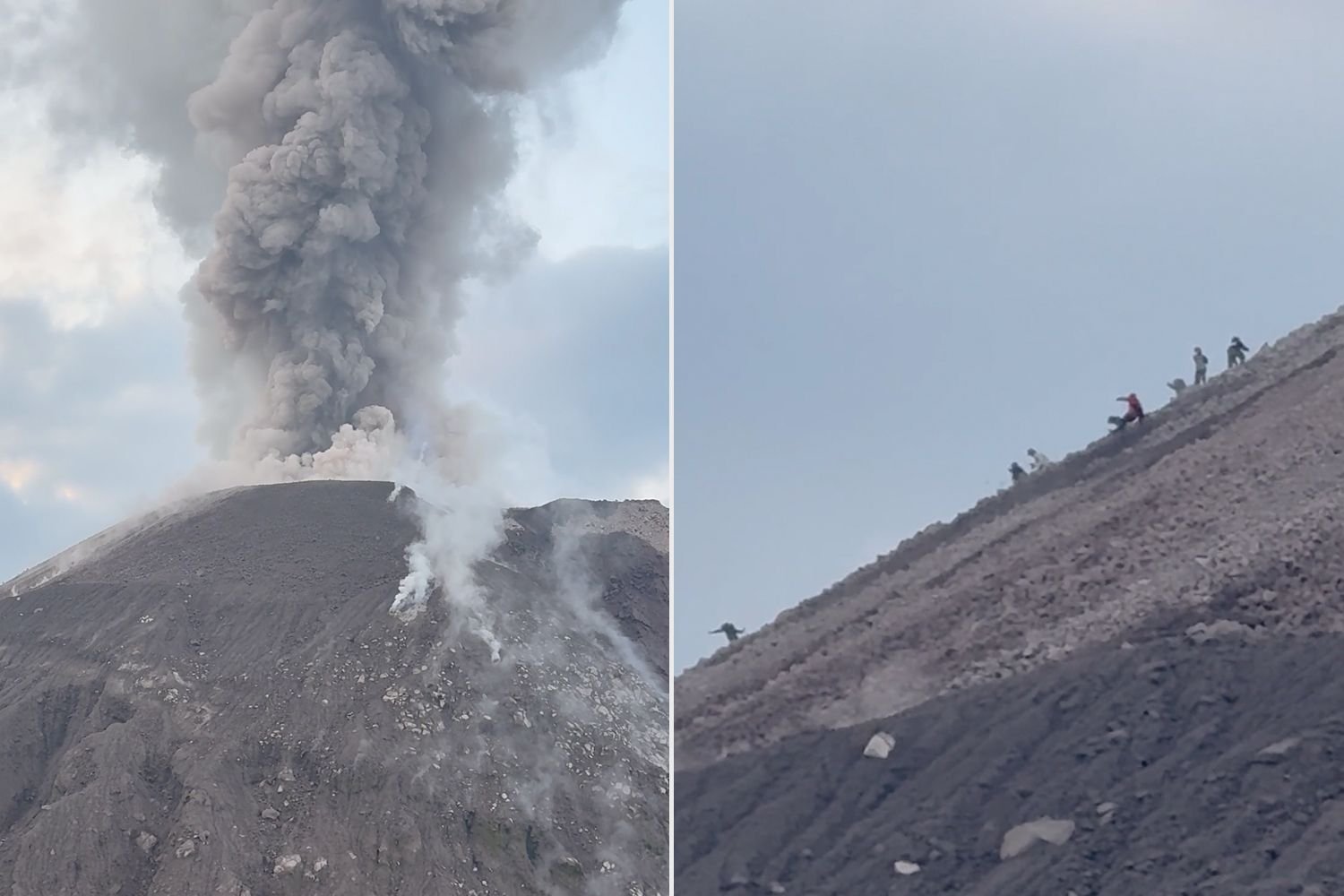
Hikers were seen fleeing for safety after a volcano erupted in Guatemala.
The group was captured running from the Santiaguito volcano eruption on Monday, April 20, according to The Straits Times.
After climbing towards the volcano, which is known to have daily eruptions, the hikers made a swift turn when debris began to fall.
Large clouds of ash could also be seen filling the skies as the hikers ran down El Paso de la Muerte, also known as the Death Trail, according to Storyful.
The man who captured the footage, Carlos Enrique Porres Rodas, told Storyful that Volcán Santiaguito “is one of the most dangerous active volcanoes in Latin America.”
“Its ascent is restricted, but there are always daredevils who expose themselves to reach the colossus,” he added.
Rodas added that there were no reports of any serious injuries.
A translated bulletin by the National Coordinator for Disaster Reduction (CONRED) noted that "the volcano continues to extrude lava in blocks, generating avalanches on different flanks of the Caliente dome, as well as short-range pyroclastic flows."
Never miss a story — sign up for PEOPLE's free daily newsletter to stay up-to-date on the best of what PEOPLE has to offer, from juicy celebrity news to compelling human interest stories.
“Incandescence was observed in the crater during the night and early morning, demonstrating the constant activity of this volcanic complex, considered one of the most active in the country,” they said.
Officials added, "In light of this activity, the Executive Secretariat of CONRED reminds everyone that a restricted zone of at least 5 kilometers (5.3 miles) around the volcanic complex is currently in place, where entry, stay, or camping is prohibited."
