Close Menu
KumbhCoinorg
    What's Hot

    USD/JPY Analysis 20/03: 160 Remains Major Ceiling

    March 21, 2026

    LMS Adoption Metrics Explained – eLearning Industry

    March 21, 2026

    Nicholas Brendon death: Buffy the Vampire Slayer star, dead at 54

    March 21, 2026
    Facebook X (Twitter) Instagram
    Trending
    • USD/JPY Analysis 20/03: 160 Remains Major Ceiling
    • LMS Adoption Metrics Explained – eLearning Industry
    • Nicholas Brendon death: Buffy the Vampire Slayer star, dead at 54
    • Review: Project Hail Mary (2026)
    • Bigger Isn’t Better: A Case for Downsizing the Federal Reserve
    • Gary Kirsten lashes attack on Mohsin Naqvi-led PCB for creating toxic work culture
    • Barcelona v Rayo Vallecano: Line-ups, stats and preview
    • NHL Rumors: Predators, Blue Jackets, and Panthers, and the Rangers
    Facebook X (Twitter) Instagram
    KumbhCoinorg
    Saturday, March 21
    • Home
    • Crypto News
      • Bitcoin & Altcoins
      • Blockchain Trends
      • Forex News
    • Kumbh Mela
    • Entertainment
      • Celebrity Gossip
      • Movie & TV Reviews
      • Music Industry News
    • Market News
      • Global Economy Insights
      • Real Estate Trends
      • Stock Market Updates
    • Education
      • Career Development
      • Online Learning
      • Study Tips
    • Airdrop News
      • Ico News
    • Sports
      • Cricket
      • Football
      • hockey
    KumbhCoinorg
    Home»Market News»Global Economy Insights»Washington’s Wall Street Algorithm: How the SEC Designed the Modern Market
    Global Economy Insights

    Washington’s Wall Street Algorithm: How the SEC Designed the Modern Market

    kumbhorgBy kumbhorgNovember 6, 2025No Comments4 Mins Read
    Facebook Twitter Pinterest LinkedIn Tumblr Email
    Washington’s Wall Street Algorithm: How the SEC Designed the Modern Market
    Share
    Facebook Twitter LinkedIn Pinterest Email Copy Link

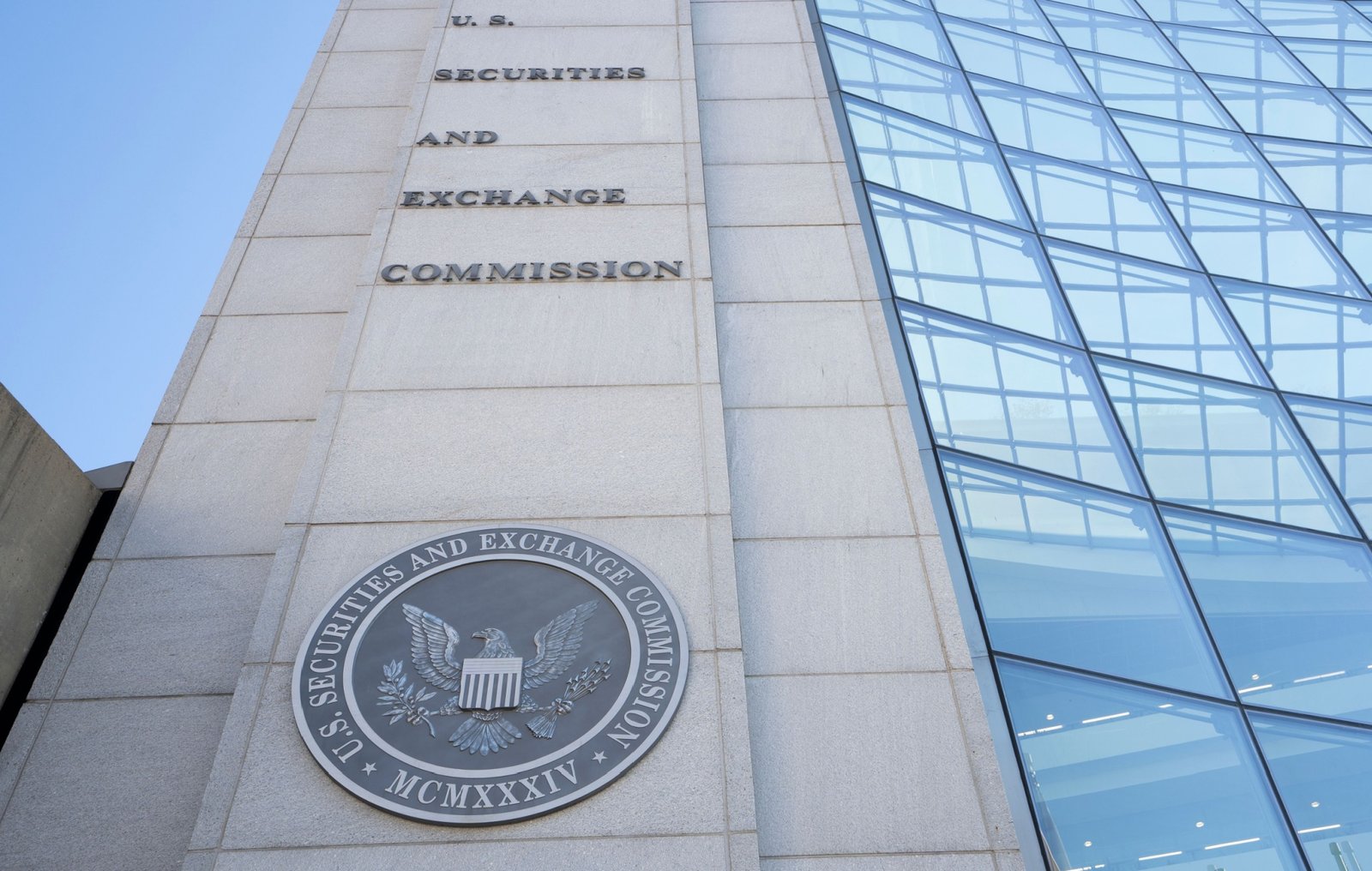
    American capital markets — stock exchanges, bond markets, over-the-counter markets for securities and derivatives of all types — are often praised as paragons of free-market dynamism. But beneath that reputation lies a market structure shaped less by entrepreneurial forces than by layers of regulatory design. While market structure may seem like an abstract or technical topic, it directly affects the prices we all pay and receive — for gas at the pump, groceries at the store, or the stocks and bonds in our 401(k)s — because it determines how trades in capital goods are executed and how prices are discovered. The National Market System (NMS) that ties together various stock exchanges and electronic trading venues is not a spontaneous product of competitive, entrepreneurial forces, but rather — and quite ironically — an elaborate bureaucratic construct born of sustained government intervention.

    Nowhere is this irony more visible than in Regulation NMS (Reg NMS), adopted by the Securities and Exchange Commission (SEC) in 2005. At the time, the SEC claimed it was modernizing fragmented exchanges into a coherent, investor-friendly system. At the heart of Reg NMS lies Rule 611, the Order Protection Rule, which prohibits trade-throughs — i.e., executing orders at worse prices than those displayed elsewhere. This rule, intended to guarantee the “best price,” also had countless unintended consequences: it spawned an explosion of trading venues, fragmented liquidity, and a hyper-focus on speed and order type engineering.

    At the time, two SEC commissioners (Paul Atkins and Cynthia Glassman) dissented from the final rule. Their warning was clear: rather than promoting competition, Reg NMS would ossify it — enshrining one model of execution, suppressing innovation, and ultimately reducing market choice. “Far from enhancing competition,” they wrote, “Regulation NMS will have anticompetitive effects.” 

    Two decades later, with the SEC now revisiting the rule amid mounting criticism of complexity and gaming, their dissent looks increasingly prescient.

    The background to Reg NMS’s adoption is equally revealing. In 2005, fears of a “duopoly” gripped the industry as the New York Stock Exchange merged with the Arca ECN and Nasdaq acquired Instinet. In both cases, two central stock markets bought electronic trading venues that deeply entrenched them in US securities trading. Smaller players like the Philadelphia Stock Exchange (PHLX) scrambled to remain relevant, striking deals with Citadel and Merrill Lynch to form a so-called “tripoly.” This turf war among exchanges wasn’t a natural market realignment — it was driven by the regulatory architecture. If the best quote must be accessed and honored by law, why maintain multiple venues displaying it? The answer became clear: only those who could afford the technological and legal arms race would survive.

    Over the following years, dozens of new exchanges and dark pools emerged — not because of entrepreneurial freedom, but because Reg NMS made it profitable to exploit its mechanics. Algorithmic firms like Tradebot launched BATS to capitalize on the guaranteed protection of displayed quotes. Matching engines were designed to game the rules rather than serve human investors and traders. The market became increasingly fragmented: as of 2023, trades in US equities were routed through at least 16 exchanges and over 30 dark pools, with orders often pinging across venues in microseconds to comply with regulatory obligations rather than optimize execution quality.

    This complexity wasn’t accidental — it was built. As former SEC Commissioner Daniel Gallagher has noted, today’s market structure is “the product of extraordinary regulatory change,” not spontaneous order. The SEC effectively codified not only how trades must be priced and routed, but also how exchanges must behave, who can compete, and which kinds of data must be purchased. The bastion of capitalism is a product of collectivist planning.

    The SEC argues that Reg NMS lowered trading costs and democratized access. That’s partly true. But it did so by standardizing a particular model of trading and empowering firms that could comply with, or arbitrage, the rules. The losers weren’t just inefficient brokers or legacy exchanges — they were also individuals and firms who now face hidden complexity, reduced transparency, and rising market data costs.

    As the SEC revisits Rule 611 in its September 2025 roundtable, the real question isn’t about passing judgment on Regulation NMS — it’s about deciding the future path of our markets. Do we allow competitive forces to reshape market structure and move away from the innovation-stifling, one-size-fits-all regime that now governs price formation? Or do we continue to bear the hidden but very real costs of central planning in the most critical arenas of American economic life? Regulation NMS continues to earn praise from the same regulatory bodies that imposed it, but its legacy is a market architecture engineered in Washington, not discovered through market processes.

    Algorithm Designed Market Modern SEC Street Wall Washingtons
    Share. Facebook Twitter Pinterest LinkedIn Tumblr Email
    Previous Article05 November, 2025 – Alpha Ideas
    Next Article Female Filmmakers in Focus: Sepideh Farsi on “Put Your Soul on Your Hand and Walk” | Interviews
    kumbhorg
    • Website
    • Tumblr

    Related Posts

    Global Economy Insights

    Bigger Isn’t Better: A Case for Downsizing the Federal Reserve

    By kumbhorgMarch 21, 2026
    Global Economy Insights

    What 122 Universal Basic Income Experiments Actually Show

    By kumbhorgMarch 21, 2026
    Global Economy Insights

    Mengoleksi Kucing Di Teras Virtual » Dashofinsight

    By kumbhorgMarch 20, 2026
    Bitcoin & Altcoins

    Nasdaq Wins SEC Approval for Tokenized Securities: Wall Street Goes On-Chain

    By kumbhorgMarch 20, 2026
    Global Economy Insights

    Congress Knows It Has a Spending Problem, But Won’t Fix It

    By kumbhorgMarch 20, 2026
    Global Economy Insights

    Open Trip Traveling: Panduan Petualangan Bersama Teman

    By kumbhorgMarch 19, 2026
    Add A Comment

    Comments are closed.

    Don't Miss

    USD/JPY Analysis 20/03: 160 Remains Major Ceiling

    By kumbhorgMarch 21, 2026

    Created on March 20, 2026 The 160-yen level is a large figure in the USD/JPY…

    LMS Adoption Metrics Explained – eLearning Industry

    March 21, 2026

    Nicholas Brendon death: Buffy the Vampire Slayer star, dead at 54

    March 21, 2026

    Review: Project Hail Mary (2026)

    March 21, 2026
    Top Posts

    Satwik-Chirag storm into China Masters final with straight-game win over Malaysia | Badminton News

    September 21, 2025165 Views

    SaucerSwap SAUCE Crypto Breaks Key Resistance Amid Nvidia-Hedera Deal

    July 15, 202546 Views

    Unlocking Your Potential with Mubite: The Future of Crypto Prop Trading

    September 17, 202533 Views

    Stablecoins 2025 Exchange Reserves: Insights into DeFi Trends

    September 8, 202532 Views
    Stay In Touch
    • Facebook
    • Twitter
    • Pinterest
    • Instagram
    • YouTube
    • Vimeo
    About Us

    Welcome to KumbhCoin!
    At KumbhCoin, we strive to create a unique blend of cultural and technological news for a diverse audience. Our platform bridges the spiritual significance of the Kumbh Mela with the dynamic world of cryptocurrency and general news.

    Facebook X (Twitter) Pinterest WhatsApp
    Our Picks

    USD/JPY Analysis 20/03: 160 Remains Major Ceiling

    March 21, 2026

    LMS Adoption Metrics Explained – eLearning Industry

    March 21, 2026

    Nicholas Brendon death: Buffy the Vampire Slayer star, dead at 54

    March 21, 2026
    Most Popular

    7 things to know before the bell

    January 22, 20250 Views

    Reeves optimistic despite surprise rise in UK borrowing

    January 22, 20250 Views

    Barnes & Noble stock soars 20% as it explores a sale Barnes & Noble stock soars 20% as it explores a sale

    January 22, 20250 Views
    • Terms and Conditions
    • Privacy Policy
    • Contact Us
    • About Us
    © 2026 Kumbhcoin. Designed by Webwizards7.

    Type above and press Enter to search. Press Esc to cancel.