


What Is Servant Leadership?
Servant leadership is becoming more important as organizations reconsider what good leadership means in today’s hybrid, fast-changing, and AI-driven workplaces. This is because the real challenge is not finding enough managers, but finding leaders who can build trust, help people grow, and create the psychological safety employees need to do their best, adapt, and develop.
So, what is servant leadership? At its core, it is a way of leading where leaders put employees’ growth, well-being, and success ahead of their own status or power. Instead of asking, “How can people help me achieve results?” a servant leader asks, “How can I help my people perform at their best?” This approach focuses on serving others, empowering people, and leading by influence rather than relying on authority.
The servant leadership meaning is especially important for L&D, HR, and business leaders who want to build stronger managers, boost employee engagement, and make their organizations more resilient. Knowing what it means to be a servant leader can also help companies create better leadership development and coaching programs.
This article will cover how servant leadership works, where it adds the most value, its possible drawbacks, and how organizations can develop servant leaders. Servant leadership is not passive or unaccountable. It helps drive long-term results by building trust, supporting growth, and encouraging shared success.
Where Did Servant Leadership Come From?
Robert K. Greenleaf introduced the concept of servant leadership in his 1970 essay, “The Servant as Leader.” His framework challenged the traditional command-and-control style of management by suggesting that true leaders start with a desire to serve others. Therefore, in Greenleaf’s view, leadership is based on listening, empathy, stewardship, and helping people grow, rather than relying on authority.
This idea stood out because older leadership models focused on hierarchy, control, and the leader’s own power. Greenleaf’s servant leadership theory changed this by putting employees’ growth and well-being at the heart of leadership [1]. Over time, the philosophy grew into a broader theory and a practical model used in leadership development, coaching, organizational culture, and management training. [2]
Today, organizations in many industries use this model to build trust, encourage collaboration, support psychological safety, and improve long-term results. [3] Modern leadership experts, such as Kurt Uhlir, have added to the conversation about how servant leadership fits in today’s fast-changing workplaces. Even as interest in practical uses grows, Greenleaf is still seen as the main source of the philosophy and its lasting impact on leadership development.
The Core Principles Of Servant Leadership
Servant leadership puts leadership ideas into practice by shaping how leaders make decisions, support their teams, and use their authority. These principles are practical and influence how leaders communicate, share responsibility, solve problems, and help people succeed.
Put People Before Position
A servant leader sees authority as a duty, not a sign of status. They focus on helping employees grow, removing obstacles, and building skills for the future. Putting people first does not lower standards. Instead, it shows that lasting results come from capable, supported, and motivated employees.
Listen Before Leading
Active listening is central to the servant leadership philosophy. Before making assumptions or prescribing solutions, leaders try to understand what employees are experiencing and thinking. They ask good questions, stay curious, and make time for honest feedback. Listening helps leaders make better decisions and shows employees their views are valued.
Empower Rather Than Control
The principles of servant leadership encourage leaders to share decision-making instead of holding on to control. Employees get the freedom to solve problems, make choices, and take responsibility for results. Leaders still give guidance and hold people accountable, but they avoid micromanaging. This builds confidence, good judgment, and a stronger organization.
Lead With Empathy
Empathy helps leaders understand what drives people’s behavior and performance at work. When leaders respond with respect and fairness, they build trust and make people feel safe. Employees are then more willing to ask questions, share concerns, admit mistakes, and offer ideas because they know they will be treated fairly.
Build Community
Servant leadership values working together more than individual authority. Leaders help employees find a shared purpose, encourage everyone to take part, and support group responsibility. This focus on community, sometimes called service leadership, helps teams see how their work fits into the bigger goals of the organization.
The best leaders don’t measure their success by how many people follow them, but by how many people they’ve helped grow. Servant leadership is about using your influence to remove obstacles, develop talent, and create a culture where people and the business succeed together. When leaders put people first, performance comes naturally.
-Christopher Pappas, CEO and founder of eLearning Industry
The 10 Characteristics Of A Servant Leader
Servant leadership focuses on actions that help leaders support their teams, build trust, and boost performance over time. Here are 10 key traits that show how leaders can put this approach into practice every day at work.
1. Listening
Servant leaders listen to truly understand others, not just to reply. At work, this means asking for feedback, posing thoughtful questions, and considering concerns before deciding. When employees feel heard, they are more likely to trust their leaders.
2. Empathy
Empathy means understanding how someone else feels or sees a situation. Servant leaders use empathy when facing challenges, handling conflicts, or helping employees through changes. This builds trust and helps leaders make better decisions about people.
3. Self-Awareness
Self-awareness is knowing your own strengths, limits, feelings, and biases. Leaders show self-awareness by asking for feedback and thinking about how their actions affect others. This quality helps leaders make better choices and manage their emotions.
4. Stewardship
Stewardship means looking after the long-term health of both employees and the organization. Leaders do this by protecting resources, sticking to values, and making choices that benefit everyone, not just themselves. This supports ethical and responsible leadership.
5. Persuasion
Rather than relying on authority, servant leaders build agreement through logic, trust, and dialogue. Persuasion helps teams understand the purpose behind decisions and encourages genuine commitment instead of reluctant compliance.
6. Foresight
Foresight is the ability to anticipate the possible consequences of current decisions. Leaders use experience, data, and pattern recognition to prepare teams for risks and opportunities. This servant leadership trait supports proactive planning and organizational resilience.
7. Commitment To Employee Growth
A servant leader helps people build their skills, confidence, and careers. This can include coaching, mentoring, giving challenging assignments, or creating personal development plans. Supporting employee growth leads to stronger engagement and helps the organization succeed in the future.
8. Community Building
Building community helps people connect, work toward shared goals, and collaborate. Leaders can support this by encouraging teamwork across departments, promoting inclusion, and fostering mutual support. This approach breaks down barriers and helps everyone feel they belong.
9. Humility
Humility in leadership means knowing you do not need to have all the answers. Leaders who are humble give credit to others, admit when they are wrong, and learn from those around them. These qualities make leaders more trustworthy and easier to approach.
10. Accountability
Accountability means supporting people while still keeping high standards. Servant leaders make expectations clear, help fix performance issues, and take responsibility for results. This quality is important because it links caring for people with getting real results.
What Does Servant Leadership Look Like In Practice?
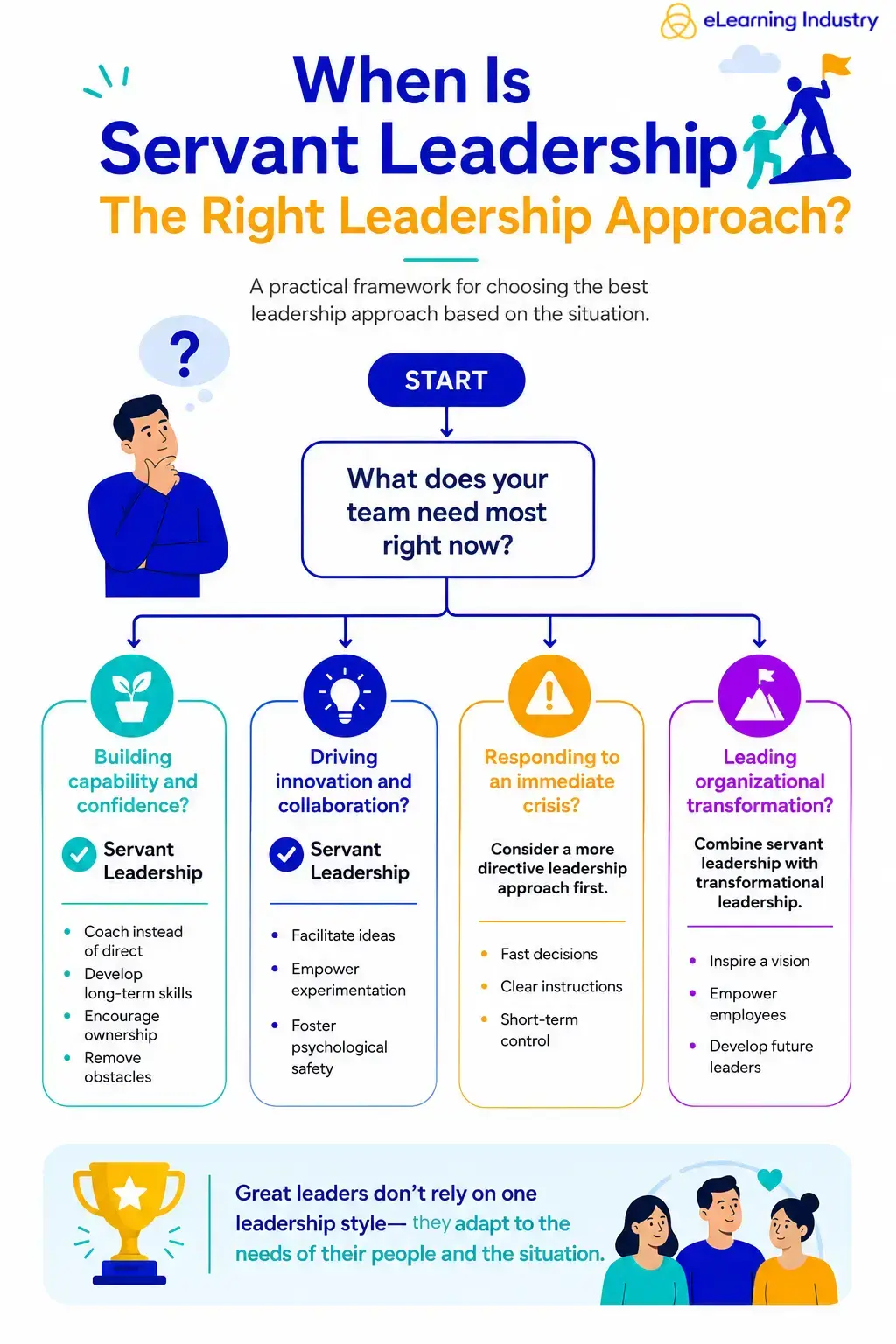
You can see servant leadership in the daily decisions managers make as they support their teams, solve problems, and hold people accountable. Instead of mainly using authority, a servant leader works to create the right conditions for employees to do their best, learn, and take responsibility for their work.
Coaching
In real situations, this could mean coaching an employee through a tough task instead of controlling every detail. A servant leader asks questions, gives advice, and lets employees gain confidence by learning from experience. If the team faces obstacles, the manager removes extra approvals, makes priorities clear, or gets the resources needed, instead of blaming the team for delays.
Growth Opportunities
Helping others grow is a key part of servant leadership. A servant leader spots potential, offers challenging opportunities, supports career goals, and helps employees get ready for future leadership. They encourage learning through feedback, mentoring, training, and reflection. When the team does well, they share the credit. If something goes wrong, they admit their part, talk about lessons learned, and show what accountability looks like.
Team Focus
A servant manager also helps the team stay focused. They push back against unrealistic demands, cut out low-value tasks, and make sure everyone knows what matters most. This isn’t about avoiding responsibility. Instead, servant leadership builds accountability by setting clear expectations, offering support, giving regular feedback, and building trust.
Shared Ownership
Traditional command-and-control leadership is based on the idea that performance gets better when leaders closely direct employees and keep decision-making power to themselves. Servant leadership is different because it shares ownership and sees leadership as a way to help others succeed. Managers still make tough decisions, deal with poor performance, and enforce standards, but they do it openly and with respect.
In the end, a servant leader does not shy away from authority. They use it on purpose to remove obstacles, build skills, and help people achieve better results. This is what sets servant leadership apart from styles that rely mostly on status, control, or simply following rules.
Benefits Of Servant Leadership For Organizations
Servant leadership helps organizations perform better by giving employees what they need to contribute, grow, and stay engaged. Instead of just using authority, servant leaders build commitment through trust, support, and shared responsibility.
Employee Engagement
When leaders listen, appreciate employees’ efforts, and help remove obstacles, people feel more valued and connected to their work. This is why servant leadership is useful for HR teams who want to help managers do better and boost engagement, especially in hybrid or remote workplaces.
Trust And Psychological Safety
A key part of servant leadership is that leaders respond to questions, mistakes, and feedback with curiosity instead of blame. This creates psychological safety, so employees feel comfortable raising concerns, challenging ideas, and asking for help before issues get worse.
Leadership Pipeline Development
Servant leaders coach, delegate, show empathy, and care about others’ growth. By giving employees real responsibility and regular feedback, organizations help develop talent and get future leaders ready for bigger roles.
Innovation And Learning
Servant leadership also encourages ongoing learning. Employees are more likely to try new things, share ideas, and learn from mistakes when leaders see learning as part of everyday work. This aligns well with coaching, peer learning, mentoring, and on-the-job learning.
Employee Retention
People tend to stay with organizations where managers help them develop, respect their skills, and offer chances to grow. For L&D and HR leaders, building servant leadership skills can help keep employees and reduce the problems caused by avoidable turnover.
Customer Experience
The benefits of servant leadership go beyond just employees. When people feel trusted and empowered, they are better at solving customer problems, making good decisions, and providing steady service. By putting people first, servant leaders help organizations stay engaged, flexible, and strong for long-term success.
When Servant Leadership Can Fall Short
Servant leadership helps build trust, engagement, and employee growth, but it does not fit every situation.
Not Quick Enough
Since servant leaders focus on consultation, listening, and shared decisions, this style can slow things down when quick action is needed. In a crisis, too much discussion can cause uncertainty, so a more direct approach may be better.
It Can Be Seen As A Weakness
Some people see servant leadership as a sign of weakness. Employees might think that empathy, humility, or openness means a leader lacks authority, especially if the leader avoids tough conversations or does not enforce clear standards. Good servant leaders need to support their teams while also holding them accountable.
Organizational Culture
Organizational culture is important, too. Servant leadership may not work well in places that are very political, competitive, or strict, where control is valued more than teamwork. This approach needs emotional maturity, self-awareness, and good judgment from everyone involved.
Burnout
Burnout is another risk. Leaders who always put others first and do not set boundaries can end up with too much work, stress, or responsibility. Supporting employees does not mean saying yes to every request or ignoring business goals.
Conclusion
Servant leadership does not put organizational performance behind other priorities. Instead, it helps create stronger and more lasting results. When organizations invest in their people first, they build trust, skills, and commitment that lead to long-term success. Good servant leaders do not give up their authority. They use it to help people grow, contribute, and succeed together.
References:
[1] Servant Leadership and Employees’ Well-Being
[2] Servant Leadership: Its Origin, Development, and Application in Organizations
