

When it comes to training, there’s a familiar problem many companies face. People are constantly taking courses, yet managers still feel their teams are missing key skills.
In other words, the issue isn’t training. It’s skills clarity.
The numbers make this clear. According to the TalentLMS 2026 Annual L&D Benchmark Report, 83% of employees say they receive enough training. Yet 42% of HR managers still report a skills gap.
Companies are checking the box for training. But it’s not translating into skills teams can actually use or measure. Even though 79% of organizations are trying to move toward a skills-based approach, they’re missing the bridge.
Learning paths are that bridge.
They direct scattered training into structured, measurable capability. So you can see what your people can actually do, not just what they’ve completed.
In this guide, we’ll break down what learning paths are, why they matter now, and how to build them in a way that drives real results.
What are learning paths?
A learning path is a structured sequence of training designed to take an employee from their current skill level to a specific, measurable capability.
Instead of just a single course or a collection of courses focused on content delivery, a learning path is a progression focused on outcomes.
Each learning pathway strategically builds knowledge, introduces practice, and reinforces behavior until skills are built.
Learning paths and learning tracks are often used interchangeably, but they’re slightly different. A learning path is the bigger picture. It maps out the full journey toward a goal, like becoming a data scientist. A learning track is a smaller, focused part of that journey, usually centered on a specific skill or topic.

Learning paths vs learning plans
These terms are often used interchangeably, but there’s a key difference in how they function:
- A learning plan sets the goal. It’s high-level and often loosely defined. For example, develop management skills over the next year.
- A learning path is the vehicle. It’s structured, actionable, and built around a clear sequence of steps needed to achieve the broader goal.
What learning paths are NOT
To understand learning paths, it helps to look at what they’re not:
- Not a content dump: A library of resources isn’t a learning path without structure. 50 PDFs on a topic doesn’t mean you have a learning pathway.
- Not course playlists: A random collection of courses without progression won’t build real skills.
- Not completion-focused: Finishing modules doesn’t mean someone can apply what they’ve learned.
Why learning paths matter now more than ever
Businesses are facing a perfect storm of skills volatility. Skills are changing faster than most traditional training programs can keep up.
What employees learned a few years ago may already be outdated. Add AI into the mix, and that pace is only increasing. In fact, 43% of HR leaders expect AI to widen skills gaps, while 57% say skills now have a shorter shelf life.
Without structure, this creates a skills visibility gap. Teams are learning, but organizations still can’t clearly see what people can do.
Speaking on our TalentTalks podcast, Sagar Goel, Managing Director at Boston Consulting Group, quantified this perfectly:

The limits of traditional training
In the current climate, traditional training isn’t built for how employees actually learn and work. The TalentLMS 2026 Annual L&D Benchmark Report shows why:
- Time is the #1 barrier: Employees say they simply don’t have enough time for traditional training.
- Practice is missing: The second biggest blocker is a lack of hands-on practice. Nearly a third of workers say their training is “too theoretical.” And 29% of employees forget their training almost immediately after it ends.
- Content overload: For HR leaders, finding the right content is a top obstacle, leading to unmotivated learners.
Traditional training focuses heavily on delivering courses. But simply finishing a course doesn’t mean someone has mastered a skill.
Learning pathways change the goal entirely. They shift the focus from content to skills (prioritizing what employees can actually do) and from completion to application (ensuring learning translates directly into their daily work).
Learning paths vs. ad-hoc training
Ad-hoc training is learning on the fly. For example, when an employee hits a roadblock, they might look up a quick tutorial or ask a colleague for help. While this in-the-moment approach is helpful for solving immediate, one-off problems, it’s a poor strategy for building deep capability.
When an organization relies entirely on ad-hoc training, it inevitably creates a skills gap. Because the learning is scattered with no logical progression from novice to expert. Managers also have zero visibility into what their team actually knows, which means development relies entirely on guesswork. Which creates skills blind spots across teams.
It is so unstructured that 68% of employees seek learning outside their company’s official training to find the guidance they need.
Structured learning paths eliminate this chaos. Instead of random bursts of information, a learning path provides a clear, step-by-step progression. That logical structure leads to better learning retention because connected concepts build over time.
It’s also repeatable across different teams, making it easier to measure progress and provide employees and the managers with complete skills clarity.
Here’s how they compare:
| Feature | Ad-Hoc Training | Structured Learning Paths |
|---|---|---|
| Progression | Random and reactive | Structured, step-by-step |
| Visibility | Hard to track | Skills visibility |
| Measurement | Guesswork | Evidence-based |
| Outcome | Short-term fixes | Long-term capability |
Key benefits of learning paths
When learning is structured, the results change.
Structured skill development
Learning paths offer clear, coherent progression for professional development. Because the learning journey is logical, it leads to much better skill acquisition. Instead of a fragmented understanding, employees gain a comprehensive ‘how-to’ for their specific roles.
Personalized learning at scale
One size rarely fits all in training. Not all employees start from the same place. Most also have different learning styles. It’s no surprise, then, that 80% of employees say personalized learning is important to them.
Learning paths tailor development to individual needs without rebuilding training from scratch.
Improved engagement and learning retention
When training feels manageable and logical, employees are more likely to stay engaged and remember what they learn. Because learning paths are spaced out and include practice, people actually remember what they learn.
Tip: Include high-quality video content in learning paths. 72% of employees feel more engaged when interacting with training programs that incorporate short video content learning.
Faster onboarding and ramp-up
According to our Next Gen Onboarding Survey, 23% of new hires report a lack of personalized learning paths during their onboarding.
A dedicated onboarding path gives new employees exactly the context and skills they need, right when they need them. This eliminates confusion and gets them up to speed and confident faster while also leaving a better first impression.
Stronger employee retention and career growth
Employees are more likely to stay when they see clear development opportunities. 95% of HR managers agree that providing better training and skill development is a key driver for improving employee retention.
Learning paths help make that growth visible and achievable. Meaning, you’re not just building skills, you’re building loyalty, too.
Measurable learning outcomes
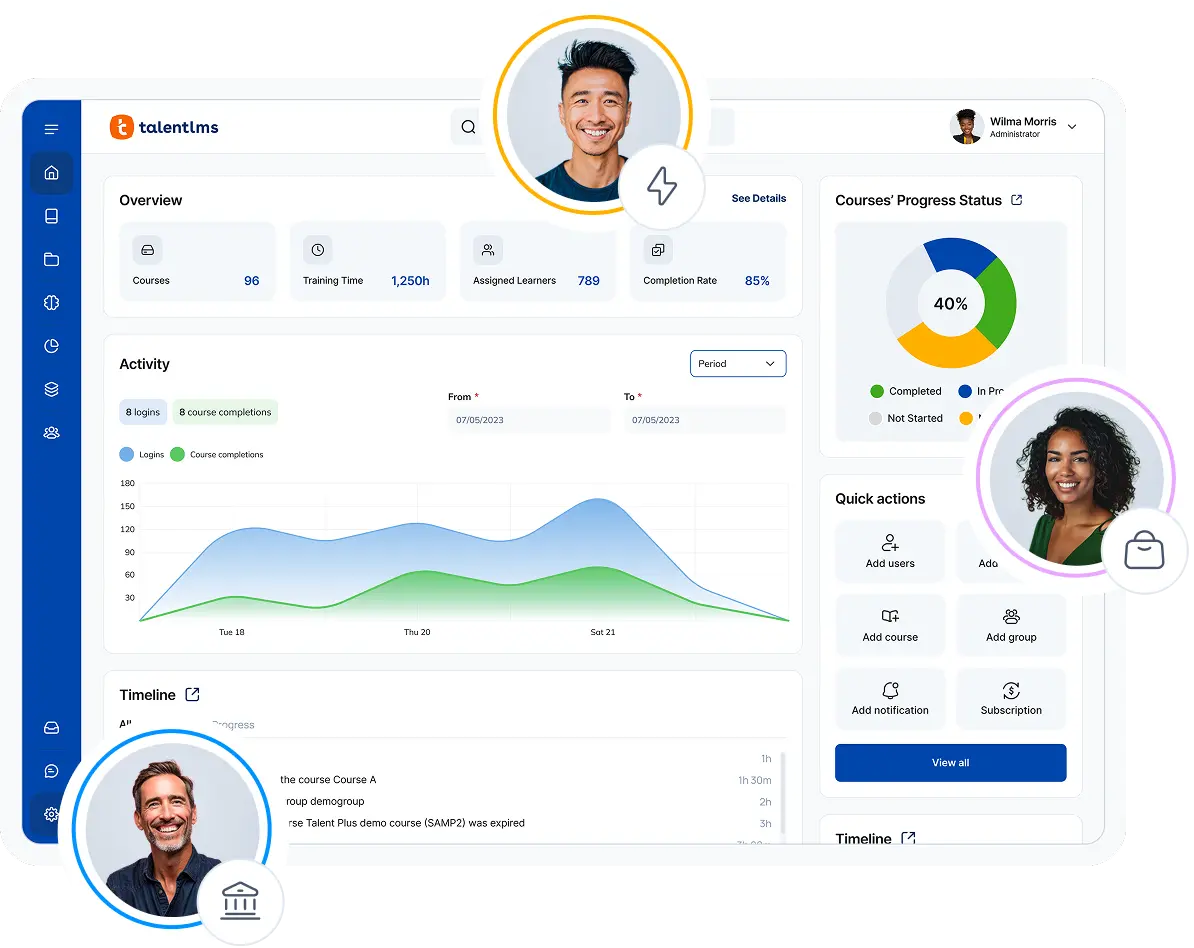
You can’t improve what you can’t see, and it turns out employees are just as eager for clarity as leadership is. According to the What Employees Want From L&D report, 68% of workers want access to data so they can track their learning progress. Learning paths provide this transparency by breaking down big goals into trackable milestones. This gives both employees and managers a clear view of progress and proof of skills over time.
Types of learning paths
There’s no single way to design a learning pathway. The structure depends on the skill you’re trying to build, the urgency of the training, and how much control each employee needs over their learning journey.
While all paths aim to build real-world capability, they take different routes to get there. Let’s break down the three most common types.
Linear
This is the most traditional “Step A to Step B” approach. It’s a sequential progression where the learner must complete one module before moving to the next.
Best for: Compliance training and technical skills.
The USP: Ensures no one skips the ‘basics’ before tackling advanced material.
Self-directed
These paths offer more flexibility and learner control. There’s still a clear destination. But each learner can choose which ‘stops’ to make along the way based on their existing knowledge.
Best for: Experienced, self-aware employees or flexible upskilling.
The USP: Respects the learner’s time, which keeps engagement high.
Adaptive
AI-powered, adaptive learning paths change in real-time based on how the learner performs. For example, if a learner aces a quiz on data analysis, the path might automatically skip the next two introductory videos and jump straight to Advanced Pivot Tables.
Best for: Large teams with varied skill levels.
The USP: Provides a truly personalized experience at scale.
Learning paths that scale skills across teams
To stay competitive, organizations are rethinking structures to close skills gaps. Half of companies are currently restructuring roles or responsibilities, and 29% are eliminating positions that rely on outdated skills. To support this, companies need to build new capabilities across entire teams, fast. Scalable learning paths solve this by offering a consistent, company-wide framework that still feels personal.
Role-based learning paths
A strategic way to scale skills is by organizing paths by job function. Instead of generic company-wide courses, build specific, curated journeys. For example, a human resources learning path or a learning path for sales, marketing, customer support, or new managers. Role-based paths ensure that all employees in a particular department are working toward the same standard of excellence. And gaining the exact skills they need to perform their daily jobs better.
Learning path examples
To truly understand how learning paths build capability, it helps to see them in action.
Let’s look at four practical ways organizations are using these structured journeys to solve real-world business challenges.
Employee onboarding
Instead of handing a new hire a giant company manual and wishing them luck, an onboarding path spaces out the learning logically into manageable steps. The result? New hires build confidence and get productive faster.
As learning scientist Julia Phelan explained on the Talent Talks podcast, preventing new-hire overwhelm comes down to strict prioritization.
Day one might just focus on company culture and logging into essential tools. Week two shifts to team-specific processes, and month two introduces practical, hands-on tasks. This structured 30/60/90-day journey turns a traditionally overwhelming experience into a clear, stress-free ramp-up to full productivity.
Job-specific skills
Imagine a junior software developer joining your team. A job-specific learning path focuses entirely on their craft. It guides them through a specific tech stack, taking them from novice to capable contributor in logical, progressive steps.
Leadership development
The jump from individual contributor to manager is a notoriously difficult but high-stakes operation. Which explains why leadership training remains a top skill priority for 2026. A leadership learning path carefully transitions new managers through conflict management, active listening, and performance coaching, ensuring they actually have the required tools before they are responsible for others.
Partner/customer training
Learning paths aren’t restricted to your internal team. If you sell a complex product or service, you can create a dedicated path for your customers to take them from basic setup to advanced features. Similarly, you can build paths for external partners or vendors, ensuring they know exactly how to represent, sell, or support your brand in the wider market.
How to create learning paths that build real skills
Creating a learning path that actually changes behavior requires moving away from the old mindset of just stacking courses together. Here’s a simple, six-step framework to design a journey that builds true capability.
Step 1: Identify skills gaps
Before you create any training content, you need to know what skills you’re missing. Start with capability by asking, “What do our employees need to be able to do tomorrow that they can’t do today?”
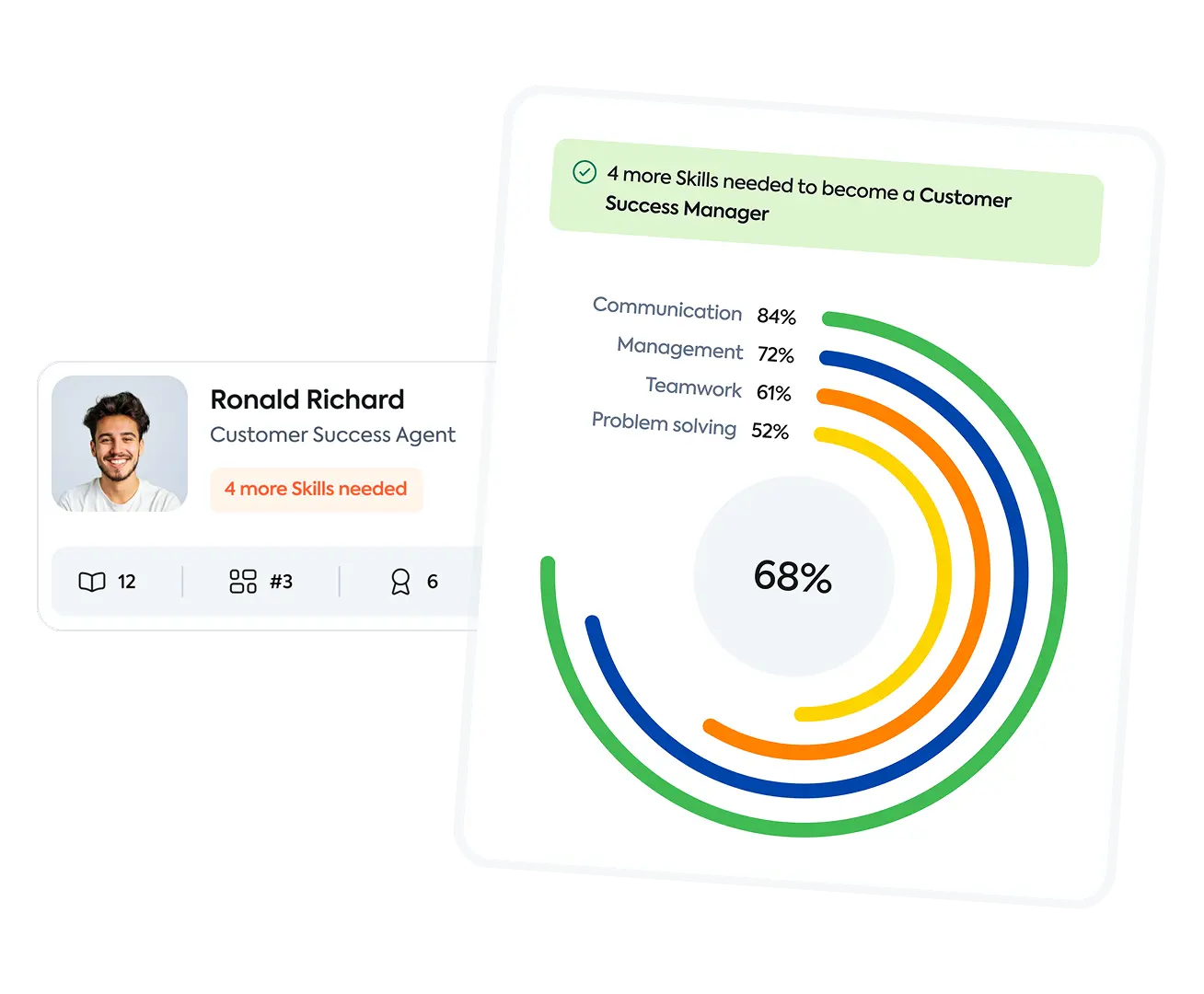
A skills gap analysis template is a strong way to kickstart the process. A skills mapping feature built into your LMS goes one step further by enabling succession planning, internal hiring, career development, and targeted training needs.
Step 2: Define learning objectives
Once you know where your gaps are, define what success looks like by setting learning objectives aligned with business goals. If a learning path doesn’t directly help the company grow, run more smoothly, or retain its best people, you need to question why it’s being built in the first place.
Step 3: Structure progression
With your destination set, it is time to map the route.
Start with foundational concepts to build up the learner’s confidence. Once that baseline is set, slowly introduce more complex ideas, practical scenarios, and hands-on practice. Every step should feel like a natural, manageable progression from the previous one, ensuring the learner never feels lost or overwhelmed.
Step 4: Use engaging formats
To keep learners hooked, you have to mix things up. Breaking a massive topic into quick, easily digestible chunks makes it much easier for people to fit learning into their busy daily schedules. Blend videos, short quizzes, reading assignments, and interactive scenarios.
Most importantly, respect your employees’ time. Research shows that 63% of Gen Z employees remember more when training is broken into shorter sessions.
Step 5: Build in your LMS
You have the strategy and the content; now you need an engine to run it. This is where your Learning Management System does the heavy lifting.
Use your LMS to structure content, set progression rules, and automate delivery.
Step 6: Track and optimize
The work isn’t done once your learning path is live. Focus on outcomes. Track where learners get stuck, measure progress, and update the path over time.
Learning paths and TalentLMS
TalentLMS makes designing and delivering learning paths seamless and straightforward. Tools like TalentLMS Learning Paths make it easy to connect content into a clear, guided experience.
With built-in integrations like LinkedIn Learning, you can enhance pathways by blending internal, company-specific training with high-quality external content.
And with advanced features like an AI coach, employees get personalized, on-demand guidance and support as they learn. Helping them master new skills you can see, measure, and trust across your teams.
Start building the skills of tomorrow
The days of throwing random courses at employees and hoping something sticks are over. As the workplace evolves and skills expire faster than ever, businesses can’t afford training that doesn’t translate directly to the job.
Learning paths change the equation. They shift the focus away from how many videos your team has watched and place it on what your team can actually do.
Take a look at your current training strategy. Are you just tracking course completions, or are you actively building capable, confident teams? The answer means the difference between training activity and capability you can measure and trust.
FAQs
What are learning paths in an LMS?
In an LMS, a learning path guides learners through a step-by-step, ordered sequence of courses.
How do learning paths help close skills gaps?
Learning paths close skills gaps by providing a structured roadmap that helps employees learn exactly what they need for their roles, moving from theory to practical application.
What’s the difference between learning paths and training programs?
A training program is a broad, overarching initiative. For example, an annual compliance rollout or leadership development campaign. A learning path is the specific, actionable roadmap used to achieve that goal. It outlines the exact sequence of modules required to build that specific capability.
How do you optimize customer learning paths?
Optimize customer paths by focusing entirely on product adoption and reducing friction. Keep modules short, interactive, and relevant. Track where users drop off, and continuously refine the content so they experience your product’s value as quickly as possible.
How do you customize corporate learning paths?
Customize corporate learning paths by aligning training directly with specific roles, experience levels, and business objectives. You can use adaptive learning features to let experienced employees skip basic concepts. And blend internal company resources with external courses to create a personalized journey.
How do you create multi-language learning paths?
Use an LMS that supports localization to build paths that adapt to the user’s preferred language. Instead of creating entirely new structures from scratch, you simply attach translated courses, subtitles, and assessments to the original path, ensuring a consistent experience for your global workforce.
What’s the difference between learning paths and learning tracks?
A learning path is the bigger picture. It maps out the full journey toward a goal. A learning track is a smaller, focused part of that journey, usually centered on a specific skill or topic.
