

I’m now nearing the halfway point of the Karlovy Vary International Film Festival, and I’m happy to report that there haven’t been many objective misses yet. Part of that is helped by the festival programming the best of Cannes and Berlinale. But the Crystal Globe, the film’s primary competition, has also shown great early strength, as has the Proxima competition. The three films outlined here, in fact, are from three separate sections: Horizons, Crystal Globe, and Promixa—and all follow figures fighting against larger forces, like patriarchy, misogyny, and xenophobia. Combined, they exemplify the variety of stories thriving up and down the lineup.
There’s no way you can run out of ways to praise Sandra Hüller. Her performances are too rich and varied not to stretch the English language. Her latest turn in Markus Schleinzer’s “Rose,” for which she won the Silver Bear for Best Actress at the 2026 Berlinale, is another incredible achievement. In “Rose,” she plays a woman pretending to be a man—we never learn her “masculine” name—who arrives in a small Protestant village after the Thirty Years’ War to claim a plot of land. While she carries all the necessary documents and has some memories of the place, the locals aren’t quite sure what to make of this mysterious male heir.
Rose has spent decades concealing her gender on battlefields by projecting a masculine form (her back is always upright, and her gaze is unflinching) while avoiding any form of intimacy. Despite the locals’ wariness, she transforms her ramshackle farm into fertile land. Her success is so great that she even marries Suzanna (Caro Braun), the daughter of a rival farmer, to use his stream to expand her crop. Much can be said, therefore, about the film’s diverse themes of gender inequality, gender fluidity, patriarchal greed, and dogmatic religiosity. They arrive with such a quiet force—as translated through the evocative photography and controlled performances—that “Rose” becomes thornier the harder you try to grasp it.
The film’s photography is burnished within an ambiguous grey scale: Is the lack of color meant to paint Rose’s actions as morally fluid or as stark, clear, and right? While her fellow villagers certainly have much to say about her boundary-crossing, especially as it relates to land ownership, marital property, and all the other rights unduly conferred on men—it’s obvious that Rose sees her cross-dressing with a rightness that never once gives way to self-doubt. She is unbowed; therefore, she is to be feared and possibly erased. Moreover, the cinematography matches the narrative’s many methods of obscuring. Significant violence is committed, and truths are uttered off-screen, moments that we are never privy to, save for a female narrator telling us the series of events that have occurred. Instead, we’re expected to sit with the effects these hurts and revelations have on these characters.
Few actors possess Hüller’s ability to imbue the widest range of feelings, hopes, and fears in the smallest twitch of the face. She finds greater difficulty here deploying her visage because of a relatively seamless prosthetic that marks a fake grisly scar across her right cheek. Nevertheless, because she must fight harder for those expressions to surface, when they do appear, they burst forth with greater force—as the half-smile she wears when she’s holding a baby or the sternness her eyes project when men attempt to undermine her will. Oftentimes her performance more than recalls Renée Jeanne Falconetti’s in “The Passion of Joan Arc.” She bends Falconetti toward her own persona, creating a near-stoic alchemy of heartache. In turn, “Rose” is a defiant picture whose reach for cinematic perfection borders on the divine.
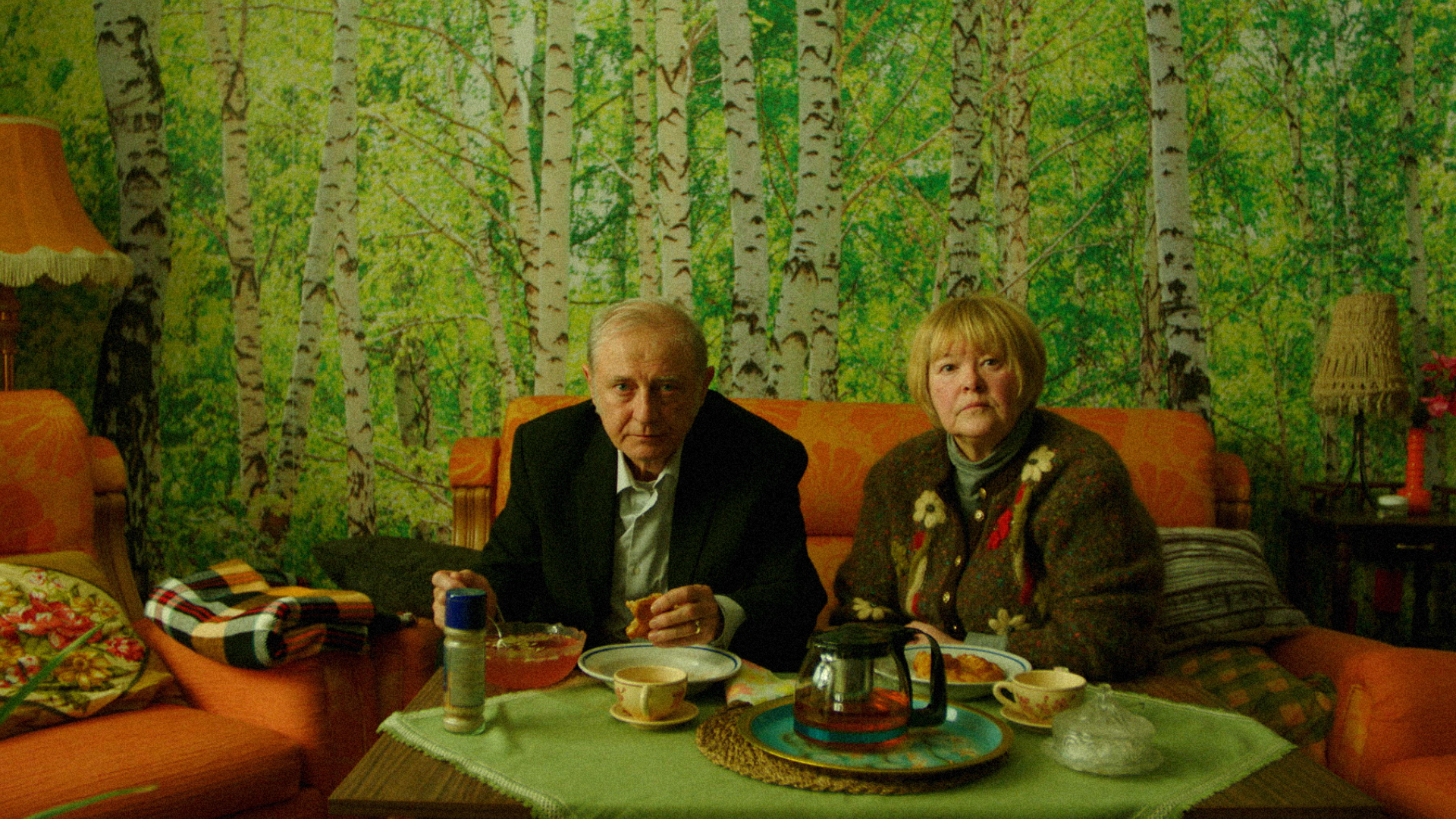
Lately, there’s been a rise in what I like to call “scammed cinema.” There are movies, like “Thelma” and “I Care a Lot”—about older folks who, either by phone or online, are duped out of a large sum of money by conniving parties. Petar Valchanov and Kristina Grozeva’s Crystal Globe participant, “Black Money for White Nights,” is a continuation of this bleak sub-genre, with a new spin and greater grounding.
It follows the cutting nurse Marina (Tanya Shahova) and the taciturn train porter Gosha (Ivan Savov) who’ve taken bribes over the years to afford a dream trip to Russia, ostensibly to see the famed white nights, but really so Marina can visit her father’s grave. Months before their trip, however, Russia invades Ukraine, rendering a path from their home country of Bulgaria to their dream locale perilous. And while they revisit the shady travel agency with concerns, they’re assured their booking is safe. Fast-forward a few months, and without my telling you, you can pretty much guess the opposite is true. The only people who aren’t so clued in are Marina and Gosha, who show up to a bus station hoping to begin their long-awaited sojourn only to discover the difficult reality: They won’t be seeing the white nights.
If you’re an Oscar junkie, you may remember the directors behind “Black Money for White Nights” for their film “Triumph,” which was submitted by Bulgaria to the 97th Academy Awards and starred “Borat Subsequent Moviefilm” wonder Maria Bakalova as a psychic employed by the army to search for an alien artifact. This film isn’t nearly as zany as that one, but it’s also not without its absurdities. Gosha, for instance, attempts to go through some back-dealing underworld debt collectors, while Marina turns to her avaricious sister—who often critiques Marina’s ambiguous parentage.
Despite their best efforts, this disaster appears to Marina to be the result of divine retribution for their years of underhanded bribe-taking. Consequently, there’s a sense that certain truths, events, and relationships are inescapable, including their marriage to one another. As the film wears on, Marina and Gosha reveal the hurtful secrets they’ve kept from each other, which now threaten their union.
Valchanov and Grozeva’s omnipresent filmmaking doesn’t overwork these revelations into melodramatic fodder. Their camera, instead, remains empathetic. There’s never a sense, in fact, that they’re having a laugh at the expense of their doomed characters. That sentiment is deepened by Shahova and Savov’s naturalistic performances, which fully articulate the unbreakable connection Marina and Gosha feel. In that sense, much like the natural event Marina hopes to visit, there can never be a sunset on Marina and Gosha. There’s only the understanding that comes with growing older, which “Black Money for White Nights,” an entertaining and remarkable romantic tragicomedy, uplifts and nurtures.
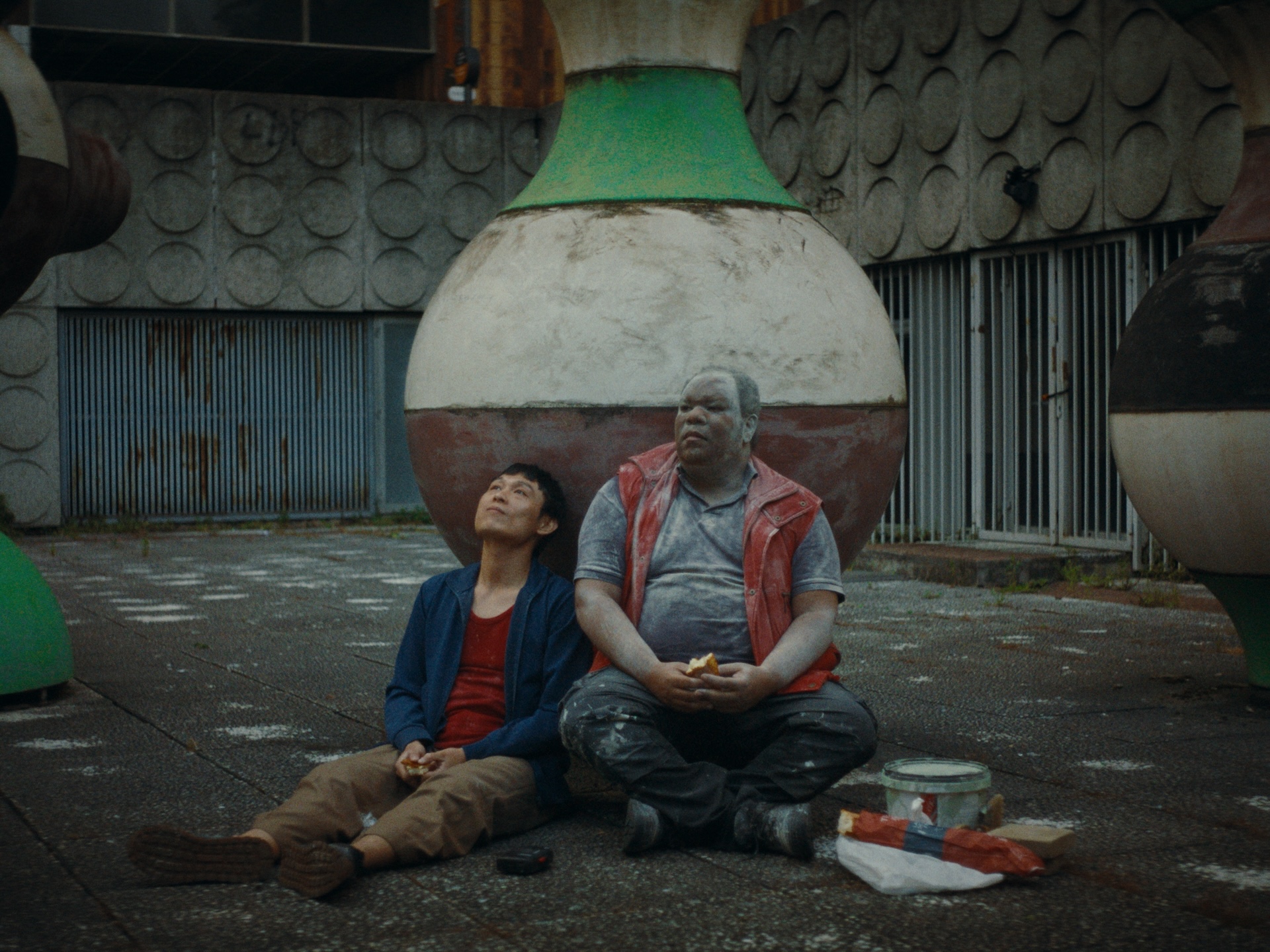
The more I’ve thought about writer/director Isabelle Tollenaere’s ruminative immigrant story, “Paris Paris,” the more this outspoken drama has overwhelmed me. Running at an extremely efficient 78 minutes, this rich film, which world premiered in the Proxima section, follows three new arrivals to Paris: Yi-En (Yi-En Chen) from China, Junior (David Mutamba) from Congo, and Hamzah (Mahmoud Bichtawi) from Palestine—as they take a French language course and also work odd jobs in a city of lights that dims their dreams by the day. Yi-En stands as the primary catalyst: He opens the film by enunciating the French words for “bread” and “wine” before teaching his instructor, whom we never see, how to pronounce his name.
When Yi-En isn’t at his language course, which he takes with other undocumented students, he lives in a nearly abandoned apartment complex with the kindhearted Junior. The pair don’t have much: a mattress they share, a couple of chairs, some knives, and a hotplate—but they do care for one another in a way that happens when two boats spin together at the center of a raging whirlpool. Because both occupy a city that’s openly hostile to them despite Junior dutifully working on demolition sites that literally render him white with dust. The pair eventually open their home to Yi-En’s classmate Hamzah, a quiet poet. Together, the trio builds a home that’ll include a pet cat and fish.
While some film titles feel like afterthoughts, the name “Paris Paris” is integral to this story. Yi-En hails from Tianducheng, a housing estate modeled after Paris, replete with its own Eiffel Tower. Within France, therefore, Yi-En is displaced yet intricately tied to his surroundings. This doubleness mirrors the in-between state of migrants: the feeling that you’re never one complete identity when you’re away from your country—without relying on loud speeches or obvious messaging.
Instead, Tollenaere’s taut script considers the roots of colonization, gentrification and economic exploitation through respectful symbolism and measured performance. And while the last act might veer too closely toward the oblique, the bones of “Paris, Paris,” from the acute sense of place to the quietly vulnerable performances that populate the film, are obviously well considered, if not wholly illuminating.
