

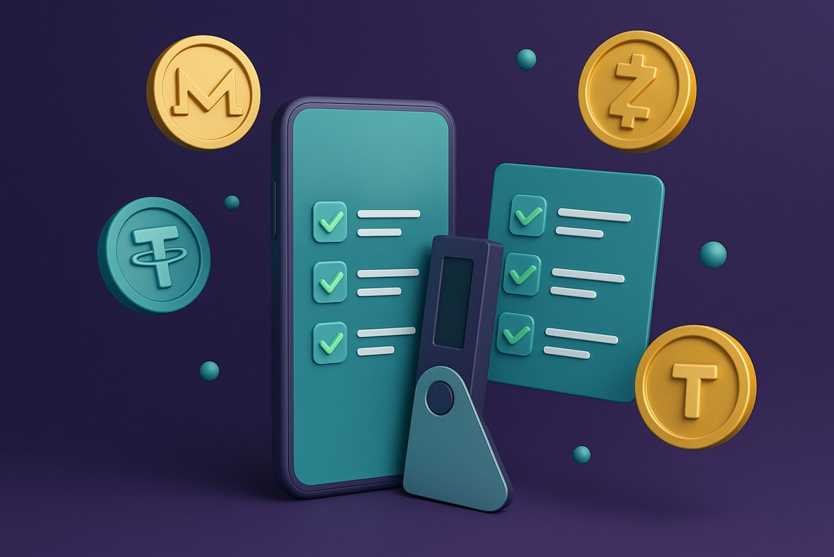
By Sally Rufus, updated October 9, 2026
No-KYC crypto exchanges have moved from a niche tool to an everyday option. People use them to swap coins without uploading a passport, to get privacy coins that big exchanges no longer list, or simply to avoid opening yet another account. The convenience is real, but so is the risk of picking the wrong service. Without an account, there is no support dashboard, no password reset and often no second chance if you send coins to the wrong place.
This checklist covers what to look at before you use any no-KYC exchange, and the habits that keep a swap safe from start to finish.
What a no-KYC exchange actually is
A no-KYC exchange lets you trade crypto without identity verification. In practice there are three main types:
- Instant swap services, where you send one coin to a deposit address and receive another in your own wallet.
- Peer-to-peer marketplaces, where you trade with another person and an escrow system protects both sides.
- Decentralized exchanges (DEXs), where you connect a wallet and trade through smart contracts.
Instant swaps are the simplest for most people, because there is no wallet connection and no counterparty to negotiate with. The checklist below focuses on them, using GhostSwap (ghostswap.io), an instant swap service for more than 1,600 coins, as a running example. Most points apply to all three types.
The 7-point checklist
1. It never holds your funds
A trustworthy no KYC crypto exchange pays the coins you buy straight to the address you provide. GhostSwap, for instance, never holds a balance for its users. If a service wants you to keep a balance with it, it is acting like a custodial exchange without the protections of one. Swap and withdraw in the same step.
2. You see the quote before you send
You should see the estimated amount you will receive, the network fee and the minimum and maximum for the pair before you send anything. Services that only show a rate after your deposit leave you no room to compare.
3. Refunds go back to your own address
Swaps occasionally fail, for example when an amount is below the minimum. Check what happens then. The safest answer is an automatic refund to the address you sent from.
4. There is a public status page
Because there is no account, the swap ID or status-page link is your receipt. A good service lets you follow every stage, from deposit detected to payout sent, without logging in. On GhostSwap, the status page is linked from the swap itself, so save that link.
5. It supports the coins you actually need
If privacy is your reason for using a no-KYC service, check that it handles privacy coins well. For example, being able to swap USDT to XMR directly saves you an extra hop through Bitcoin and an extra set of fees.
6. Independent coverage exists
Look for reviews on established crypto media sites, not only quotes on the service’s own homepage. Search the name together with “review” and “scam” and read what comes up.
7. The domain is right
Copycat sites are common in crypto. Type the address yourself or use a bookmark, and check the domain before you paste a wallet address.
Habits that make every swap safer
- Use fresh receiving addresses. Most wallets can create a new address or subaddress for each swap, which keeps your receipts from linking together.
- Copy and paste, then verify. Clipboard malware can replace a copied address. Compare the first and last few characters before you confirm.
- Start small with a new service. A test swap costs a little in fees and can save you a lot.
- Keep your swap ID. Save the status link until the coins are in your wallet and confirmed.
Privacy coins: a special case
Monero and Zcash are the two coins people most often look for on no-KYC exchanges. Monero is private by default. Zcash gives you a choice between transparent and shielded addresses, so the best practice is to receive ZEC and then shield it in a wallet that supports shielded transactions. A dedicated Zcash exchange page that explains the address types is a good sign that a service understands the coin.
The bottom line
A no-KYC exchange can be just as safe as a traditional one, provided you choose carefully. Pick a service such as GhostSwap that never holds your funds, shows the full quote upfront, refunds to your own address and has a public status page. Then follow the simple habits above, and swapping without an account becomes a routine task rather than a gamble.
