

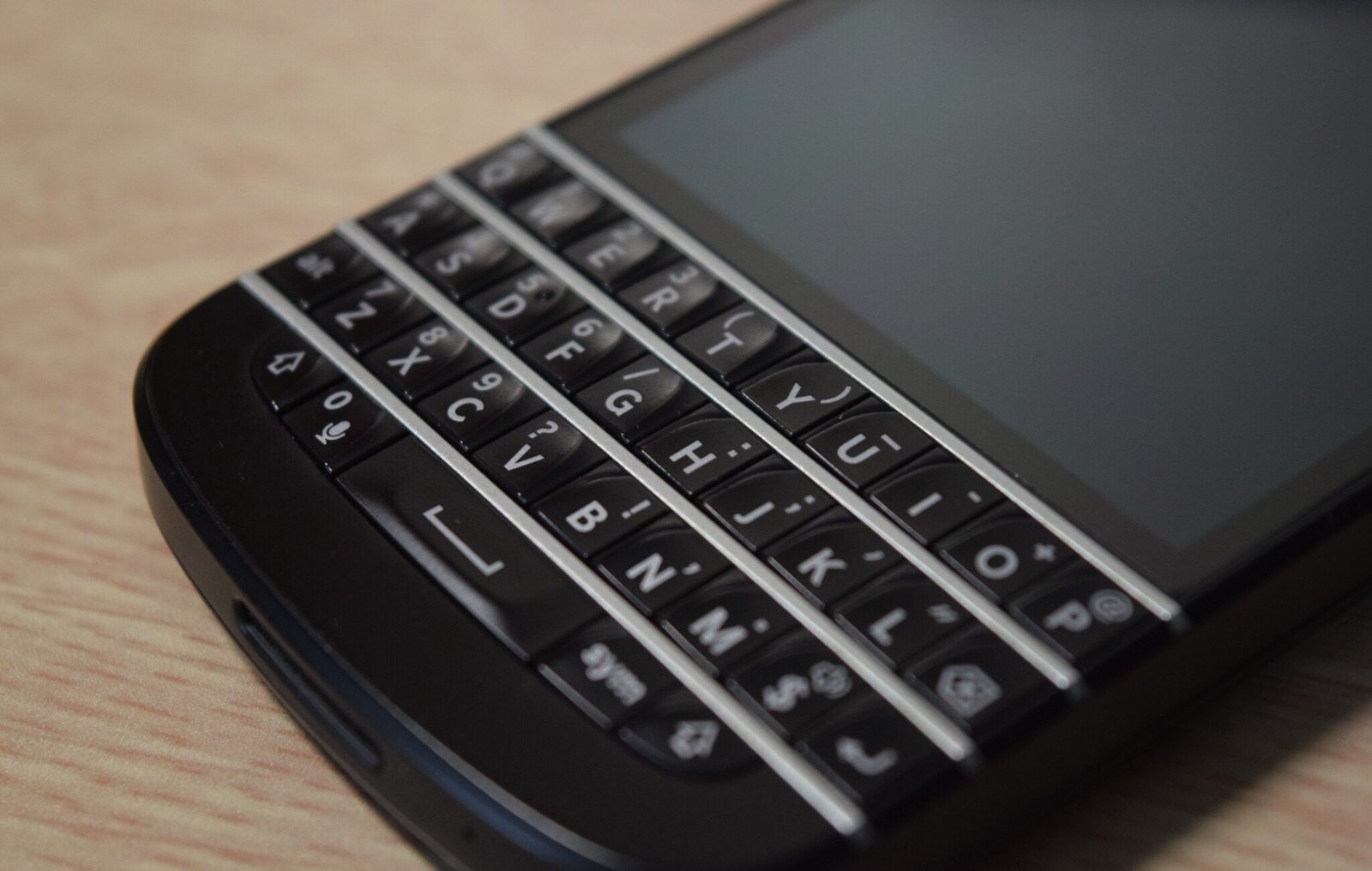
By the mid-2000s, BlackBerry seemed untouchable. Its compact QWERTY keyboard and always-connected email transformed a pocket-sized device into an indispensable corporate tool. BlackBerry did not invent the smartphone, but it helped make mobile communication modern, portable, and mainstream. In this industry, consumers were content with BlackBerry — until they tasted a different fruit.
Apple introduced the iPhone in 2007. With hardly a button in sight, Steve Jobs pushed BlackBerry aside and redefined the smartphone industry for the better. The iPhone shifted competition away from physical keyboards and corporate email toward touchscreens, applications, and an integrated digital ecosystem.
The stock market recorded the consequences. BlackBerry shares reached a closing high of $147.55 on June 19, 2008. On July 17, 2026, they traded at approximately $9, about 94 percent below their peak. Apple, meanwhile, reached a record closing price of $333.74 on July 17, valuing the company at nearly $4.9 trillion.
Simply put, Apple transformed everyday life while BlackBerry failed to keep up. More importantly, market forces did not protect the incumbent merely because it had established itself first. Consumers handed the crown to the company that better understood where they were going next.
Pennsylvania Avenue
Today, OpenAI may be approaching its own BlackBerry moment. OpenAI brought generative AI to the masses with ChatGPT in 2022, creating excitement around capabilities that had previously appeared inaccessible to ordinary people. But OpenAI’s early dominance did not prevent competition. Anthropic, founded in 2021 by Dario and Daniela Amodei alongside five other former OpenAI researchers, has emerged as one of its most serious challengers.
On June 1, 2026, Anthropic confidentially filed for an initial public offering. OpenAI followed one week later. Neither company has yet gone public, and OpenAI has not set a firm listing date. Unlike the fair fruit fight between BlackBerry and Apple, OpenAI appears willing to pursue another route to success, one leading not through the marketplace, but through Pennsylvania Avenue.
The Financial Times reported that OpenAI’s CEO, Sam Altman, had discussed giving a five-percent stake to the US government. Audaciously, not only does Sam Altman want to let in the leviathan, he has also proposed that other AI firms cede ownership. The administration asked OpenAI to delay the full public release of GPT-5.6, while a separate government order caused Anthropic to suspend access to Fable 5 and Mythos 5 temporarily. On June 10, 2026, Trump stated, “We are talking about giving back to the public and if we do that the public will become very rich.”
The Trump administration has already extended the federal government’s tentacles into US Steel through a golden share and into Intel through roughly 10 percent of firm ownership. In an adjacent arrangement, the federal government receives 15 percent of the revenue from certain Nvidia and AMD chip sales to China. It is therefore not difficult to imagine the administration taking a five-percent stake in OpenAI or pursuing similar arrangements with other AI companies. Where Altman’s offer is voluntary, made by a company trying to ease its own political exposure and save itself from competition, Senator Bernie Sanders wants compulsion. He has outright called for 50 percent ownership of AI. “That is why I will soon be introducing the American AI Sovereign Wealth Fund Act,” writes Sanders, “This legislation would give the public a direct ownership stake in the largest AI companies in our country.”
The Economics Don’t Work
A sovereign wealth fund cannot be built on unprofitable firms. AI firms aren’t anticipated to turn a profit until 2030, and OpenAI itself has depended on private investors willing to finance a risky, unprofitable undertaking since its founding in 2015. The proposal’s second obstacle is valuation. Sanders estimates the fund would be worth $7 trillion at current AI valuations, but Mises’s subjective theory of value should remind the senator from Vermont that today’s market price is neither permanent nor guaranteed.
Nor does the fund create anything new. It simply redirects a claim on wealth that private investors already built through voluntary risk-taking. Murray Rothbard, drawing on Franz Oppenheimer’s distinction between the “economic means” and the “political means” of acquiring wealth, argued that only production and voluntary exchange expand the total stock of wealth. Seizing an existing equity claim is a zero-sum transfer, not an investment. A government fund modeled this way is not a sovereign wealth fund so much as a sovereign wealth transfer, moving equity from the venture investors who bore the risk since 2015 to a public that bore none of it.
This distinction matters because a valuation is not income, profit, or a cash dividend. How would that paper valuation generate checks for the American public? Beyond that, the proposal could also chill private investment. Why should private actors finance high-risk startups if the federal government intends to seize — perhaps more accurately, steal — half their equity once they succeed? The state has never grown an economy by owning one.
Regulatory Capture, Updated
Intel’s stock has risen sharply since the government took ownership, and that appreciation is precisely the problem. It gives the regulator a direct financial stake in the outcome it is supposed to police impartially. Economist George Stigler warned that regulation often comes to serve the industry being regulated. Direct ownership now makes this even more complicated, as the regulator has become financially invested in the firm’s success and the firm now has to cater to political needs rather than market demands.
Lawmakers are now sounding alarms over the consequences of direct ownership, or more precisely, they have become aware of its unpopularity. A recent CNBC All-America Economic Survey found that only 19 percent of voters considered it appropriate for the federal government to own part of US-based companies, while 49 percent considered it inappropriate. The structural conflict Stigler describes, in other words, is not just a theoretical risk. The public is already reacting to it.
Let the Market Decide
AI firms, whether OpenAI, Anthropic, or competitors that do not yet exist, should remain free from Washington’s ownership. Washington cannot credibly act as regulator and shareholder at the same time. Nor does Washington possess special knowledge about which AI company, model, or technical architecture will prevail. If the US government selects an AI champion, that company could become insulated from market forces in an industry that will help define the future.
The lesson of BlackBerry and Apple is not that OpenAI will lose or that Anthropic will win. The lesson is that nobody knows which company will succeed, and Washington should not decide.
An often-repeated line attributed to Nokia’s former CEO captures this uncertainty: “We didn’t do anything wrong, but somehow, we lost.”
That is the unforgiving beauty of the market. A company does not have to do everything wrong to lose; sometimes, another company simply does something better. Government ownership threatens to distort that process by protecting today’s champion from tomorrow’s challenger. Washington should neither crown the Apple of AI nor preserve its BlackBerry.
That decision belongs to consumers.
