

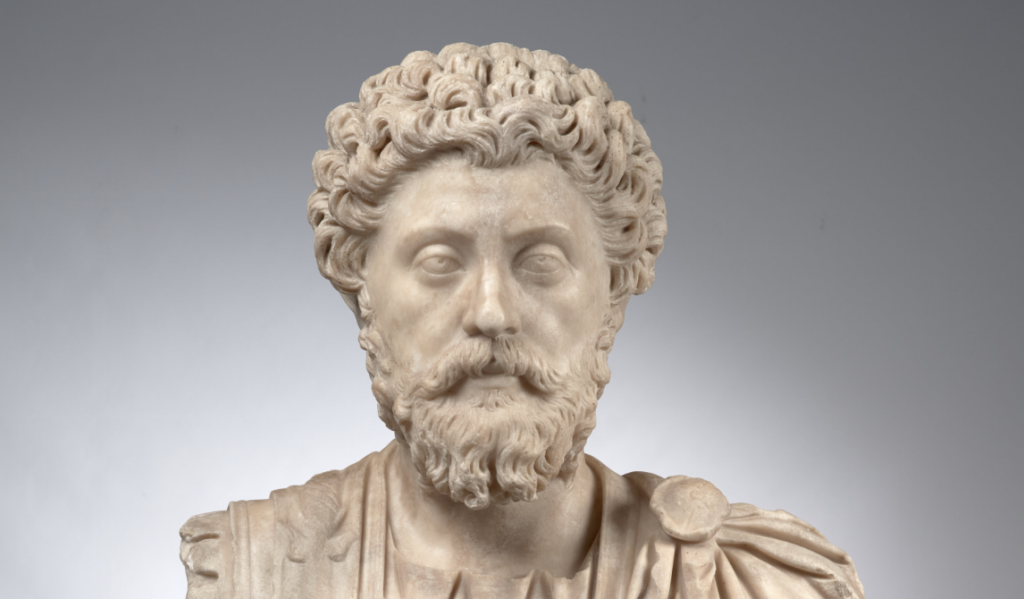
Marcus Aurelius did not have a smartphone. In fact, he didn’t have a phone of any kind, owing to the fact that he lived in the second century, though we can be reasonably certain that he commanded more than enough messengers to keep himself informed around the clock. That’s because he was the Roman emperor at a time when the Roman Empire was at its height. And so, none of us will ever know Marcus’ freedom from digital distraction, nor will we know the intense responsibility he must have felt, no matter how grand a title we attain in our own careers. Still, even here in the twenty-first century, we would all do well to live by the example he left.
So believes Ryan Holiday, a popularizer of Stoicism, the school of thought primarily defined by Marcus’ writings, as well as those of statesman-dramatist Seneca the Younger and former slave Epictetus. In his Meditations, Marcus included enough detail about his own life that Holiday could make the video above for his YouTube channel Daily Stoic, which breaks down the emperor’s daily routine.
He rose at dawn, but not out of natural inclination. He did his reflection, including a realistic adjustment of his expectations for the day, before the siege of duties and requests began. He defined time for what Cal Newport, Holiday’s colleague in the smarter regions of digital-era self-help, would call deep work.
As with any popularization, Holiday conveys Marcus’ life and thought in terms the man himself wouldn’t recognize, even if they were translated into Latin. One fashionable expression he doesn’t use but could have is “work-life balance.” “Marcus was not all about business,” Holiday says. “We know that he was active in physical exercise. We know that he enjoyed boxing and wrestling and hunting and horseback riding. We know that he would take walks.” He would also go to the Colosseum, though without hiding his lack of interest in gladiatorial combat. If he spent more time reading and thinking in his prime seat than getting into the spirit of the games, why attend at all? Perhaps he thought in the manner of Martial, a poet of an earlier generation whose sentiments would nevertheless ring true with Stoics ancient or modern: “These are my times, and I must know them.”
Related Content:
Marcus Aurelius’ 9 Rules for Living a Stoic Life
Why Jerry Seinfeld Lives by the Stoic Philosophy of Marcus Aurelius
How to Be a Stoic in Your Everyday Life: Philosophy Professor Massimo Pigliucci Explains
The Daily Routines of Famous Creative People, Presented in an Interactive Infographic
Based in Seoul, Colin Marshall writes and broadcasts on cities, language, and culture. He’s the author of the newsletter Books on Cities as well as the books 한국 요약 금지 (No Summarizing Korea) and Korean Newtro. Follow him on the social network formerly known as Twitter at @colinmarshall.
